 EVERYTHING


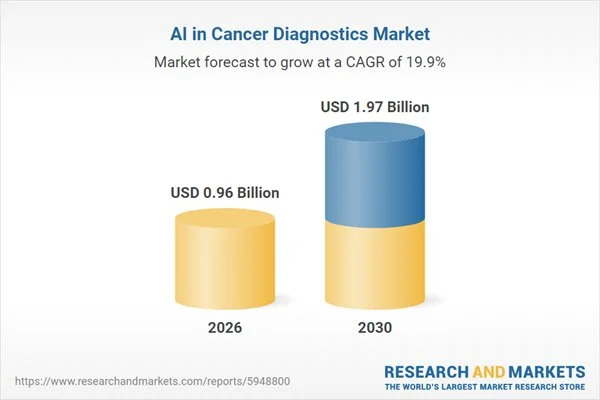
The integration of Artificial Intelligence into medical procedures is fundamentally reshaping global healthcare delivery. According to Globenewswire, the AI in cancer diagnostics market is poised for substantial growth, driven by both increasing cancer incidence globally and the rapid evolution of machine learning capabilities.
Market Expansion and Technological Drivers
The market trajectory shows robust expansion, with projections indicating it will reach $1.97 billion by 2030, maintaining a Compound Annual Growth Rate (CAGR) of 19.9%. This upward trend is primarily supported by the expanding network of diagnostic centers and increasing investment in digital health technologies.
- Deep learning algorithms are enabling more precise image analysis across multiple cancer types.
- AI-powered imaging systems facilitate earlier detection, which is crucial for successful treatment planning.
- The market encompasses a wide range of services, including early detection, predictive analytics, and pathology analysis systems.
Cancer incidence serves as a critical driver for this sector; the National Cancer Institute forecasts 2 million new U.S. cancer cases in 2024 alone, with global new cases expected to reach 29.9 million by 2040.
Industry Adoption and Competitive Landscape
Major strides are being made through strategic partnerships and acquisitions that bolster AI capabilities. For instance, Dedalus and Ibex Medical Analytics have launched integrated AI-powered systems aimed at improving diagnostic accuracy throughout Europe. Furthermore, Lunit recently acquired Volpara for $193 million, a move designed to strengthen its presence in the U.S. market by leveraging Volpara's extensive database.
Prominent corporations shaping this competitive landscape include Microsoft Corporation, IBM Corporation, Verily Life Sciences LLC, Tempus Labs Inc, and Guardant Health Inc. While North America led the market in 2025, regions like Asia-Pacific and Europe are showing significant growth potential. The adoption rate has been influenced by tariffs on imported imaging hardware, which simultaneously encouraged local manufacturing and regional software innovation.
The focus of AI integration is shifting toward personalized treatment pathways and operational efficiency. By utilizing advanced software solutions for image analysis and predictive modeling, healthcare providers can move beyond traditional diagnostic methods to a more holistic approach. This technological evolution represents a crucial step forward in the fight against cancer.