 EVERYTHING


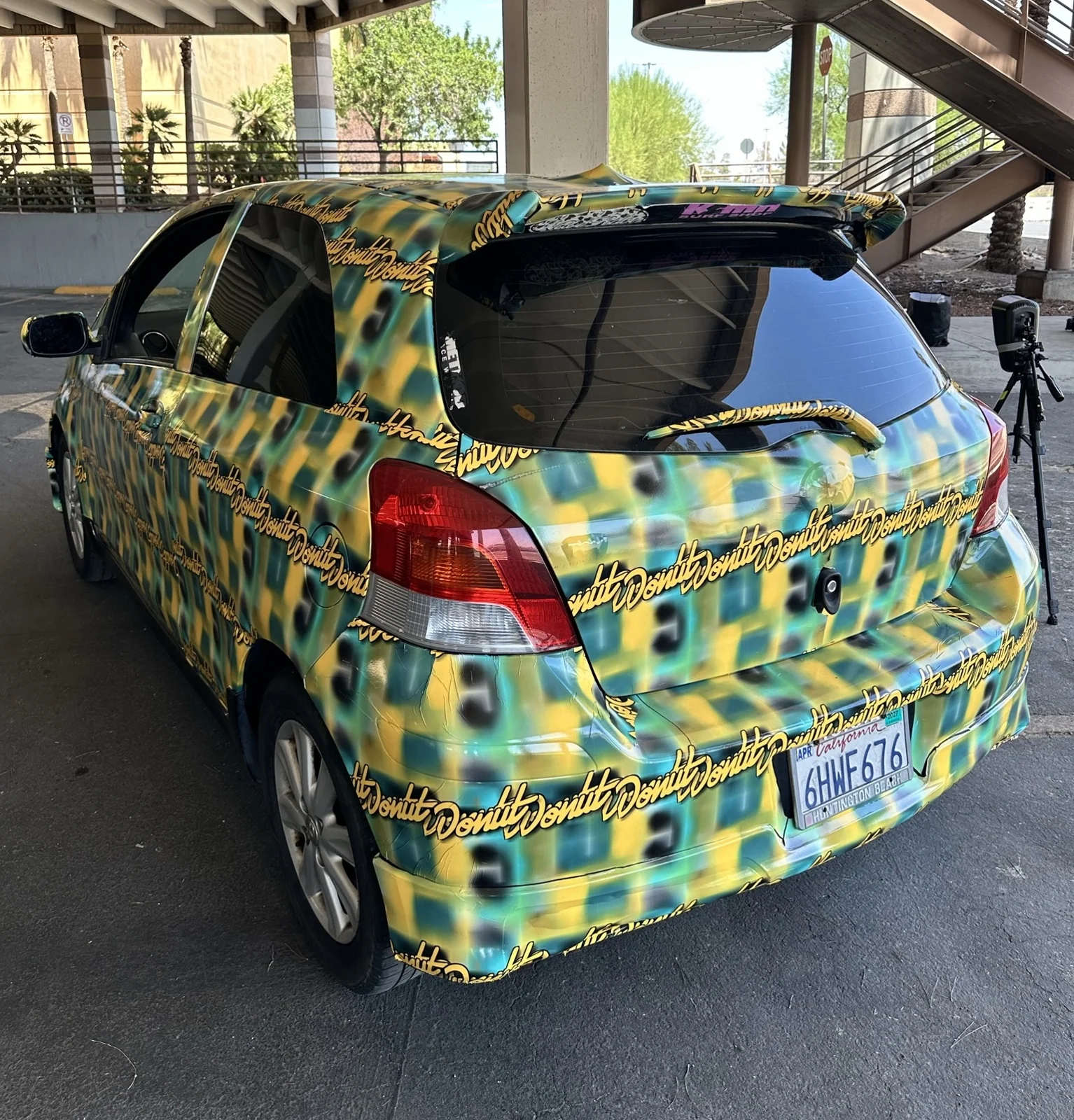
Live Demonstration at Def Con Proves AI Blind Spot
At the Def Con cybersecurity conference in Las Vegas, researcher Bill Swearingen unveiled noRecognition, a reinforcement learning system designed to defeat automated camera tracking. During a live demonstration conducted with Donut Media, a 2009 Toyota Yaris wrapped in a computer-generated adversarial pattern successfully passed by Flock license plate readers without triggering a single automated detection alert.
While standard cameras continue recording normal video footage, Swearingen's custom patterns scramble the underlying computer vision algorithms. The neural networks that scan video feeds fail to identify the target, turning tracked individuals back into untagged objects within the system.
Inside the 31 Million Automated Painting Tests
Building the system required transforming an ensemble of open-source artificial intelligence models into a self-training loop. Swearingen taught his reinforcement model how to paint complex visual patterns, subjecting every design to iterative tests against existing vision software until it discovered mathematical configurations capable of confusing multiple neural networks simultaneously.
The training process refined the visual shields across several key operational milestones:
- Execution of over 31 million simulated evaluation cycles to identify subtle vulnerabilities in object detection frameworks.
- Simultaneous evasion of 11 major detection algorithms, including systems powering Axon body cameras, Clearview AI, and Flock street monitors.
- Continuous generation of high-resolution clothing and vehicle wrap designs that remain effective from long distances without sacrificing visual appeal.
Swearingen described his motivation during a technical briefing: «Privacy is a fundamental right. These patterns give people a practical way to opt-out of being tracked by algorithms they never consented to.»
The Escalating Arms Race Between Vision AI and Privacy Wearables
The emergence of automated adversarial pattern generation marks a structural shift in how public privacy is defended against ubiquitous machine vision. By keeping his most potent mathematical recipes off public repositories, Swearingen prevents camera manufacturers from quickly retraining their vision classifiers against his specific visual signatures. His model continuously generates fresh, upgraded patterns every minute, ensuring that as soon as one pattern is recognized, dozens of new mathematical variations are ready to replace it.
This dynamic creates a persistent headache for surveillance vendors, who must now rebuild fundamental feature extraction layers rather than applying simple software patches. As crowdsourced merchandise and vehicle wraps enter consumer distribution through Kickstarter, everyday citizens gain access to active algorithmic countermeasures. The technological equilibrium of urban spaces is shifting, demonstrating that the same neural network architectures used to watch public spaces can be weaponized to preserve personal anonymity.