Money Read the original on Los Angeles Times 1 min read 0

Charter Secures Final State Approval for $34.5B Cable Merger

According to the Los Angeles Times, California regulators voted unanimously to approve Charter Communications' $34.5 billion acquisition of Cox Communications on August 13, 2026. The decision removes the final regulatory barrier standing between the telecom giant and nationwide consolidation. However, the multi-billion-dollar deal triggers complex market realignments that will ripple across broadband pricing and consumer choice.

#Charter Communications #telecom merger #broadband industry #corporate acquisitions
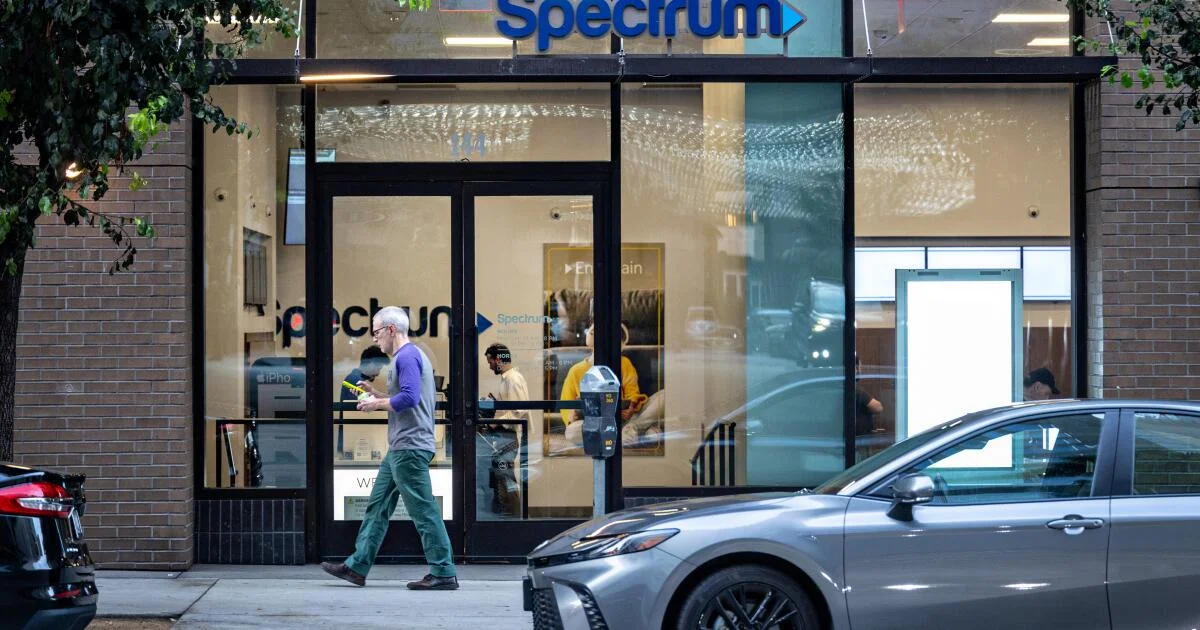
A Spectrum retail store location in Los Angeles following the regulatory approval of Charter's $34.5 billion merger with Cox Communications.
A Spectrum retail store location in Los Angeles following the regulatory approval of Charter's $34.5 billion merger with Cox Communications. · Image source: Los Angeles Times

Unanimous Regulatory Vote Clears the Final Barrier

The California Public Utilities Commission voted unanimously on Thursday to clear Charter Communications' proposed purchase of Cox Communications. Having already secured federal approvals from the Department of Justice and the Federal Communications Commission earlier in the year, California represented the final hurdle for closing the transaction.

The approved transaction values Cox Communications at $34.5 billion, uniting two of North America's largest cable operators into a single distribution network.

Subscriber Scale and Operational Restructuring

The combined entity expands Charter's footprint across 41 states, expanding its subscriber base to more than 38 million users. In California alone, the consolidation brings over 6 million broadband and cable customers under Spectrum infrastructure.

To secure state approval, regulators mandated several binding operational commitments:

  • Expanding low-cost broadband tiers to 250,000 low-income households across California.
  • Investing $400 million over three years in rural fiber-optic infrastructure.
  • Maintaining existing pricing caps on basic internet services through late 2028.

Under the integration roadmap, Spectrum will replace the Cox brand for consumer internet and television services within 12 months, while the overarching parent enterprise will adopt the Cox Communications corporate name.

Defending Cable Scale Against Fiber and Wireless Rivals

Beyond immediate market consolidation, the merger signals a major strategic defense against structural headwinds facing legacy cable providers. Broadband operators are contending with accelerating market share loss to direct-to-home fiber networks and 5G fixed-wireless access provided by mobile carriers.

By consolidating subscriber volume, Charter gains the financial scale needed to fund capital-intensive hybrid fiber-coaxial upgrades without eroding operating margins. Rather than expanding geographical reach into unserved markets, this $34.5 billion consolidation allows legacy operators to pool capital against telecom rivals offering symmetrical gigabit speeds.

Why it matters

The approval of Charter's $34.5 billion merger with Cox establishes a blueprint for future telecom regulation under heightened antitrust scrutiny. By conditioning approval on $400 million in rural fiber investments and rate caps through late 2028, regulators demonstrated that mega-mergers in utility-like sectors will require tangible infrastructure guarantees. For the broader technology and telecommunications industry, this transaction underscores how legacy cable providers are pooling resources to combat capital-intensive competition from fiber optic builds and satellite providers. As 38 million subscribers transition onto a single combined network, corporate competitors will face renewed pressure to consolidate their own regional infrastructure assets.

FAQ

When will the Charter-Cox merger officially take effect?
The deal secured its final regulatory approval from California regulators on August 13, 2026, following prior clearances from the Department of Justice and Federal Communications Commission. The companies expect operational integration to begin immediately, transitioning consumer services to Spectrum branding over the next 12 months.
How will the merger impact existing Cox Communications customers?
Existing Cox customers will transition to Charter's Spectrum platform over the coming year. Regulators mandated that existing basic internet pricing must remain frozen through late 2028, while low-income households will gain access to expanded low-cost internet tiers.
What conditions were attached to the merger's regulatory approval?
California regulators required Charter to invest $400 million into expanding rural fiber-optic infrastructure over three years. Additionally, the combined company must expand low-cost broadband access to 250,000 low-income households and adhere to broadband price caps.