 EVERYTHING


China's 2026 Safety Directive Forces Power Bank Redesign
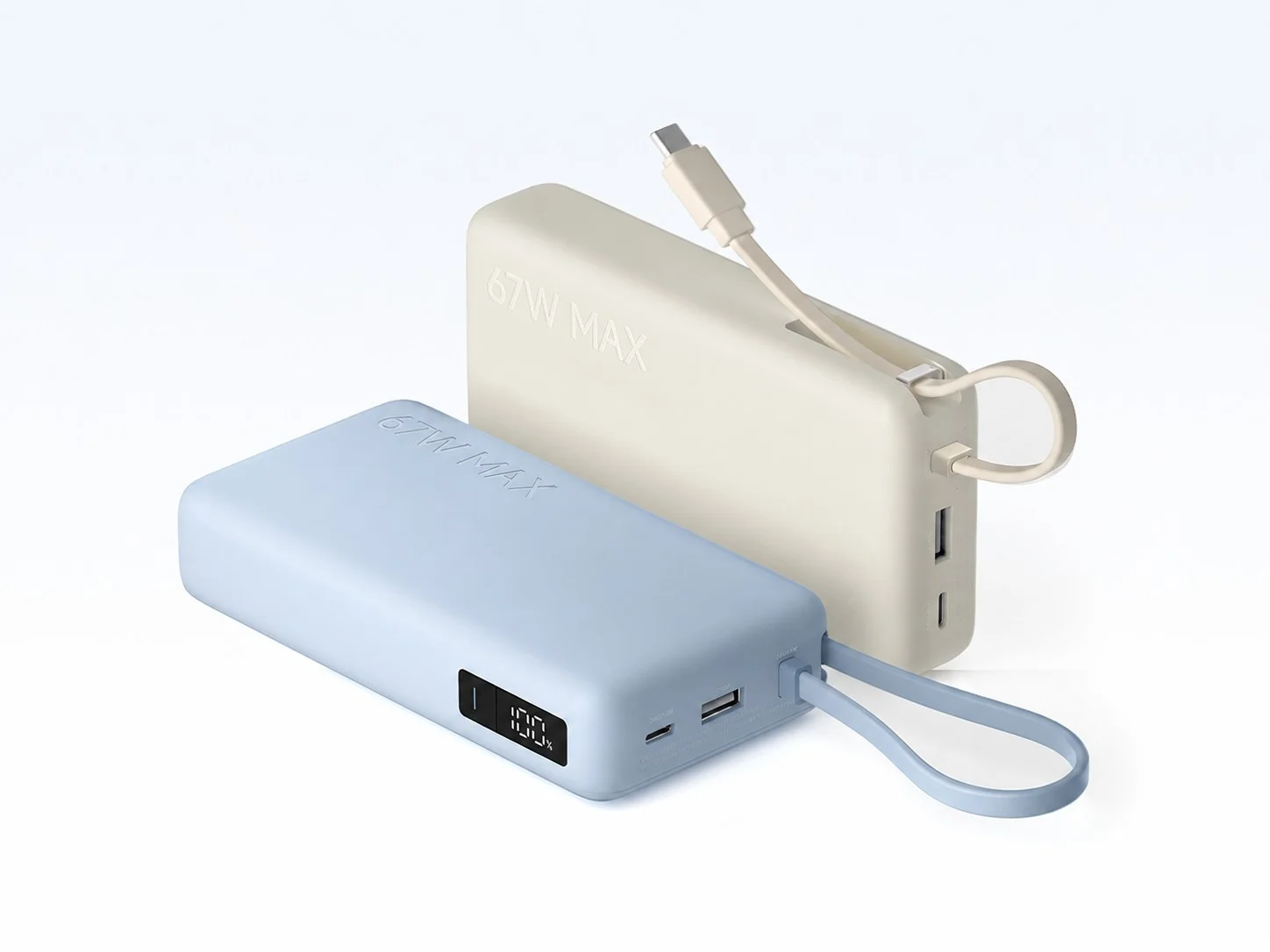
Xiaomi released two upgraded portable power banks in China, expanding its mobile accessory ecosystem with the Xiaomi Power Bank 20000 67W with Built-in Cable and the Xiaomi Power Bank 20000 45W with Built-in Cable. Both models feature an integrated USB-C cable that doubles as a carrying strap, alongside additional USB-C and USB-A ports to charge up to three devices at once.
The timing of the release aligns with China's newly implemented 2026 national safety standard for portable energy storage. Under the updated framework, battery cells must pass extreme physical stress tests, including mandatory needle-penetration assessments designed to simulate internal short circuits and prevent catastrophic fires or thermal runaways.
Dual High-Output Variants Target Everyday Laptop Users
While earlier portable packs focused primarily on low-wattage smartphone top-ups, these revised units deliver substantial output increases to handle demanding modern hardware. Xiaomi structured the lineup to cater to different user mobility needs:
- The flagship 67W edition provides enough power to charge laptops and features a smart digital display that shows real-time capacity percentages.
- The 45W model serves lightweight laptops and tablets, replacing the digital screen with four status LEDs while maintaining the same 20,000mAh capacity.
- Both models include integrated software support, allowing users to monitor battery health metrics through a dedicated web application on a PC or laptop.
Pricing in the domestic market starts at 499 yuan (approximately $74) for the 45W model, while the high-output 67W variant retails for 599 yuan (around $89). Xiaomi has not yet detailed international release dates for either device.
Beyond Charging Speed: The Practical Shift to Structural Safety
The introduction of needle-tested 20,000mAh chargers reflects a broader evolutionary shift in how consumer tech handles high-density lithium batteries. For years, portable power banks pushed higher wattages and tighter enclosures without fundamental changes to cell resilience, resulting in increased transit bans and airline restrictions on high-capacity packs.
By combining 67W laptop-level power delivery with industrial-grade puncture resistance, Xiaomi demonstrates that high-capacity charging no longer requires sacrificing peace of mind during travel. As global regulators scrutinize battery fire risks, these domestic safety benchmarks are poised to become the baseline expectation for portable power worldwide.