 EVERYTHING


A Dedicated Code Forge for High-Speed AI Collaborators
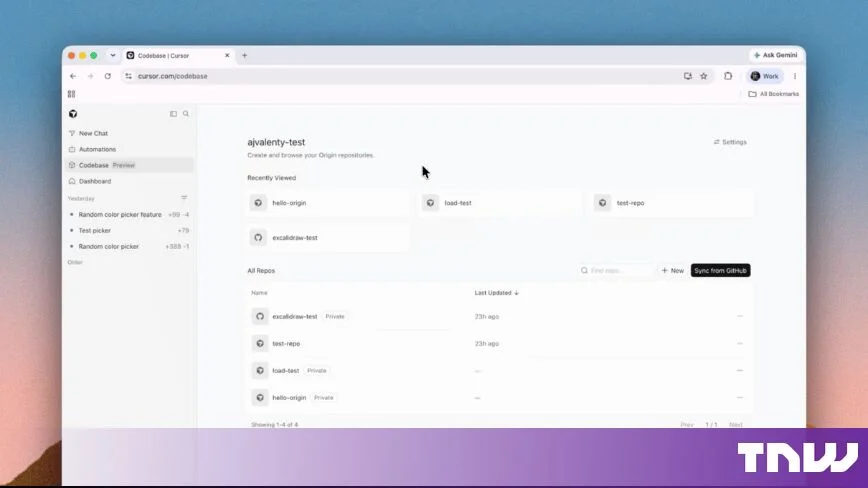
Cursor announced the rollout of Cursor Origin on 17 August 2026, marking the launch of a code hosting environment designed explicitly for the speed and volume of agentic development. Unlike traditional platforms built around human typing speeds, Origin is structured to receive rapid-fire commits generated directly by autonomous software workflows.
The platform operates without requiring engineering teams to migrate away from their current setups. Origin establishes a read-mostly mirror that synchronizes seamlessly alongside existing repositories, maintaining permissions and syncing pull request comments bi-directionally within seconds while leaving primary repositories as the source of truth.
Engineered for High-Frequency Autonomous Development
Traditional git forges were designed around human collaboration patterns, where a pull request represents a thoughtful review conversation between developers. However, the rapid adoption of AI coding tools has dramatically altered how code is written and integrated into corporate repositories:
- Demonstrations of Origin showed AI agents executing automated commits at speeds reaching 22.6 commits per second against a single repository.
- Autonomous background agents now generate 35% of all pull requests merged inside the Cursor ecosystem.
- Integration pipelines through services like Depot, Buildkite, and Vercel run existing GitHub Actions workflows and preview deployments without requiring architectural overhauls.
By removing friction from high-frequency commits, Origin allows synthetic developers to operate continuously without clogging standard human review queues.
The Hidden Control Shift in Enterprise Repositories
While the performance advantages of Origin are tailored for high-speed automated development, the platform introduces significant compliance and data governance questions. Cursor has enabled Origin by default for all paid subscription plans, requiring enterprise administrators to manually opt out if they do not wish their codebase mirrored on the new infrastructure.
Furthermore, complete documentation regarding data retention, regional storage residency, model training policies, and subprocessor access has not yet been published. Following Cursor's acquisition by SpaceX under its SpaceXAI division, enterprise technology leaders must weigh the operational convenience of agent-first hosting against the reality of centralizing their code editor, model provider, and version control repository within a single entity's ecosystem.