 EVERYTHING


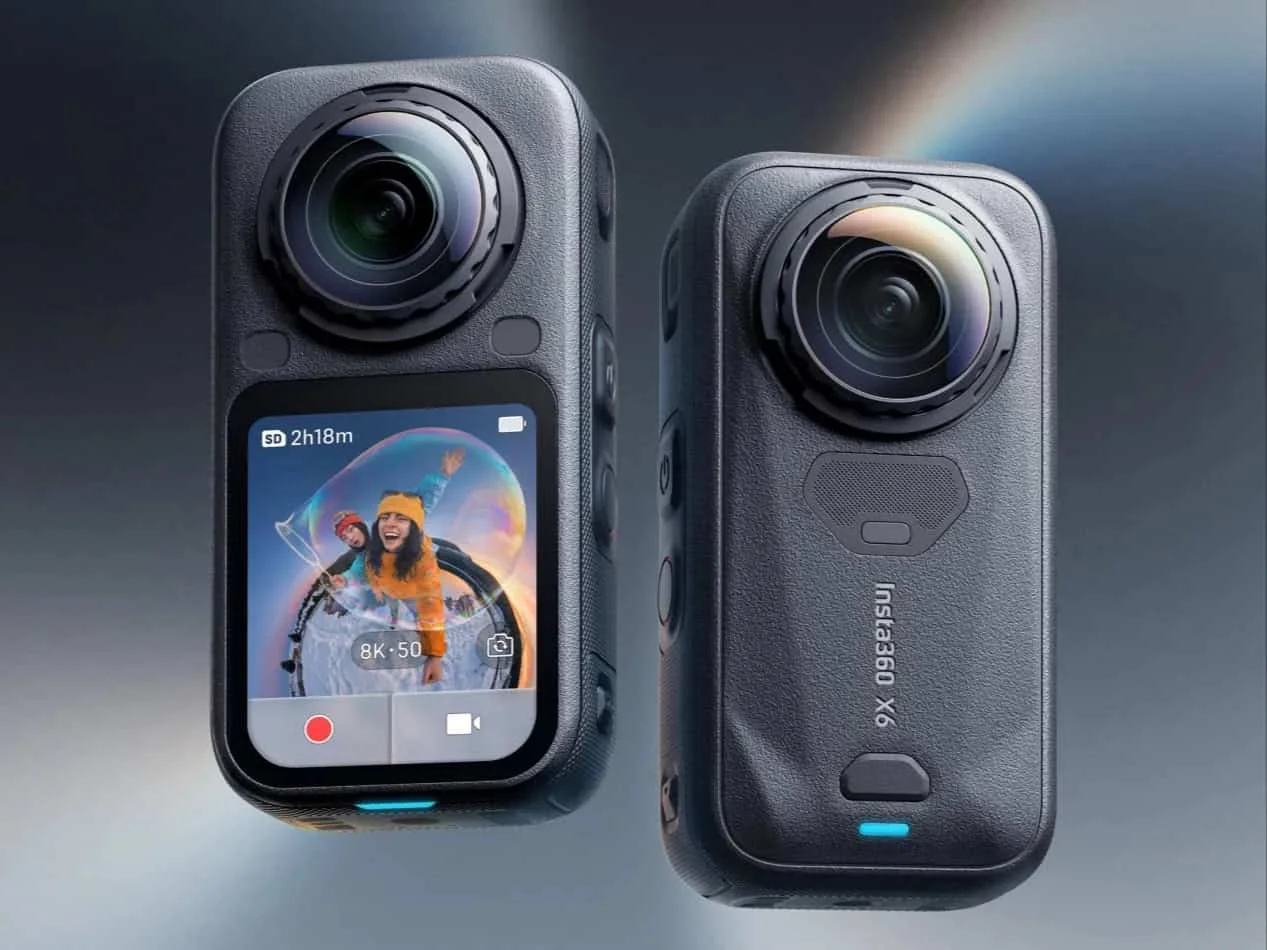
Dual 1-Inch Sensors and 8K Video Capture
The newly announced Insta360 X6 camera enters the consumer market at $699.99, stepping up native spherical recording to 8K resolution at 50 frames per second. Built around dual custom Sony 1/1.1-inch square sensors, the device delivers a one-inch equivalent imaging area designed to improve low-light performance and dynamic range during fast-action recording.
Beyond standard video recording, the hardware incorporates native Dolby Vision support with 10-bit color depth and 120-megapixel spherical photo capabilities. To handle the increased thermal and processing requirements of high-bitrate video, the chassis houses an upgraded 2600mAh battery that provides up to 140 minutes of continuous recording time.
Triple-Chip Processing Architecture and Hardware Specifications
To support high-resolution recording and on-device machine learning tasks, Insta360 redesigned the internal silicon layout of the X6 camera system:
- Triple AI silicon setup combining an 8-core 3.3GHz primary processor with two dedicated neural imaging units.
- Internal storage capacity of 47GB paired with microSD card expansion support for high-bitrate video files.
- Waterproof rating extended to 20 meters depth without external housing, backed by reinforced glass lens guards.
- In-camera color profiling options including flat i-Log presets for manual post-production adjustments.
The updated silicon pipeline delivers five times the processing throughput of earlier generations, shifting heavy computational tasks away from connected mobile devices and into the camera hardware itself.
Automated Highlights Shift Editing from Phone to Camera
The primary shift in user workflow centers on how the device handles unedited footage after recording ends. While plugged into a wall charger overnight, the camera executes its PanoMind algorithm across stored media files, analyzing spatial movement, facial tracking, and audio cues to isolate key action moments without cloud uploading.
By completing object tracking and reframing inside the camera body, the system generates ready-to-publish vertical clips that sync directly to a paired smartphone when powered back on. This automated pipeline transforms raw spherical footage into formatted highlights during idle charging hours, eliminating manual reframing for everyday users.