 EVERYTHING


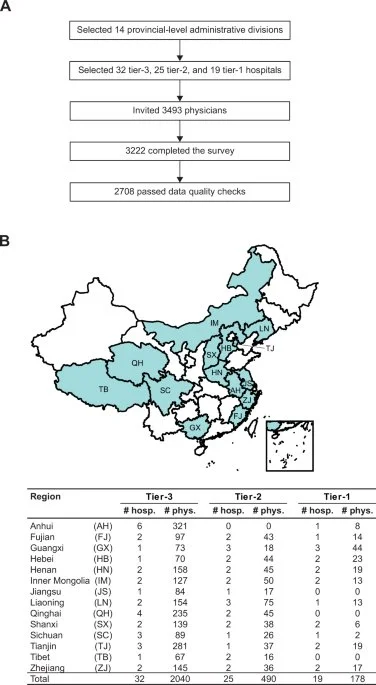
The integration of artificial intelligence into healthcare has expanded rapidly across various fields, including diagnostic imaging and robotic surgery. However, the application of AI to drug prescribing has historically progressed slowly, with physician resistance often cited as a major obstacle. To address this knowledge gap, researchers conducted a large-scale quantitative survey among Chinese physicians.
Broad Receptivity for Conditional AI Models
According to Nature, the study found that most respondents are open to adopting AI in prescribing practices. Crucially, 66% of participants expressed a preference for conditional drug-prescribing AI—a "doctor-in-the-loop" design where the physician retains final discretion—rather than fully autonomous systems. This suggests that while clinicians trust the potential of AI, they require human oversight to ensure safety and accountability.
Identifying Key Implementation Settings
When considering where AI should first be deployed, physicians provided specific insights into clinical scenarios. The most commonly suggested initial settings for AI-driven drug prescribing included:
- Situations governed by standard guidelines (74%).
- Decisions regarding the continuation of a current patient prescription (55%).
- Prescribing choices that rely on high-complexity clinical data (44%).
These findings suggest that early adoption is likely to occur in structured environments where AI can assist with complex decision support, rather than replacing core clinical judgment entirely.
Psychological Profiles and Exposure
The research also utilized clustering analysis to identify two distinct psychological profiles among the surveyed physicians: "optimists" and "pragmatists." These groups exhibited different standards regarding model efficacy, explainability, and governance. The study established that a high level of prior exposure to medical AI was the strongest predictor for classifying a physician as an optimist (OR = 2.98 [2.53, 3.51]; P < 0.0001). This disparity indicates that familiarity with existing AI tools significantly influences professional attitudes toward future adoption.
In conclusion, the data points to wide acceptability of conditional autonomous drug-prescribing AI among Chinese physicians, provided the technology is introduced in structured settings and allows for human oversight.