 EVERYTHING


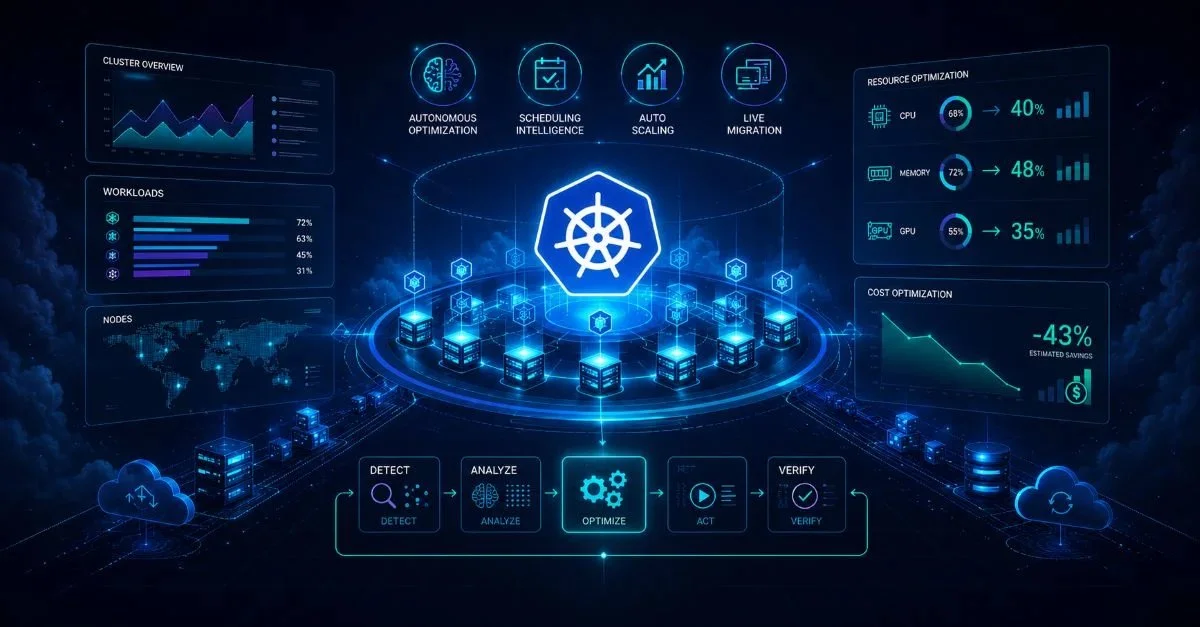
According to Cloudnativenow, DevZero has introduced an autonomous infrastructure optimization platform that continuously monitors Kubernetes clusters, nodes, and individual workloads. The core function of the platform is to build statistical models detailing resource demand, allowing it to apply context-aware scheduling and autoscaling.
Optimizing Resources Across Massive Scale
The DevZero platform operates across a highly complex environment, supporting more than 3,000 instance types, 69,000 price points, 23 different GPU types, and 80 cloud computing regions. By leveraging these statistical models, the system dynamically adjusts CPU, memory, and Graphics Processing Unit (GPU) provisioning to ensure optimal resource utilization.
Beyond standard autoscaling, DevZero also developed a checkpoint-restore capability. This feature enables instant live migration of workloads without requiring restarts, thereby eliminating the need for IT infrastructure resources to remain idle simply in case additional capacity is required later on.
Addressing Compute Overspending and AI Demands
The necessity for such advanced optimization has grown significantly with the deployment of more artificial intelligence (AI) workloads. These modern applications are heavily dependent on expensive GPU resources, making efficient consumption of IT infrastructure paramount. Debo Ray, CEO of DevZero, noted that prior to adopting their platform, IT teams were averaging an overspend of 53% on compute resources.
The inherent complexity of Kubernetes has historically made it difficult for most application developers and IT teams to achieve the goal of dynamic scaling up or down. Developers often default to overprovisioning clusters—assuming that maximizing available compute and memory will minimize downtime, even if utilization rates remain in single digits. This cultural inertia, combined with technical challenges, leads to substantial waste.
- The platform enables real-time rightsizing by dynamically adjusting CPU, memory, and GPU provisioning.
- It reduces the total cost of deploying workloads on Kubernetes clusters by 30% to 60%.
- Its checkpoint-restore feature allows for instant live migration without service interruption.
While many application developers lack visibility into actual infrastructure costs, DevZero aims to simplify complex resource management. The company has already seen early adoption from organizations including DataBahn, Dentira, Starburst, OpenObserve, and Outerbounds. Ultimately, the platform represents a crucial step toward routine automation of IT infrastructure optimization for even non-specialized IT professionals.