 EVERYTHING


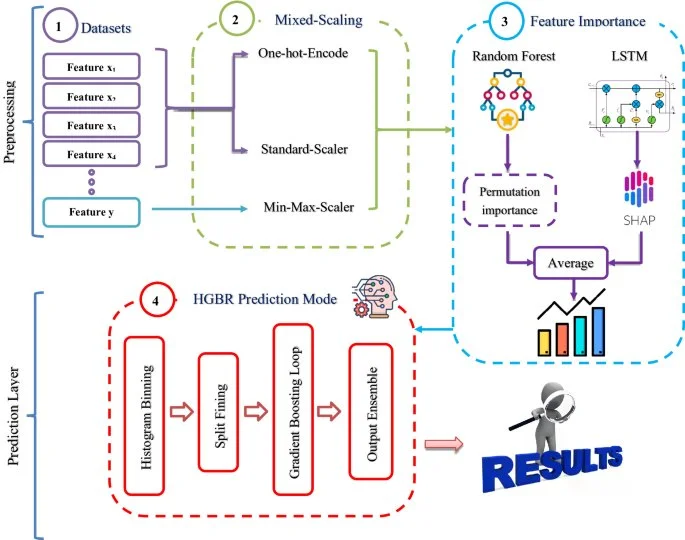
According to Nature, a new framework called Accurate Surgical Time Prediction (ASTP) has been proposed to address the logistical challenges of hospital management. Predicting how long a surgery will last is notoriously difficult due to unpredictable variables such as patient health status, unexpected bleeding, and equipment malfunctions. Currently, many hospitals rely on subjective opinions from anesthesiologists or simple averages, both of which can lead to significant scheduling errors.
A two-layered approach to machine learning
The ASTP framework operates in two distinct stages to ensure both accuracy and interpretability. The first layer focuses on identifying the most relevant data points using Long Short Term Memory (LSTM) models combined with SHapley Additive exPlanations (SHAP) values, alongside Random Forest permutation importance. This allows researchers to understand which specific factors contribute most to a surgery's duration.
The second layer evaluates subsets of these features using Histogram Gradient Boosting Regression (HGBR). The study compared HGBR against several other architectures, including:
Performance in real-world clinical settings
The researchers tested the framework on two distinct datasets: a real-world collection from Nile Hospital and a public dataset from the Medical Informatics Operating Room Vitals and Events Repository (MOVER). In the Nile Hospital data, the HGBR approach emerged as the most balanced method. It achieved a Mean Absolute Error of 8.89 minutes and an R-squared value of 0.26 using only four specific features.
On the MOVER dataset, the framework showed that reducing input complexity did not necessarily sacrifice accuracy. The HGBR model reached its strongest numerical results at a TOP-12 feature set but maintained near-optimal performance even when narrowed down to a TOP-7 subset. By identifying these critical features, the ASTP framework provides a resource-efficient tool for hospital administrators.
Impact on healthcare logistics
Inaccurate surgical timing creates a ripple effect of negative consequences, including increased operating expenses, staff burnout, and longer waiting times for patients. By providing a more reliable prediction model, the ASTP framework supports intelligent scheduling that prioritizes patient safety while maximizing the use of expensive resources like surgeons and specialized equipment. This technology paves the way for automated decision-making tools in modern healthcare environments.