 EVERYTHING


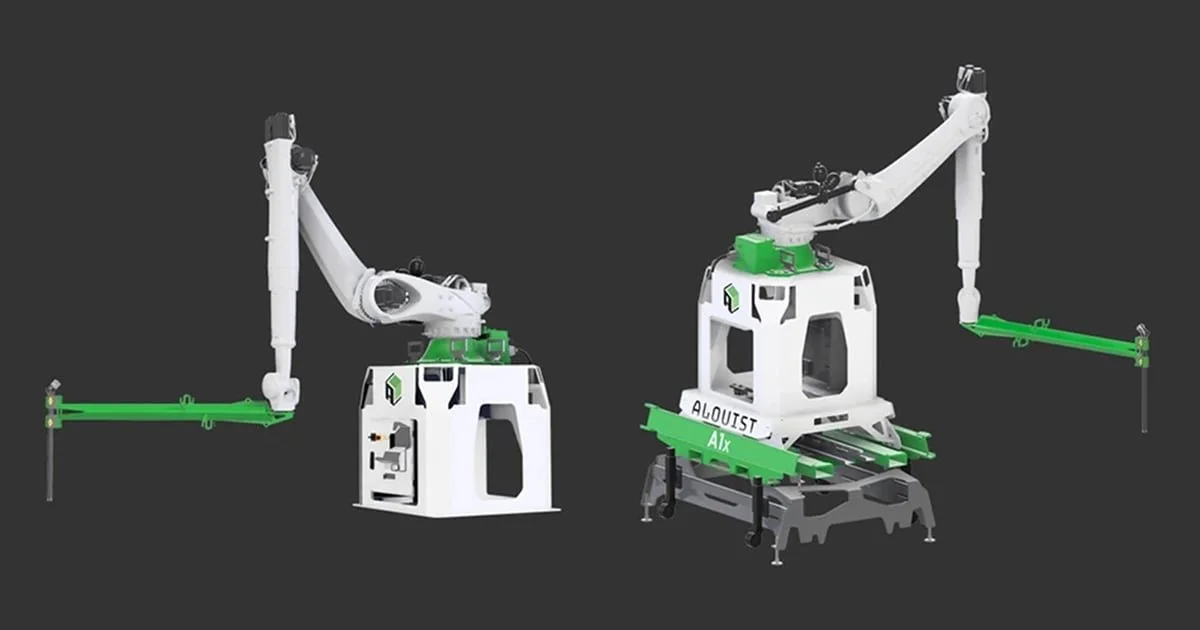
According to Designnews, the robotics landscape is being reshaped by a move toward democratization. By leveraging open-source architectures and modular components, technology companies are enabling users to build sophisticated automation solutions without requiring massive enterprise budgets.
Modular platforms and open-source accessibility
One of the primary drivers of this shift is the emergence of customizable desktop systems. For example, Tobor Robotics has introduced an open-source platform that allows engineers and makers to combine robotic arms, motion platforms, sensors, and actuators into bespoke configurations. This modularity supports a wide range of applications, including CNC design work, rapid prototyping, and assembly line assistance.
By providing the underlying architecture for free or at low costs, these platforms allow smaller manufacturers to automate complex workflows that were previously only available to large corporations with significant capital. The focus is on high-precision automation that can be tailored to specific niche tasks rather than one-size-fits-all industrial applications.
AI integration and industrial scaling
While small-scale modularity grows, heavy industry leaders are integrating advanced AI to solve high-stakes manufacturing problems. GFT Technologies has deployed robotic arms capable of both detecting and removing defective automotive parts in real time. This is a critical advancement for the automotive sector, where a single vehicle recall can cost manufacturers more than $500 per unit.
Other significant advancements include:
- Dürr's fourth-generation EcoRP4 painting robot, which uses an asymmetric architecture to reach difficult interior areas of vehicles.
- Ultra-lightweight cobots from companies like FANUC and ABB that can be deployed in minutes without specialized programming.
- High-payload systems designed to bridge the gap between traditional collaborative robots and heavy industrial machines.
Strategic partnerships and market expansion
The growth of the cobot market is projected to reach a 20% annual expansion rate through 2028, according to estimates from ABB Robotics. This momentum is being fueled by strategic alliances between industry giants. Partnerships involving companies such as Aptiv, Comau, Flex, Teradyne Robotics, and Siemens are accelerating the deployment of sophisticated automation across the semiconductor and electronics sectors. These collaborations ensure that innovations in AI and modular hardware reach diverse manufacturing environments quickly.
The convergence of open-source flexibility and high-end AI capabilities is creating a multi-tiered robotics ecosystem. This allows for a seamless transition between hobbyist experimentation, small-scale production, and massive industrial automation, ultimately lowering the barrier to entry for advanced technology across all sectors.