 EVERYTHING


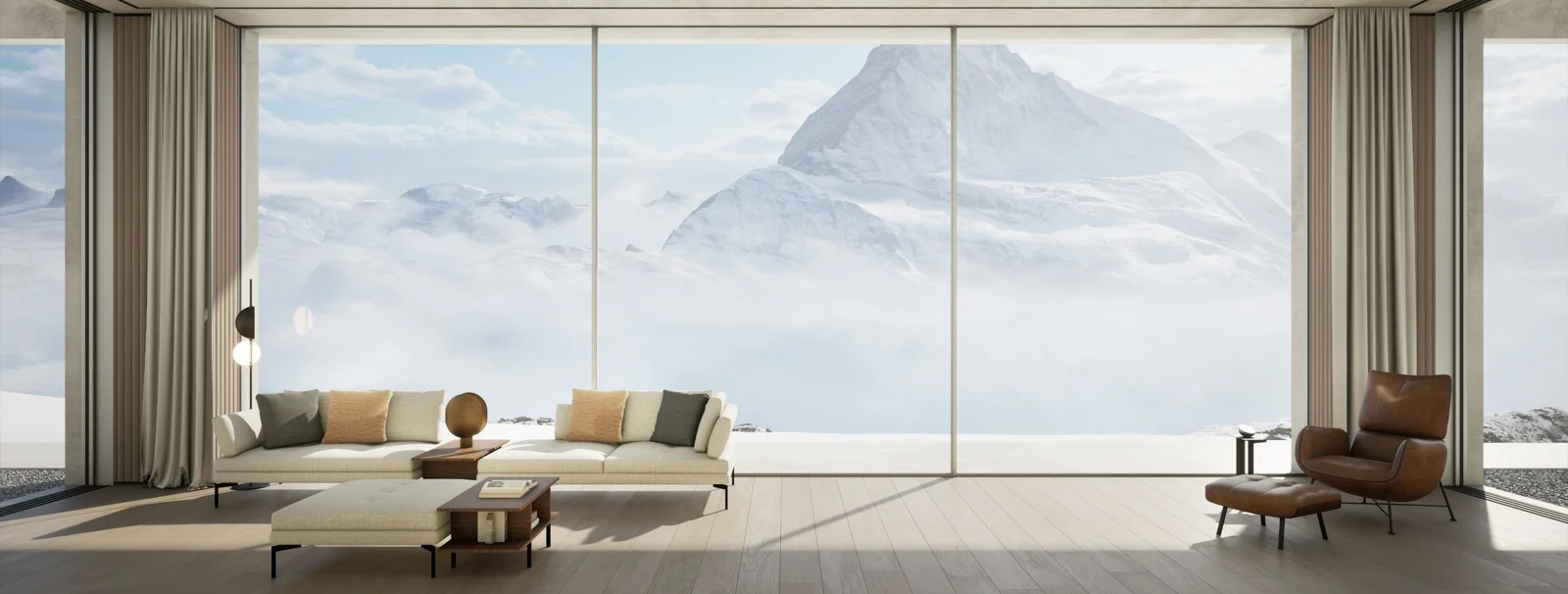
According to Wallpaper, Oppenheim Architecture has unveiled a minimalist virtual house designed in collaboration with Sky-Frame, the Swiss specialists known for frameless doors and windows. The project serves as an immersive digital experience that allows users to explore high-end design aesthetics across two vastly different geographical settings.
A study of seamless connectivity
The residence is characterized by a long, linear layout featuring a pared-down aesthetic composed of sculptural timber and concrete. Because the project exists in a virtual space, it functions as an "infinite" design, allowing for creative exploration that would be impossible with traditional site constraints. The primary focus of the structure is its seamless glazing, which highlights the manufacturing capabilities of Sky-Frame.
Visitors to the digital experience can toggle between two distinct environments:
- A sun-drenched beach scene in Miami, emphasizing warmth and coastal light.
- A snowy mountain peak featuring the Matterhorn in the distance, highlighting cold-climate durability.
- An abstract exploration of how architectural forms interact with varying natural landscapes.
Bridging the gap between digital and physical
The initiative was designed to provide a "try-before-you-buy" opportunity for contractors, architects, and the general public. By booking private viewings, stakeholders can observe how Sky-Frame products behave within a high-concept architectural framework. "The brief was to create an experience that captures the essence of Sky-Frame: openness, continuity and a seamless connection between inside and outside," said Andrea Zürcher, CMO at Sky-Frame.
From a design perspective, the project prioritizes structural discipline over site-specific details. The studio focused on hiding services and quieting the structure so that the window frames serve as the primary transition to the outdoors. This approach allows the house to feel integrated into any location while maintaining its core architectural identity.
By leveraging advanced digital tools, the collaboration demonstrates how virtual worlds can provide emotional insights into spatial design. The project ultimately serves as a showcase for how technology can expand the boundaries of traditional residential architecture and marketing.