 EVERYTHING


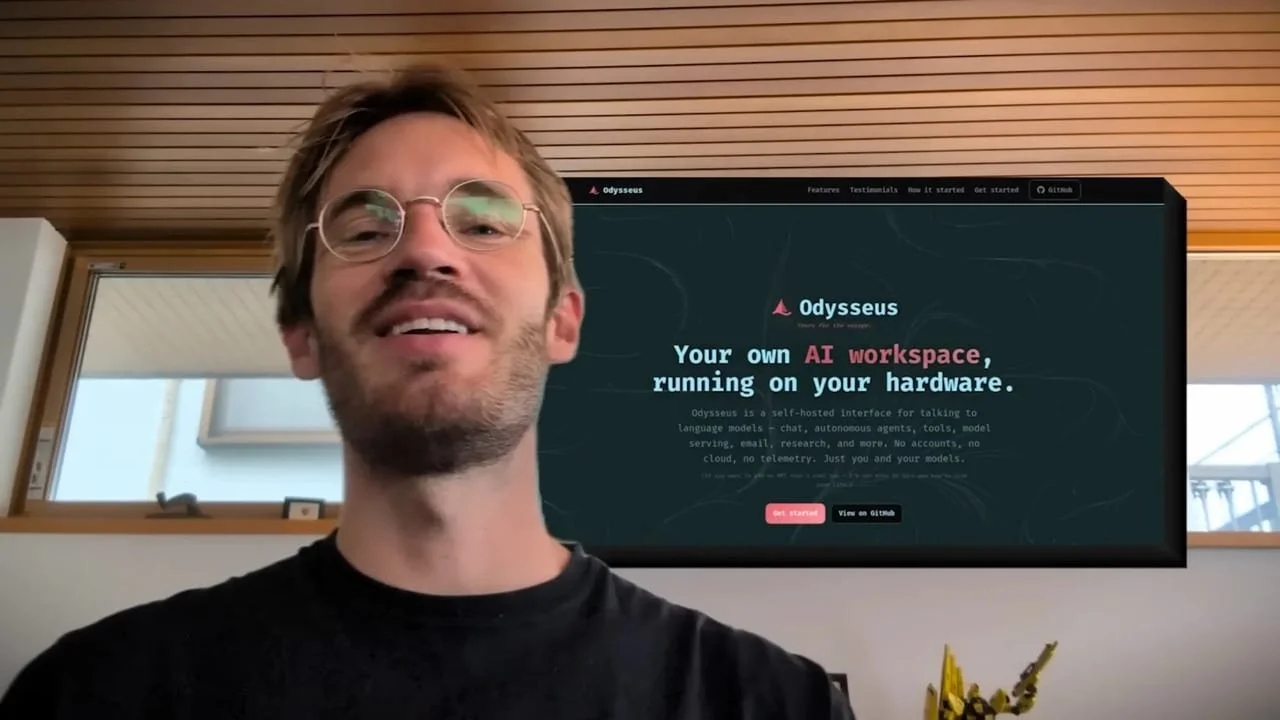
PewDiePie has introduced Odysseus, an open-source AI workspace that fundamentally shifts the paradigm of how consumers interact with large language models (LLMs). Rather than being a new model itself, Odysseus acts as a versatile interface, allowing users to leverage various LLMs while retaining complete control over their data. According to Propakistani, the core difference between Odysseus and commercial offerings lies in its commitment to local-first operation and zero telemetry.
Local Control and Privacy Focus
Odysseus is built for users who prioritize privacy and autonomy. It supports a wide array of model serving technologies, including vLLM, llama.cpp, Ollama, OpenRouter, OpenAI, and GitHub Copilot. This flexibility enables users to run open-source models directly on their hardware or connect to external cloud APIs if preferred. The platform’s design ensures that user data—including sessions, messages, and documents—is stored locally within the project's dedicated data folder.
Advanced Functionality Beyond Basic Chat
The workspace offers capabilities far exceeding simple conversational chat. It is engineered as a comprehensive productivity suite featuring autonomous agents, deep research modes, and integrated tools. The agent feature, for instance, can execute complex tasks by utilizing several built-in skills:
- Web access and file manipulation
- Shell commands execution
- Memory recall across sessions
- Integration with MCP servers for additional tooling
Furthermore, the platform includes a robust document editor supporting Markdown, HTML, and CSV formats. It also features vision capabilities and supports various file uploads, including PDFs. For users needing to manage daily tasks, Odysseus incorporates email tools that work via IMAP and SMTP, alongside calendar synchronization using CalDAV.
Technical Requirements and Security
It is important to note that Odysseus is not a simple consumer application; it requires technical setup. The project supports Docker, native Linux, macOS, Apple Silicon, and Windows installations, though native setups require Python 3.11 or newer. While smaller systems can connect to remote APIs instead of running large models locally, the performance of local model serving depends heavily on available hardware resources like GPU and VRAM.
The project documentation issues a strong security warning, advising users to treat Odysseus akin to an admin console due to its capacity for handling shell access, file uploads, web research, and API tokens. This emphasis on user responsibility is central to the decentralized nature of the software. Ultimately, Odysseus represents a significant step toward democratizing AI by placing computational power and data sovereignty back into the hands of the end-user.