 EVERYTHING


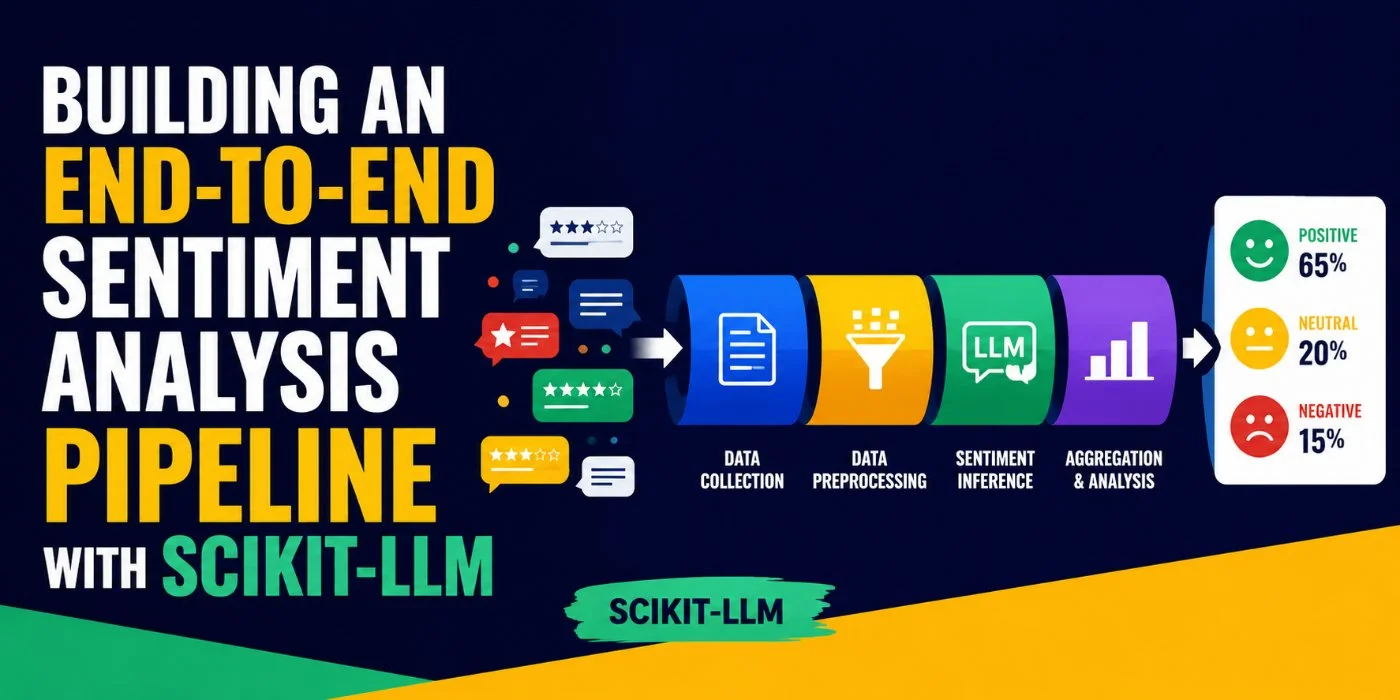
According to Machinelearningmastery, developers can now streamline the deployment of artificial intelligence by using Scikit-LLM to bridge the gap between classical machine learning and modern large language model (LLM) API calls. This development allows practitioners to maintain the structured workflow of traditional libraries while benefiting from the advanced reasoning capabilities of contemporary models.
Integrating LLMs into standard workflows
Traditionally, text classification tasks required extensive preprocessing steps, such as extracting TF-IDF frequencies or generating token embeddings before feeding data into models like logistic regression or support vector machines. However, the rise of LLMs has shifted the paradigm toward zero-shot and few-shot reasoning. Scikit-LLM addresses this shift by providing a compatible interface that allows these powerful models to function as components within an existing machine learning framework.
The implementation focuses on using open-source models served through the Groq API, which is designed for high-speed inference. By routing requests through a compatible endpoint, developers can execute sentiment analysis on large datasets without building custom infrastructure from scratch. The tutorial demonstrates this by applying these techniques to the IMDB Movie Reviews dataset, which contains approximately 50,000 instances of user-generated content.
Technical setup and pipeline execution
To build an end-to-end sentiment analysis pipeline using this method, users must configure specific environment variables and API keys. The process involves several key steps to ensure the model interacts correctly with the data:
- Installing the Scikit-LLM library via pip for local environment compatibility.
- Configuring the SKLLMConfig to point toward a Groq-compatible endpoint.
- Importing and preparing the IMDB dataset, which consists of binary labels for positive and negative sentiments.
- Executing a zero-shot classification pipeline using scikit-learn-compatible syntax.
Because many free-tier APIs have strict rate limits, the guide suggests testing the pipeline on a subset of 500 rows from the larger dataset to demonstrate feasibility. This approach highlights how developers can achieve reasonably fast inference results while maintaining the modularity of their code. By treating an LLM call as just another step in a pipeline, organizations can more easily swap models or update logic without rewriting the entire data processing architecture.