AI Read the original on Machinelearningmastery 2 min read 0

Scikit-LLM enables multi-label text classification via zero-shot

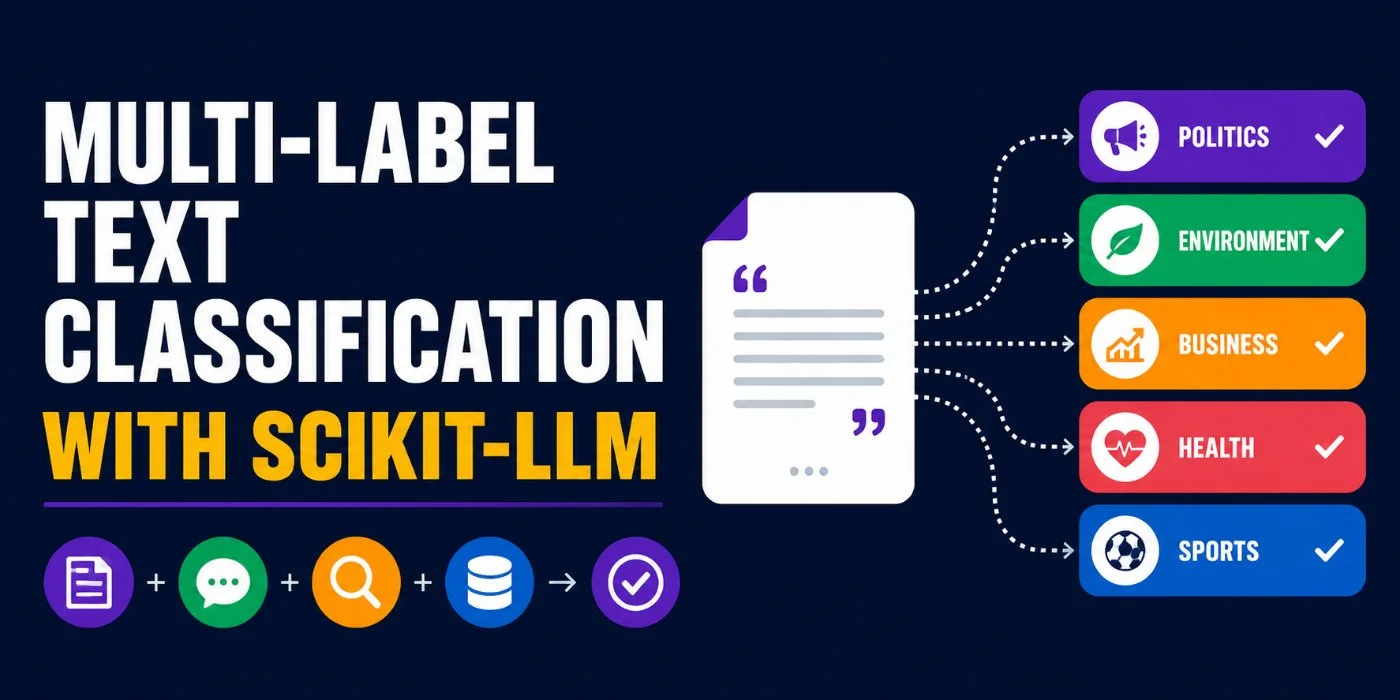
Developers can now perform complex multi-label text classification using large language models without the need for extensive labeled datasets or intensive model training. By utilizing the scikit-LLM library, users can implement zero-shot reasoning to assign multiple categories to a single piece of text simultaneously. This approach simplifies nuanced sentiment analysis by leveraging pre-trained models from providers like Groq, allowing for a familiar machine learning workflow that mimics traditional scikit-learn patterns.

Scikit-LLM enables multi-label text classification via zero-shot — ілюстрація до новини в рубриці «ШІ»
Scikit-LLM enables multi-label text classification via zero-shot — ілюстрація до новини в рубриці «ШІ» · Image source: Machinelearningmastery

According to Machinelearningmastery, the shift toward multi-label classification represents a significant upgrade over standard text categorization. While basic systems might label a review as either positive or negative, human sentiment is often contradictory. A single sentence can express both satisfaction and frustration at once, requiring a system capable of identifying multiple overlapping categories simultaneously.

Streamlining workflows with scikit-LLM

Traditionally, building multi-label classifiers required massive amounts of labeled data and complex neural network architectures. However, the emergence of scikit-LLM provides a wrapper that allows users to bypass these hurdles. It enables developers to use existing large language models (LLMs) for inference while maintaining a workflow style familiar to those who have used scikit-learn for years.

One of the primary advantages of this method is its compatibility with open-source resources. The library supports zero-shot inference, meaning the model can perform tasks it was not specifically trained on by using its inherent reasoning capabilities. This eliminates the need for a dedicated training phase for every new classification task.

Implementation via Groq and Hugging Face

The technical implementation involves configuring scikit-LLM to route requests to high-performance endpoints. By integrating with Groq, developers can access fast-inference models like Llama 3.3 without the typical quota limitations of some proprietary services. The process follows a structured pipeline:

  • Installing necessary dependencies including scikit-llm and datasets.
  • Configuring API keys and custom endpoints for the Groq provider.
  • Initializing a MultiLabelZeroShotGPTClassifier to define maximum label limits.
  • Loading real-world data, such as the go_emotions dataset from Hugging Face, for testing.
  • By using these tools, researchers can analyze nuanced datasets where a single input might trigger multiple emotional responses. This modular approach makes it easier to scale sentiment analysis across diverse industries without the overhead of manual data labeling. The integration of zero-shot reasoning into standard Python libraries marks a significant step toward making advanced AI more accessible for everyday data science tasks.

    FAQ

    What is the benefit of using scikit-LLM for text classification?
    scikit-LLM provides a wrapper that allows developers to use large language models for inference while maintaining a workflow style familiar to those who have used scikit-learn. It eliminates the need for a dedicated training phase for every new classification task by using zero-shot reasoning.
    How does scikit-LLM handle multi-label text classification?
    The library allows users to assign multiple categories to a single piece of text simultaneously. This is useful for identifying overlapping categories, such as contradictory human sentiments where a single sentence can express both satisfaction and frustration at once.
    Telegram

    Fresh news on our Telegram

    Get instant alerts for new posts in «AI»

    @proaiandevenmore