 EVERYTHING


USF Esports has undergone a significant transformation over its six-year history, evolving from a simple online gaming community into a nationally recognized collegiate program. According to Usforacle, the initiative began as an informal Discord server in 2020 before gaining institutional backing and physical infrastructure.
The Transition to Physical Infrastructure
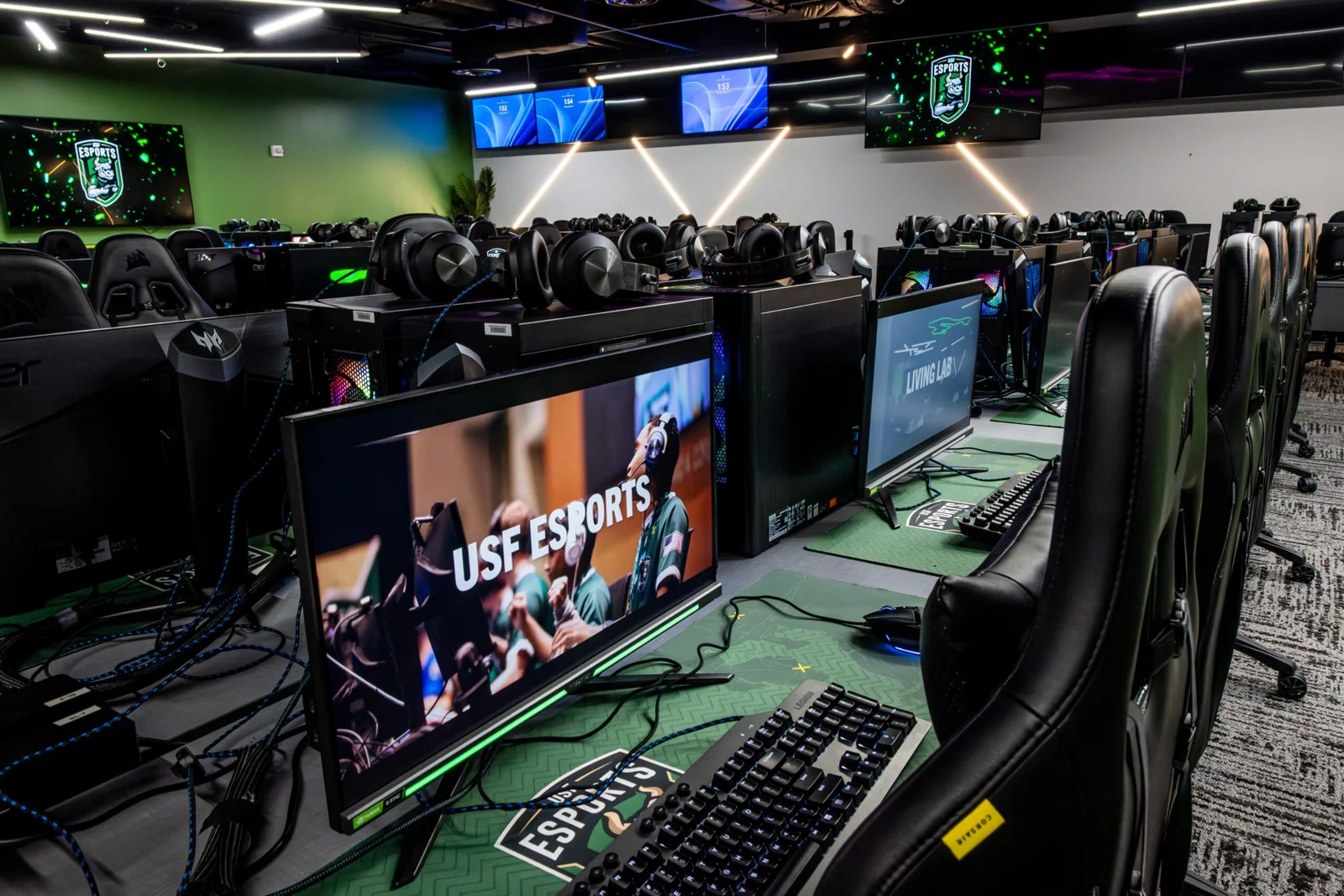
While the program initially operated entirely online, running tournaments and intramurals through its communication platform, this changed dramatically in Fall 2024. The university opened a dedicated 2,700-square-foot Esports Living Lab inside the Campus Recreation Center.
This state-of-the-art facility is equipped to support both competitive play and casual engagement, featuring:
- 42 high-performance computers
- Four console stations for gaming
- A private gaming suite
- A broadcast room designed for live events
Andrew Ross, the program’s Esports coordinator, noted that the physical space was intended to be more than just a place to play. He stressed that the lab offers students an environment where they can learn and develop skills both inside and outside of competitive gaming.
Balancing Competition with Community
Ross explained that USF adopted an unconventional strategy by building community engagement before establishing a physical space, a method that proved immediately successful. The program maintains a dual focus: fostering elite competition while remaining accessible to the general student body. While teams compete through organizations like the National Association of Collegiate Esports and recently joined the PlayVS College League, the Living Lab is designed for everyone.
Ross emphasized this inclusive approach, stating that 95% of the student population does not participate competitively. Instead, many students simply seek a casual place to play with friends. This focus on broad accessibility ensures the lab remains a central hub for campus life.
Academic Integration and Media Reach
Beyond competitive leagues and community events—which include intramural games in titles like Valorant and Electronic Arts Sports Football Club—the USF Esports program is deeply integrated into the university’s academic structure. The Muma College of Business offers two specialized three-credit courses: the Business of Esports and Digital Content for Esports.
This integration allows students to explore the business side of gaming alongside competitive play. Furthermore, the program has achieved significant media visibility; its Twitch channel is currently the third most-followed collegiate channel in North America. This reach is supported by 20 student staff members who are trained in essential broadcasting roles, including livestreaming and directing.
The successful expansion of USF Esports demonstrates a comprehensive model where grassroots passion meets institutional support, creating a robust ecosystem that benefits students academically, competitively, and socially.