 EVERYTHING


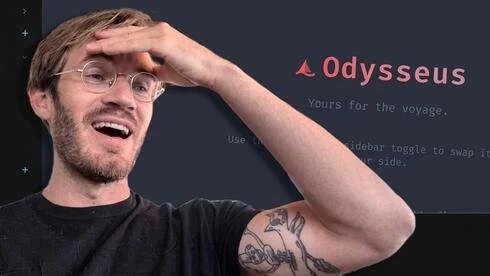
According to Ynetnews, Felix Kjellberg, better known as PewDiePie, has unveiled Odysseus, a sophisticated AI project challenging the dominance of large technology firms in artificial intelligence. The core philosophy behind Odysseus is radical privacy: instead of sending personal information—such as documents, workflow details, or questions—to distant data centers for cloud processing, the system runs complex AI models locally on the user’s machine.
Prioritizing User Privacy and Data Control
Kjellberg highlighted the inherent risk in current AI usage, noting that sharing extensive personal data with centralized services allows tech companies to build comprehensive profiles. Odysseus directly addresses this concern by ensuring users are not tracked and that there is no business model based on collecting user data. While the system maintains a private environment, it still permits users to connect external commercial models like ChatGPT or Claude through Application Programming Interfaces (APIs) if they choose.
The platform also incorporates advanced functionality beyond simple chat interfaces. It features an autonomous AI agent, built upon the open-source OpenCode project, capable of performing various independent tasks. This agent can handle routine office duties, search local files across a computer, analyze uploaded documents, and even operate specialized software tools.
Advanced Capabilities and Open-Source Integration
One notable demonstration involved Kjellberg asking Odysseus to transcribe an audio file. The autonomous agent successfully located the file, processed it using the WhisperTranscribe transcription engine, and returned the results without any further manual intervention from the user. Furthermore, the system includes a robust research capability, similar to advanced deep research tools, allowing users to gather information from multiple sources, process that data, and present the findings in a visual format.
- The platform integrates SearXNG, a search engine aggregator that compiles results from hundreds of different databases and search engines.
- It features a document editor closely resembling Claude, alongside a notes and journaling application described by Kjellberg as a 'copy-pasted Google Keep.'
- An image-editing tool is also included, which mirrors the functionality found in professional software like Photoshop.
Hardware Demands and Market Adoption
Despite its ambitious vision for decentralized AI, Odysseus faces significant hurdles related to hardware requirements. Kjellberg himself operates the system on a high-end computer equipped with eight graphics cards—a setup estimated to cost approximately $20,000. This demanding specification presents a major barrier to entry for the average consumer who typically uses far more modest computing devices.
Early public reactions have been varied. Some users report strong performance when utilizing commercial AI models via APIs, while others emphasize that running local models is heavily dependent on the specific hardware configuration of their machine. The success of Odysseus will ultimately depend on its ability to democratize powerful, private AI processing across a wider range of consumer hardware.