 EVERYTHING


A Space Mirror to Power Solar Grids at Night
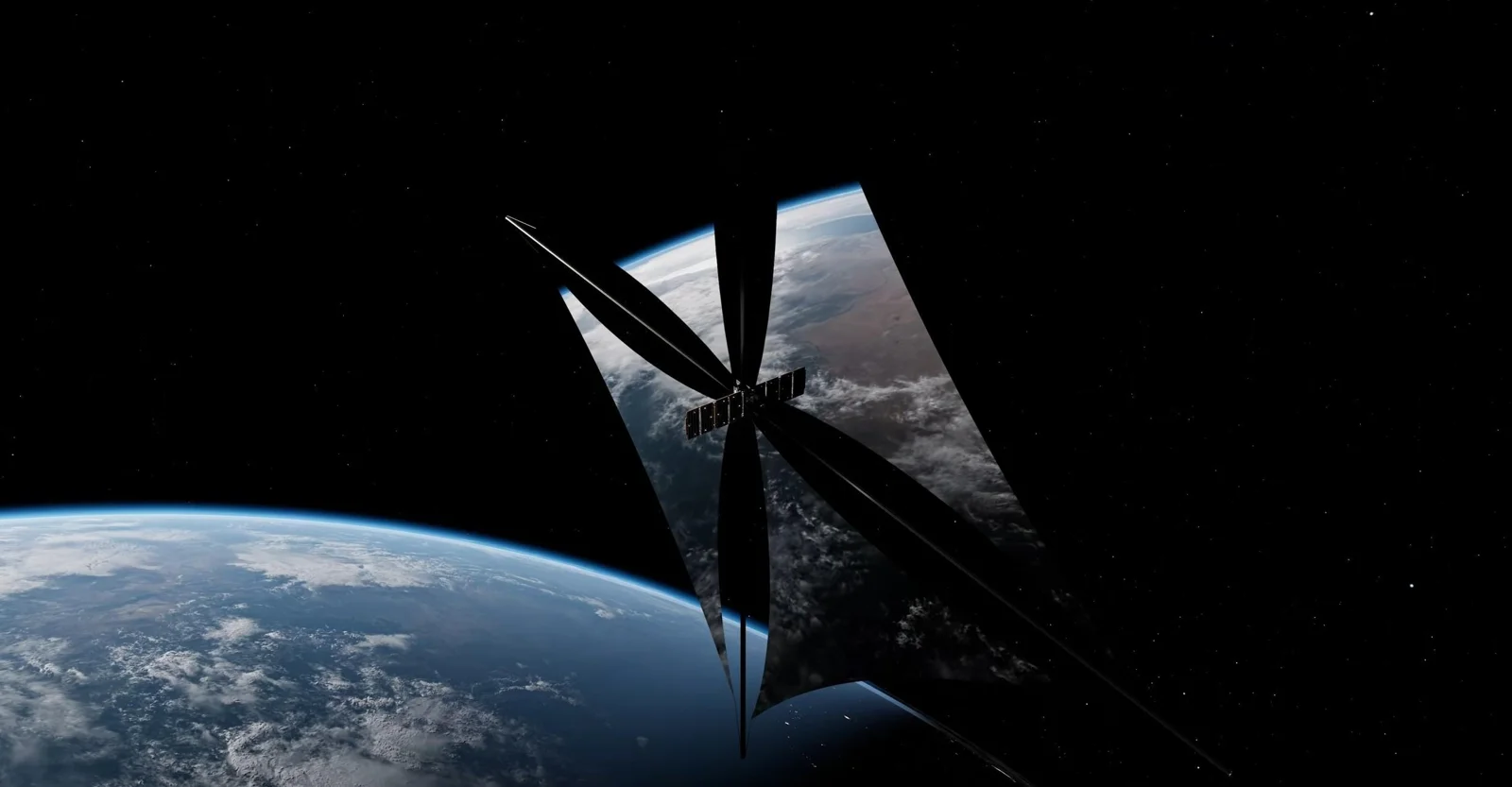
On 10 August 2026, Federal Communications Commission filings revealed that Reflect Orbital received regulatory approval to launch its first orbital test satellite, Eärendil-1. Think of the concept as installing a giant orbital flashlight in low Earth orbit: a satellite carrying an 18-square-meter mirror catches raw sunlight that would normally miss the planet and reflects it back down toward specific points on the ground.
The California startup aims to create a targeted light beam roughly 5 kilometers wide, allowing commercial solar farms to generate electricity long after midnight, while also illuminating search-and-rescue operations during nighttime disasters.
Four Times Brighter Than the Full Moon
While continuous clean energy sounds ideal, the sheer intensity of orbital reflection turns low Earth orbit into a visual hazard for researchers and wildlife. Outside the focused ground beam, the spacecraft will shine as brightly as Venus, but directly inside the targeted light path, the illumination reaches four times the brightness of a full moon. DarkSky International and the American Astronomical Society warn that scaling this technology will trigger severe operational hurdles across multiple sectors:
- Optical observatories risk losing long-exposure sky surveys due to intense atmospheric light scattering, which causes background night skies to glow three to four times brighter than normal.
- Major research facilities like the Vera C. Rubin Observatory face data degradation that could add at least $22 million in extra project costs to compensate for distorted images.
- Aviation groups, including the Air Line Pilots Association, caution that sudden orbital beam shifts could cause temporary flash blindness for commercial pilots and drivers.
- Migratory birds and nocturnal ecosystems face severe circadian disruption when artificial daylight pierces natural darkness.
Roohi Dalal, deputy director for public policy at the American Astronomical Society, warned that building the planned constellation of 50,000 satellites «is likely the end of ground-based optical astronomy.»
The Regulatory Blindspot That Endangers Stargazers
The most alarming revelation sits hidden within Reflect Orbital’s regulatory paperwork. In its filing to federal regulators, the company acknowledged that an amateur astronomer glancing at one of its mirrors through a standard 12-inch backyard telescope could suffer permanent eye damage—an intensity comparable to staring directly at a solar eclipse. Despite this warning, the Federal Communications Commission approved the test launch while explicitly declining to assess light hazard risks, stating that optical safety falls entirely outside its radiofrequency mandate.
Because no federal agency currently possesses legal authority over orbital brightness, commercial space mirror operators face no mandatory safety restrictions or public notification requirements. As dark-sky organizations and international astronomical bodies call for a moratorium on orbital reflection, our editors observe that private space commercialization has officially outpaced federal safety governance, leaving the protection of the night sky dependent almost entirely on voluntary corporate restraint.