Science Read the original on National Geographic 2 min read 0

A 237-Million-Year-Old 'Blessed Lizard' Unlocks Post-Apocalypse Earth

According to National Geographic, paleontologists excavating in northwestern Argentina have unearthed the fossilized remains of a terrifying land predator that ruled the continent 237 million years ago. The newly identified species, named Shakajlura riojanensis, reveals how terrestrial life clawed its way back after the most destructive mass extinction event in planetary history. Long before giant dinosaurs claimed the top of the food chain, this armored giant established an evolutionary blueprint that reshaped ancient ecosystems.

#paleontology #fossils #mass extinction #Triassic period #Shakajlura
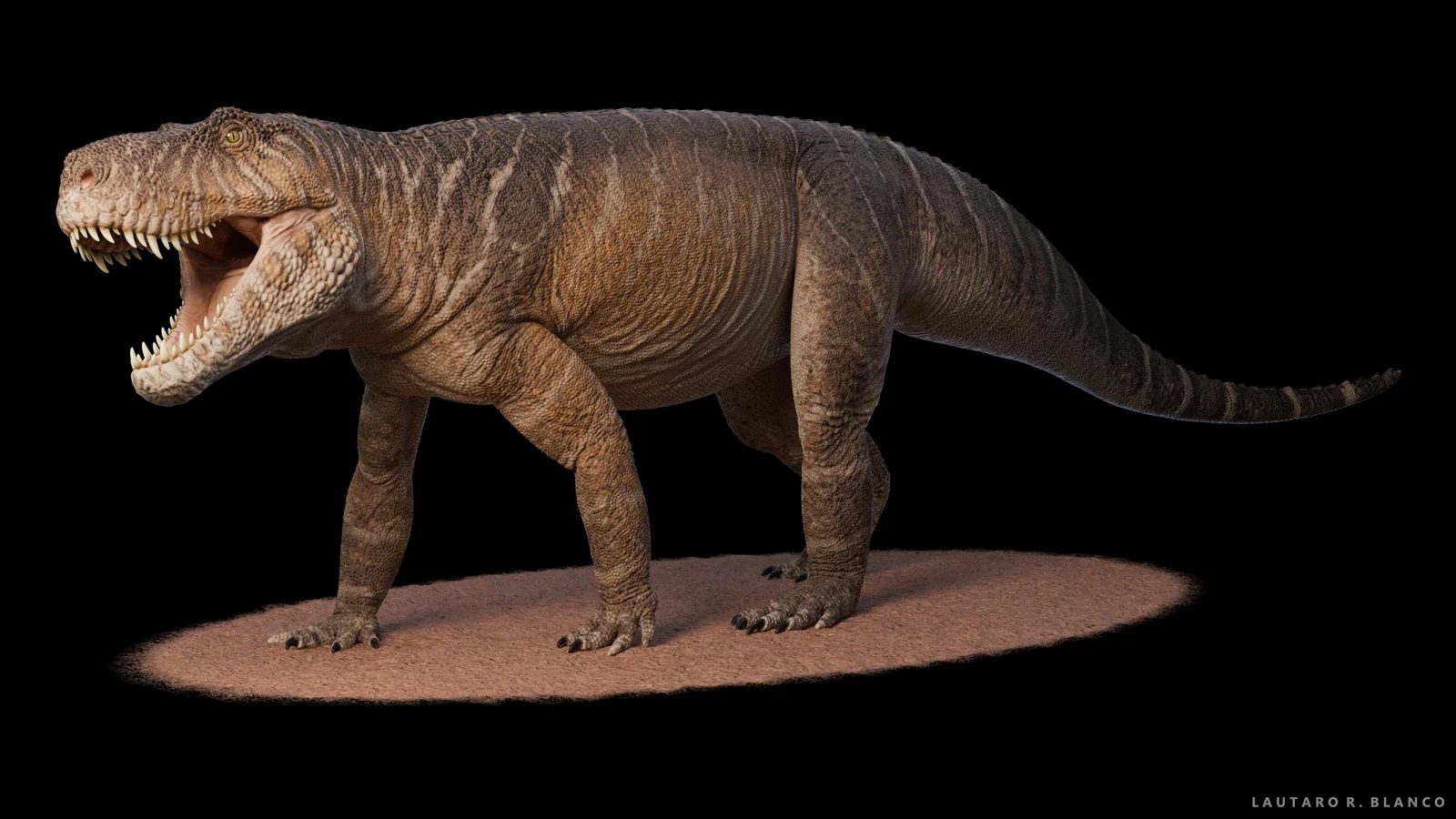
Fossilized skull and jaw fragments of the Triassic predator Shakajlura riojanensis discovered in Argentina
Fossilized skull and jaw fragments of the Triassic predator Shakajlura riojanensis discovered in Argentina · Image source: National Geographic

Fossils in La Rioja reveal a 20-foot Triassic apex predator

A team of researchers led by paleontologist Ariel F. Cardillo uncovered partial skeletal remains protruding from rock layers in Talampaya National Park, located in the La Rioja Province of Argentina. The specimen, cataloged as CRILAR-Pv 572, includes cranial fragments, jaw sections with serrated teeth, vertebrae, and a near-complete hip bone. Dating back to the Middle-to-Late Triassic period roughly 237 million years ago, the creature measured nearly 6 meters (20 feet) in length, making it one of the largest terrestrial carnivores of its era.

The species was formally described in the scientific journal Papers in Palaeontology under the name Shakajlura riojanensis. The generic name merges the Kakan word "Shakaj" (meaning "blessed") with "lura" ("lizard"), honoring the indigenous Diaguita people who historically inhabited the region.

Blade-like teeth and heavy armor defined the paracrocodylomorph

Rather than an early dinosaur, Shakajlura belongs to the paracrocodylomorphs, an ancient lineage of pseudosuchians closely related to modern crocodilians. Unlike today's aquatic alligators and crocodiles, these Triassic cousins walked upright on land, acting like the biological equivalent of living tanks outfitted with steak knives. Evolutionary analysis shows that Shakajlura filled the top ecological niche millions of years before carnivorous dinosaurs scaled up in size.

Key skeletal adaptations enabled this ancient predator to dominate its habitat:

  • Blade-shaped, serrated teeth designed to slice through thick hide and bone with surgical precision
  • An upright limb structure providing high-speed mobility across open Triassic floodplains
  • A massively constructed skull measuring nearly 1 meter in length to anchor crushing bite muscles

Ancient crocodile relatives won the evolutionary race after the Great Dying

The true significance of Shakajlura lies in the timing of its arrival. The creature emerged approximately 15 million years after the Permian-Triassic mass extinction, often called the Great Dying, which wiped out roughly 90% of all life on Earth. Scientists long assumed that terrestrial food webs remained simple and fragile for tens of millions of years following the disaster. Shakajlura proves that complex apex predator networks rebounded far faster than previously recognized.

While early dinosaurs were small, bipedal creatures scurrying underfoot, pseudosuchians seized control of the land. By reaching 6 meters in length during the Triassic period, Shakajlura demonstrated that crocodile relatives were the original rulers of post-apocalyptic Earth, establishing a dominant evolutionary blueprint that lasted until a second extinction event cleared the way for dinosaurs.

Why it matters

The identification of Shakajlura riojanensis highlights a pivotal shift in evolutionary biology, demonstrating that crocodile relatives, rather than dinosaurs, pioneered super-predator niches following planetary mass extinctions. Published in Papers in Palaeontology in August 2026, the 6-meter fossil specimen from Argentina’s Chañares Formation provides global researchers with an empirical benchmark for measuring ecosystem recovery times. Understanding how apex carnivores re-established ecological stability after the Great Dying offers essential insights for modern conservation biology as climate pressures alter current food webs. The findings reinforce how key anatomical innovations, such as upright posture and specialized dentition, allow specific animal clades to rapidly monopolize vacant environmental roles.

FAQ

What is Shakajlura riojanensis?
Shakajlura riojanensis is a newly discovered species of paracrocodylomorph, an ancient land-dwelling crocodile relative. It lived roughly 237 million years ago during the Triassic period in present-day Argentina, reaching lengths of nearly 6 meters and acting as an apex carnivore.
Was Shakajlura riojanensis a dinosaur?
No, Shakajlura was not a dinosaur. It belonged to the pseudosuchian lineage, making it more closely related to modern crocodilians. During the Middle Triassic, these crocodile relatives walked upright on land and dominated terrestrial ecosystems while early dinosaurs remained small.
Why is the discovery of Shakajlura riojanensis significant?
The discovery shows that complex land ecosystems recovered faster than previously thought following the Permian-Triassic mass extinction. By filling the apex predator role 15 million years after the catastrophe, Shakajlura demonstrates how crocodile relatives initially won the evolutionary race for terrestrial dominance.