Science Read the original on Nature World News 2 min read 5

A 518-Million-Year-Old Sea Bug Unlocks the Origin of Spider Fangs

According to Nature World News, high-resolution X-ray scans of a 518-million-year-old marine fossil from China have uncovered the earliest known anatomical ancestor of modern spider fangs. The tiny organism, known as Urokodia aequalis, preserved delicate soft tissue that bridges a long-standing gap in arthropod evolution. Researchers found microscopic pincer-like limbs hiding just behind the creature's eyes, offering fresh insights into how ancient sea creatures eventually crept onto land with lethal weapons.

#paleontology #evolution #fossils #spiders #Urokodia
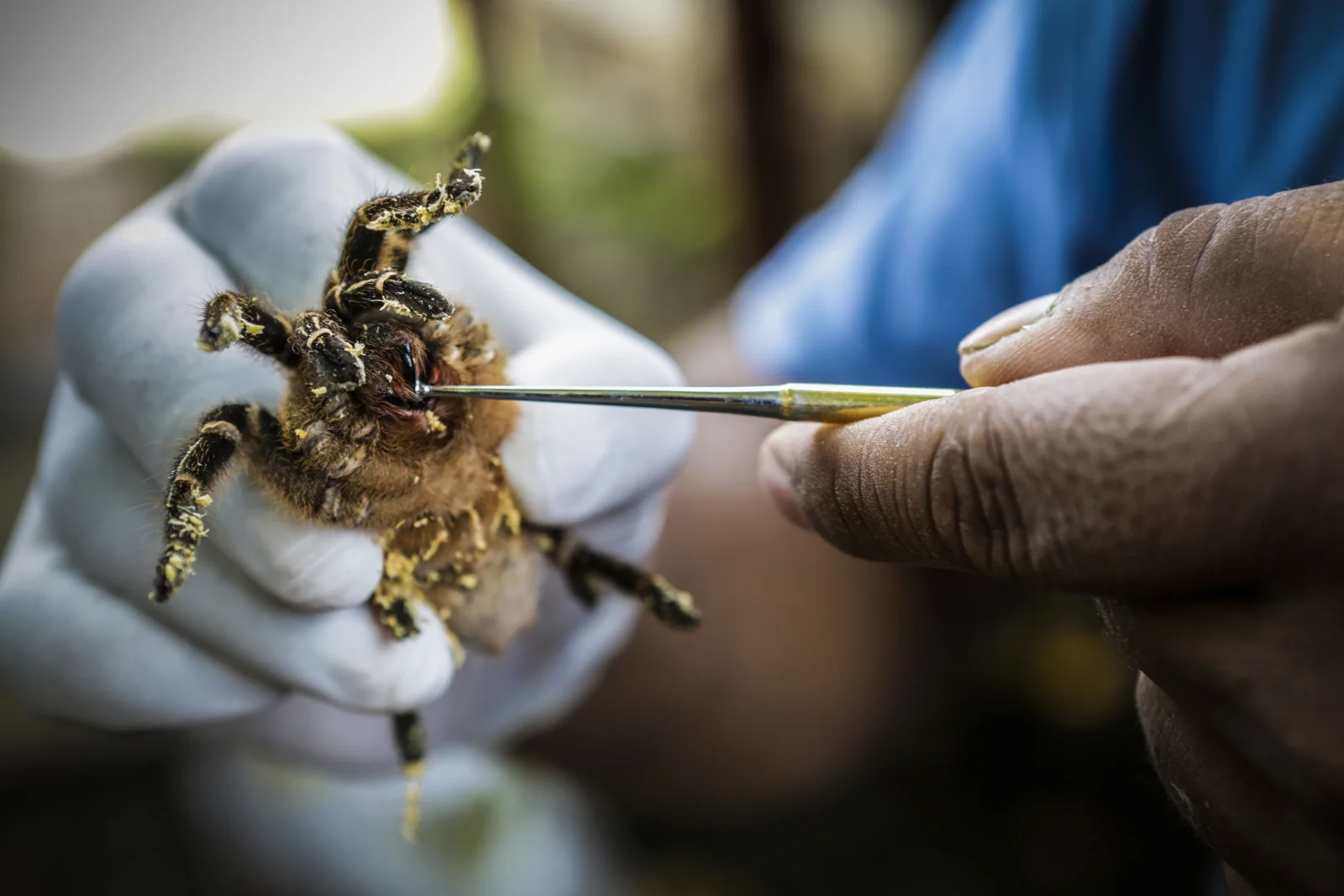
Detailed close-up view of spider fangs and chelicerae against a dark background
Detailed close-up view of spider fangs and chelicerae against a dark background · Image source: Nature World News

Ancient Shrimps Hiding Modern Weapons

A team of international paleontologists examining rock layers from the Chengjiang formation in Yunnan, China, has identified the earliest physical precursor to spider fangs. The creature, a two-centimeter marine arthropod called Urokodia aequalis, was previously thought to be an evolutionary side branch.

By probing beneath the rock surface without breaking the specimen, researchers discovered delicate soft tissues that survived 518 million years of geological pressure. The discovery published in Nature rewrites the timeline for when specialized feeding claws first appeared in marine ecosystems.

Peering Inside a Half-Billion-Year-Old Specimen

Using high-resolution X-ray microtomography, scientists scanned the fossil down to microscopic cellular outlines. Instead of a simple swimmer, the 3D reconstructions revealed complex head structures tucked behind its stalked eyes.

The scans pinpointed key anatomical features that connect this primitive swimmer to modern arachnids:

  • Two specialized pincer-like appendages known as chelicerae, positioned directly in front of the mouth.
  • Preserved respiratory structures resembling book gills along the lower body segments.
  • Flexible jointed leg bases engineered for gripping slippery seabed prey rather than open-water swimming.

According to lead researchers, these structures demonstrate that the blueprint for arachnid hunting gear developed long before animals set foot on dry land.

From Ancient Seabed Predators to Terrestrial Hunters

The true significance of Urokodia lies in how it resolves a crucial evolutionary paradox. For decades, biologists struggled to explain how simple sensory antennae in early ancestors transformed into the venom-injecting fangs seen in spiders today.

The 3D model shows that the front-most limbs did not transform all at once. Instead, Urokodia used its primitive pincers like microscopic pliers to slice food, proving that feeding mechanics evolved before venom delivery systems. As these marine creatures eventually adapted to land millions of years later, these very same pincers shrank and sharpened, giving birth to the fangs and claws that dominate terrestrial ecosystems today.

Why it matters

Advanced 3D imaging technology is fundamentally transforming paleontology from a destructive, hammer-and-chisel science into a non-invasive digital discipline. By using high-resolution X-ray microtomography, researchers at institutions like Yunnan University can inspect sub-millimeter anatomical features preserved in 518-million-year-old rocks without destroying priceless specimens. This non-destructive methodology allows global research teams to digitize fragile fossils, share high-definition 3D models across international borders, and resolve long-standing evolutionary debates. As advanced imaging techniques become cheaper and more accessible, natural history museums and academic laboratories worldwide are systematically re-scanning historical collections, uncovering hidden anatomical structures that traditional optical microscopes missed for over a century.

FAQ

What is Urokodia aequalis?
Urokodia aequalis is a small, two-centimeter marine arthropod that lived 518 million years ago during the Cambrian period. Discovered in Yunnan, China, it represents one of the earliest known evolutionary relatives of modern arachnids.
How did scientists examine the fossil without damaging it?
Researchers used high-resolution X-ray microtomography to scan beneath the rock surface. This non-invasive 3D imaging technique allowed paleontologists to map delicate internal soft tissues and microscopic limbs without destroying the fossil specimen.
Why is this discovery important for understanding spider evolution?
The fossil preserves the earliest known precursors to chelicerae, the pincer-like limbs that eventually evolved into spider fangs. It proves that predatory feeding tools developed in ocean environments long before arachnid ancestors moved onto land.