 EVERYTHING


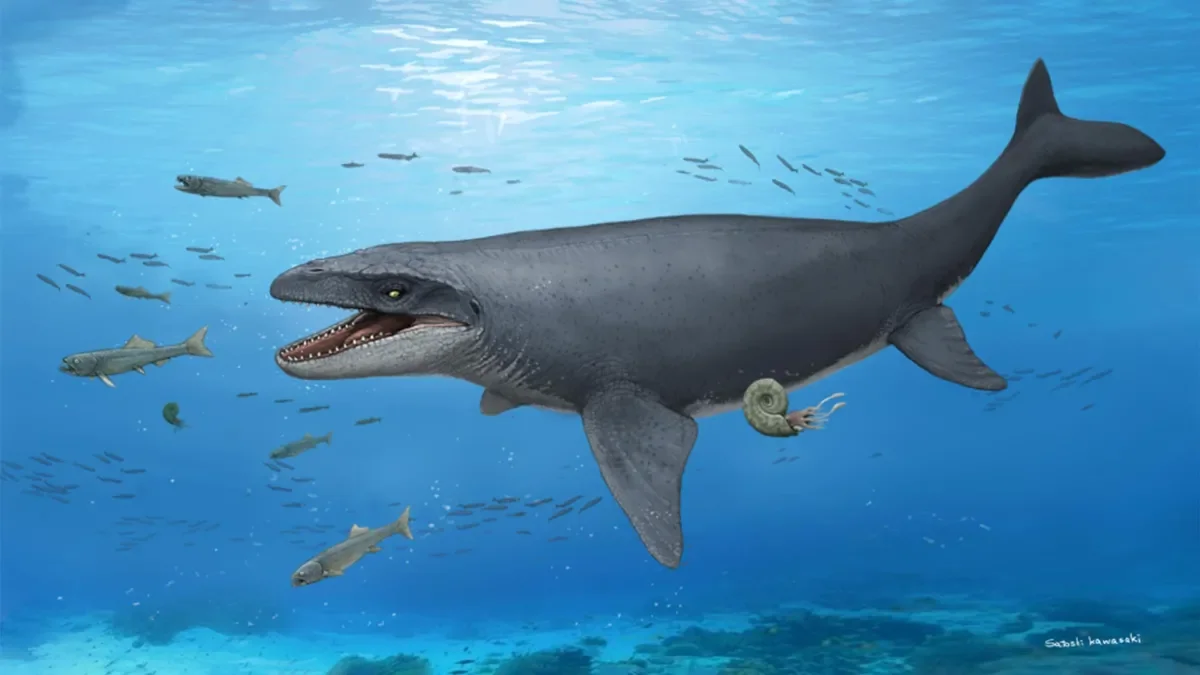
Re-examining a 1990s Discovery in Osaka
Between 1990 and 1992, fossil collectors in Sobura, located within Kaizuka City in Osaka Prefecture, pulled several heavy rock slabs containing prehistoric marine remains from the ground. The specimens were deposited at the Natural History Museum in Kishiwada City, where unworked sections of the rock remained encased in stone for over three decades.
Recently, a collaborative team led by researchers from Okayama University of Science returned to these stored slabs to complete the delicate process of rock preparation. As technicians carefully chipped away the outer matrix, they uncovered four fossilized skull bones that had been completely overlooked during the initial excavation.
Unlocking the Jaw Anatomy of an Ancient Apex Predator
Mosasaurs were giant marine reptiles that ruled the world's oceans during the Late Cretaceous period, roughly 98 to 66 million years ago. Imagine a creature shaped like a monitor lizard on steroids, equipped with powerful paddle-like flippers, a muscular swimming tail, and jaws built for tearing through armored prey.
The newly extracted bones include a pivotal piece of anatomical evidence that paleontologists have sought in Japanese waters for decades. The research team identified several key anatomical elements embedded within the Osaka specimen:
- The premaxilla, representing the frontmost tip of the upper jaw, which is the first confirmed upper jawbone of its kind ever identified in a Japanese mosasaur fossil.
- The basisphenoid bone, a sturdy structural element located near the base of the braincase that helped anchor the creature's massive head.
- Two additional cranial fragments that provided structural support for the jaw hinge mechanism.
Unusual Horns Point to an Undiscovered Species
When paleontologists originally analyzed the specimen in the early 1990s, the global library of mosasaur fossils was far too sparse to determine its exact identity. Decades of worldwide discoveries have since filled in the evolutionary tree, allowing the team to compare the braincase structures directly against cataloged species across North America and Europe.
The analysis revealed a striking biological anomaly. The basisphenoid bone features short, outward-projecting horns and lacks the central groove on its lower surface typical of known mosasaurs. These distinctive anatomical quirks suggest the Osaka specimen may represent an entirely new species of marine predator that occupied a unique ecological niche in the ancient northwestern Pacific, proving that museum archives can still hide ocean giants waiting to be named.