 EVERYTHING


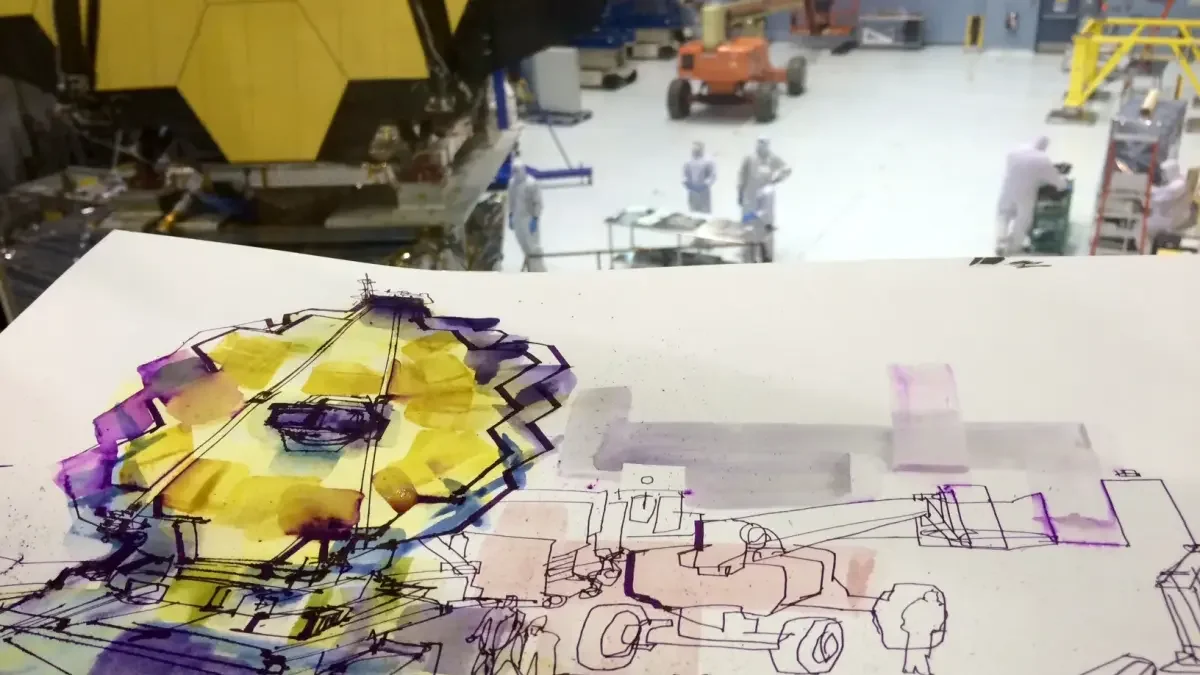
Overexposed light floods the cosmos' sharpest mirror
Think of the James Webb Space Telescope as a super-sensitive night-vision camera. Nobel Laureate John C. Mather famously noted that Webb can pick up the thermal signature of a single bumblebee as far away as the Moon. That extreme sensitivity makes it perfect for spotting the dimmest, oldest galaxies formed shortly after the Big Bang. However, pointing that same eye at Jupiter or Saturn is like shining a high-beam flashlight into night-vision goggles—the sensors overflow with photons, leaving astronomers with washed-out, blurry frames.
A code patch dispatched one million miles into deep space
To prevent detector saturation, astronomers previously had to crop their field of view down to a tiny box or apply dense optical filters, discarding vast amounts of valuable data. Now, engineers at the Space Telescope Science Institute in Baltimore are rolling out a clever software fix called "superstripe". Instead of staring at a glaring planet in one long exposure, the telescope's camera sweeps across the target, collecting thin image slices in tiny fractions of a second before the glare can build up.
This rapid scanning method works much like a camera shutter operating in high-speed burst mode. By capturing quick vertical stripes and stitching them together digitally, the telescope avoids blinding its detectors while preventing atmospheric cloud shifts on gas giants from smearing the final picture. STScI scientist Bryan Holler explained the challenge when reflecting on early test shots: «The nicer Jupiter images that are out there from people who really know how to do image processing, they were able to actually deblur some of those images using the data.» But as Holler noted, software sharpening cannot restore light that was never recorded in the first place.
Expanding deep space capabilities without a physical servicing mission
Because Webb sits at the second Lagrange point—roughly 1.5 million kilometers from Earth—astronaut repair missions like those sent to Hubble are out of the question. Updating the observatory's software remotely unlocks massive observational advantages without touching a single piece of hardware:
- Capturing targets more than 100 times brighter than previously achievable without risking sensor damage
- Recording rare stellar occultations, where planets or moon systems pass in front of distant stars, to measure atmospheric density
- Stitching together seamless panoramic maps of giant planet storm systems and auroral rings in crisp detail
Lifting the cosmic veil on nearby lava worlds
The true payoff of this software patch extends far beyond our own solar system. By conquering extreme stellar glare, Webb will soon analyze alien worlds orbiting bright host stars that were previously off-limits. Astronomers plan to use the superstripe readout method during Webb's next observing cycle starting in July 2027 to inspect exoplanets like 55 Cancri e, an infernal lava world located 41 light-years away. By transforming how Webb handles blinding light, a simple software update sent across deep space has effectively turned a deep-sky telescope into an unprecedented close-up planetary explorer.