 EVERYTHING


An Unlikely TikTok Clip Triggers a Deep Underground Hunt
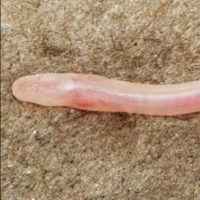
In 2024, a brief video clip uploaded to TikTok captured a strange sight near the border between India and Nepal: a tiny, worm-like pink fish emerging from a village handpump. While most social media users scrolled past the clip, zoologists at the Thackeray Wildlife Foundation in Mumbai immediately paused. No subterranean—or stygobitic—fish species had ever been recorded living beneath the vast Indo-Gangetic Plain, leaving researchers to question whether the creature was an anomaly or a hidden resident of deep groundwater networks.
Determined to solve the mystery, an international expedition comprising scientists from India and China traveled to Bihar. Fieldwork in subterranean biology is notoriously difficult because target habitats lie hidden beneath dozens of meters of sediment. To capture specimens, the team had to secure permission from local landowners and manually operate handpumps for hours, filtering massive quantities of groundwater in hopes of retrieving another live creature.
Pumping 2,500 Liters of Groundwater for a 4-Centimeter Specimen
The search demanded relentless manual labor. The researchers extracted approximately 2,000 liters of water before their first specimen emerged, though the fragile organism sustained fatal damage during the pumping process. Undeterred, the team pumped another 500 liters from the exact same borewell, successfully retrieving a second, fully intact specimen measuring roughly 4 centimeters in length.
Detailed anatomical examination revealed extraordinary evolutionary adaptations for life in perpetual dark:
- Skin-covered vestigial eyes that render the creature completely blind
- A translucent, unpigmented body through which internal organs remain visible
- An complete absence of ribs combined with a unique spine structure of 64 vertebrae
Advanced micro-CT scanning conducted at the Shanghai Synchrotron Radiation Facility confirmed that the creature belonged to the earthworm eel family Chaudhuriidae. However, genetic analysis revealed a 20 percent divergence in mitochondrial DNA from all known relatives, establishing it as an entirely distinct genus.
«The unique morphology of the fish in the video, and the fact that there are no known stygobitic fish from the region, motivated us to track down the species,» the research team reported. Lead investigator Akshay Khandekar noted that obtaining permissions and pumping 2,500 liters of water by hand proved to be the most grueling phase of the discovery.
Unlocking the Dark Aquifers of the Indo-Gangetic Plain
The team officially named the new species Gangaichthys indonepalicus—translating to "fish of the Ganges from India and Nepal." Beyond adding a new branch to the tree of life, the discovery shatters long-held assumptions about the biological sterility of deep alluvial aquifers in northern India. For decades, scientists assumed the intense mud and silt of the Gangetic Basin prevented complex aquatic organisms from colonizing underground water layers.
Finding a specialized subterranean predator proves that complex, self-sustaining ecosystems exist deep beneath the feet of hundreds of millions of people. It also highlights an essential shift in modern taxonomy: viral digital content can alert scientists to hidden ecological treasures before habitat destruction or groundwater depletion wipes them out forever.