 EVERYTHING


A Gutless Worm Redraws the Boundaries of Animal Nutrition
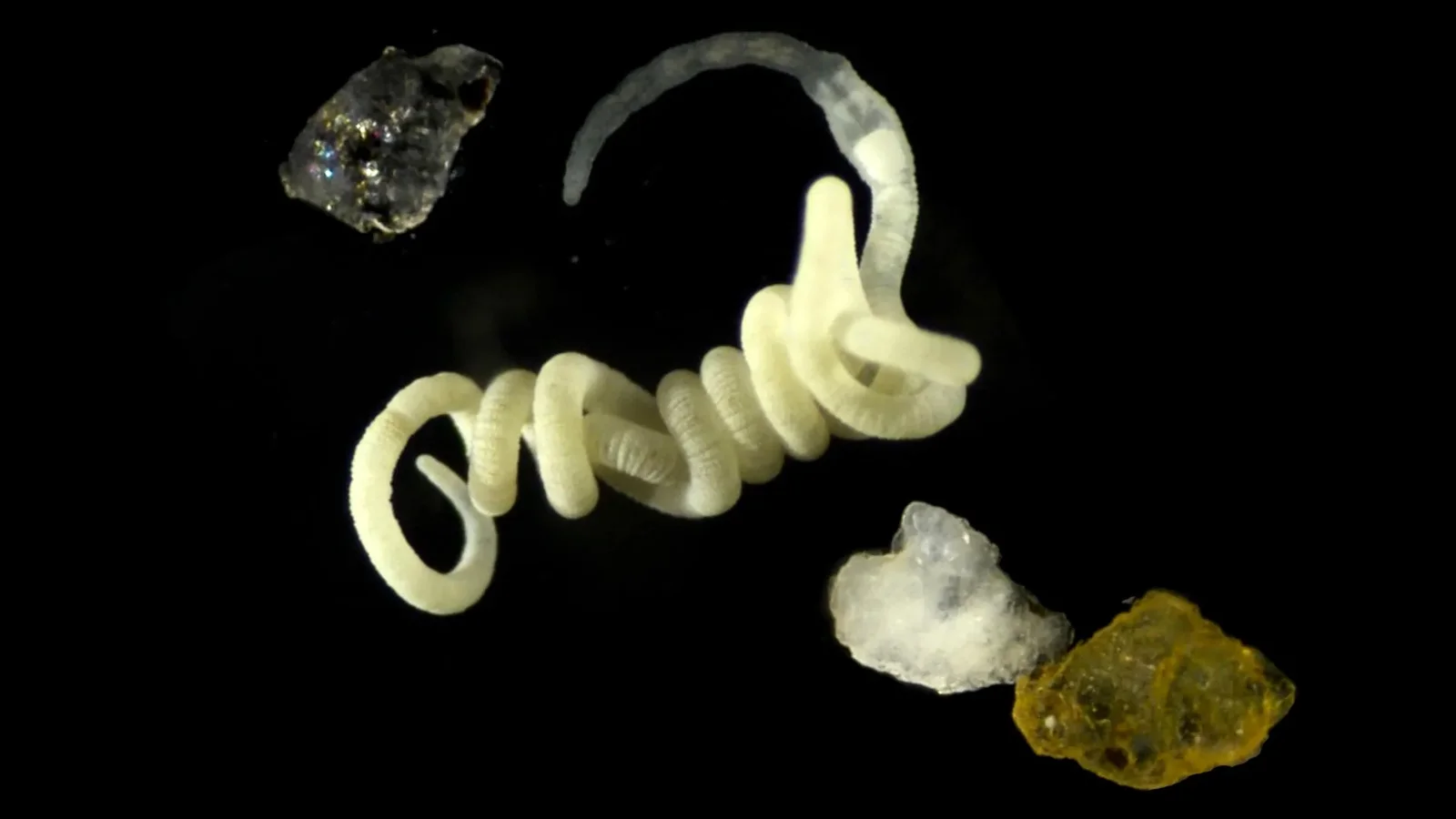
On 17 August 2026, a team led by researchers Caroline Zeidler, Nicole Dubilier, and Maggie Sogin from the Max Planck Institute for Marine Microbiology published findings in Nature Ecology & Evolution showing that animals actively digest microbial plastics. The investigation began with Olavius algarvensis, a two-centimeter marine worm residing in Mediterranean seafloor sediments. Lacking both a mouth and a digestive tract, the worm relies entirely on bacterial symbionts living beneath its skin to process nutrients and manage waste.
One of these bacterial partners stores carbon in the form of polyhydroxyalkanoates (PHAs)—natural bioplastics that serve as microscopic batteries. Using high-resolution imaging and biochemical analysis, the researchers discovered that the worm produces a specialized enzyme precisely where it consumes its bacterial partners, breaking down stored PHA into usable metabolic fuel.
From Seafloor Sponges to Earthworms: A Shared Molecular Toolkit
What scientists initially assumed was a unique survival trick of a single marine worm turned out to be a widespread evolutionary strategy across the animal kingdom. When the research team analyzed genomic databases across diverse animal lineages, they uncovered similar PHA-degrading enzymes hidden in species across nine distinct phyla.
To verify that these genetic codes were functional rather than evolutionary relics, the team produced and tested the enzymes in the laboratory. They confirmed active PHA degradation in several distantly related animals:
- Sponges filtering ocean water on tropical reefs
- Earthworms aerating soil in terrestrial ecosystems
- Springtails processing decaying organic litter on the forest floor
This widespread capability demonstrates that animals have evolved to utilize microbial bioplastics as an energy source, bridging a long-overlooked link between single-celled producers and multicellular consumers.
Industrial Bioplastics Meet an Ancient Global Carbon Highway
The realization that multicellular life has been consuming PHAs for hundreds of millions of years alters our understanding of the global carbon cycle. For decades, environmental models treated microbial carbon reserves as locked vaults accessible only to other single-celled organisms.
This discovery also arrives at a critical moment for industrial materials science. As global manufacturing scales up PHA production for biodegradable packaging, medical sutures, and agricultural beads, scientists must evaluate how these materials break down in nature. Rather than relying solely on bacterial decay in marine and soil environments, ecosystems deploy an entire army of animal species equipped to digest these polymers. Co-corresponding author Maggie Sogin noted: «Animals have probably been feeding on nature's original bioplastic for hundreds of millions of years—we are only discovering it now.» This hidden food chain confirms that natural bioplastics fit seamlessly into existing biological cycles, guiding the future design of genuinely eco-friendly materials.