 EVERYTHING


The contest sought visionary ideas that were simultaneously grounded in real urban opportunities, echoing the foundational ambition of Daniel Burnham’s 1909 Plan of Chicago. According to Chicagotribune, World Business Chicago (WBC), the city’s economic development arm, hosted the initiative to find the next major catalyst for transforming the cityscape. The six finalists represent diverse approaches to modern urban challenges, ranging from ecological restoration to industrial repurposing.
Ecological Restoration and Green Infrastructure
One of the most nature-focused proposals is 'Green City Rising,' submitted by The Morton Arboretum. This plan aims to help Chicago fulfill its motto, “Urbs in Horto” (city in a garden), by establishing a comprehensive network of mini-forests across various city neighborhoods. Ramel, chief of staff at World Business Chicago, noted that the initiative addresses the current deficit of forest canopy amidst the dense concrete environment. By integrating these small, localized forests, the plan seeks to restore native splendor and improve urban biodiversity while making the city more livable.
Repurposing Industrial Spaces and Infrastructure
Other finalists focus on transforming existing infrastructure into vibrant civic spaces. The 'Third Frontage Initiative,' developed by Gensler and Adrian Smith + Gordon Gill, envisions a radical overhaul of Chicago’s 1,900-mile alley network. Currently used primarily for waste management, the initiative proposes converting these back passages into functional neighborhood streetscapes. This transformation would incorporate housing units within unused garages, introduce green infrastructure, and create pedestrian-friendly routes, thereby adding civic life to previously utilitarian corridors.
Creating Experiential Districts
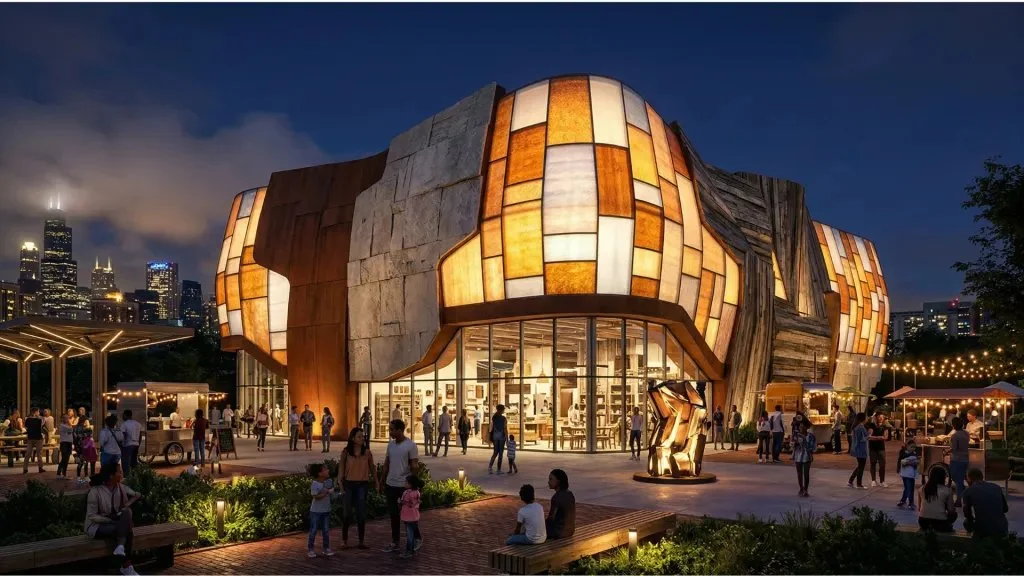
The 'Re-Loop Vision Coalition' presented a concept for an immersive "experience district." This proposal centers on creating a highly walkable area featuring unique public art—specifically 80-foot sculptures forged from crushed CTA rail steel. The district would also integrate food stalls and provide permanent homes for local salvage businesses, makers, and fabrication programs already active in the South and West sides of Chicago. This concept blends industrial heritage with modern community needs.
The Path Forward
The six finalists will showcase their detailed plans at the Chicago Cultural Center throughout the summer, allowing the public to view the designs and provide feedback on their favorites. Phil Clement, CEO of World Business Chicago, emphasized that the goal was not just abstract dreaming but identifying ideas with tangible potential for development. The contest highlights a growing trend in urban planning where sustainability, industrial reuse, and community experience are becoming central pillars of future city design.
The selection process involved a 10-member jury tasked with evaluating the submissions based on their visionary scope and practical viability within Chicago's complex urban fabric.