 EVERYTHING


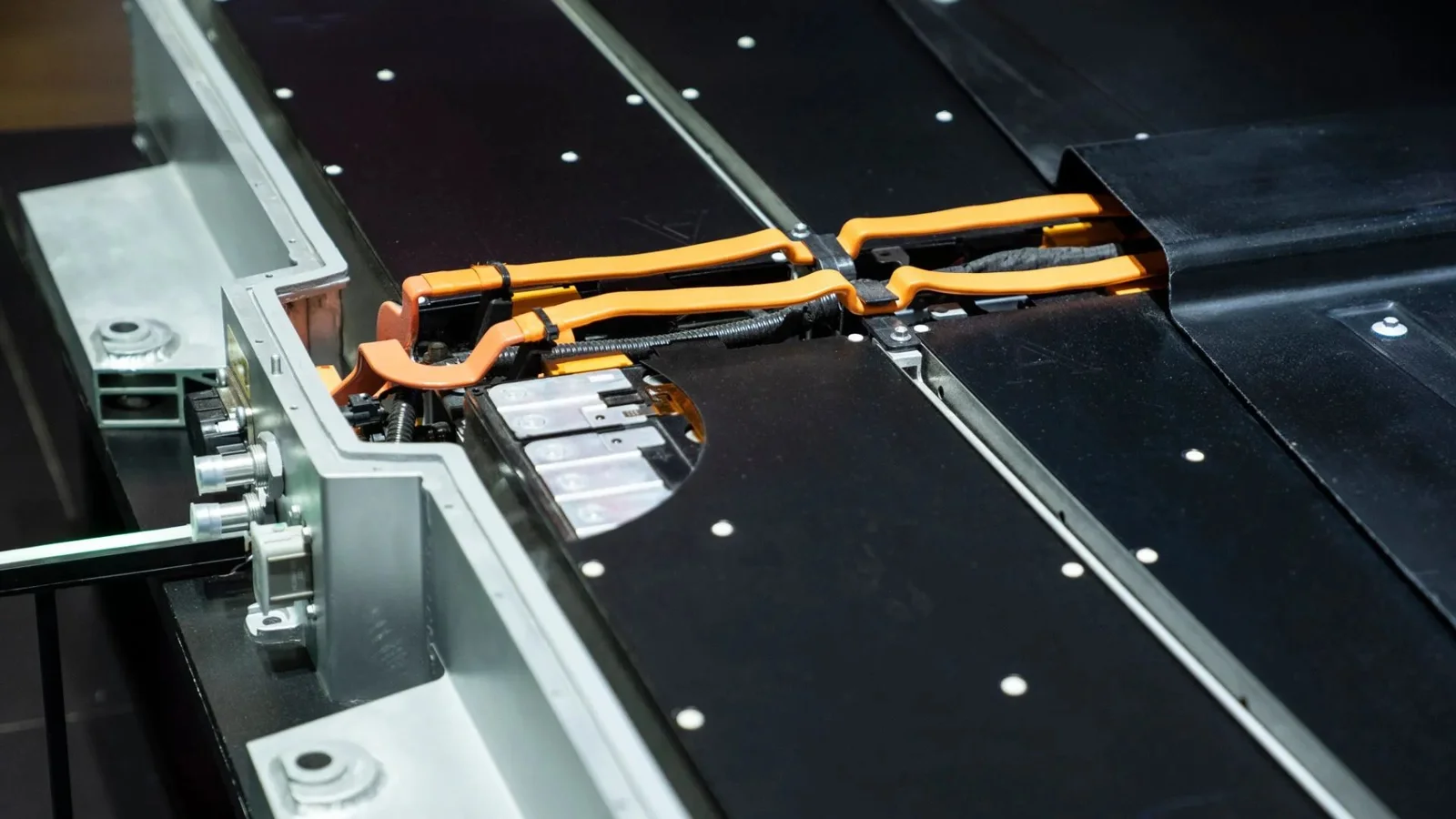
According to Interestingengineering, a collaborative team from Southeast University, HiNa Battery Technology, and Yangzhou University has successfully developed a new quasi-solid-state electrolyte. This innovative material is engineered to significantly improve the speed, longevity, and safety of sodium metal batteries (Na-metal), which are gaining traction as an affordable alternative due to sodium's widespread availability.
Addressing Core Challenges in Na-Metal Batteries
The primary hurdles facing Na-metal battery development include sluggish sodium-ion movement and interfacial instability, both of which can lead to dendrite formation—needle-like structures that cause short circuits. The researchers tackled these issues using a dual-mediator electrolyte composed of tin ions ($ ext{Sn}^{2+}$) and difluoro(oxalato)borate ($ ext{DFOB}^{-}$). This combination works to regulate the overall electrolyte structure while promoting efficient sodium ion movement.
The design achieves several key performance metrics that surpass conventional systems. The new electrolyte delivers a high sodium-ion transference number of 0.94, significantly higher than the 0.4 to 0.7 typically recorded by existing quasi-solid-state electrolytes. Furthermore, its ionic conductivity stands at $1.3 ext{ mS cm}^{-1}$.
Enhanced Ion Flow and Interface Protection
The dual-interlocked structure of the electrolyte facilitates faster ion transport. Simulations indicated that sodium-ion diffusion rates reached $16.8 ext{ Å}^2 ext{ ns}^{-1}$, which is roughly six times faster than those observed in traditional liquid electrolytes. The material also plays a crucial role in protecting the battery's electrodes during operation:
- At the sodium metal anode, tin ions form a protective sodium-tin alloy-rich interface that ensures uniform sodium deposition.
- At the cathode, $ ext{DFOB}^{-}$ helps create a thin and mechanically robust layer, minimizing electrolyte degradation.
This dual protection mechanism is vital for suppressing dendrites and maintaining consistent performance even when subjected to high current demands.
Exceptional Cycle Stability Under Stress
The laboratory testing demonstrated the robustness of this new system across various operational parameters. In symmetric cells, the batteries operated continuously for 6,000 hours without any failure related to dendrite growth at a current density of $0.1 ext{ mA cm}^{-2}$. When paired with sodium vanadium phosphate cathodes, the cell maintained an impressive capacity retention rate:
- The system delivered $80.1 ext{ mAh g}^{-1}$ even when charged at an ultra-fast rate equivalent to a full charge in about four minutes.
- Crucially, the cells retained 90 percent of their initial capacity after completing 2,000 charge-discharge cycles at a high charging rate of 3C.
The electrolyte also proved stable up to 4.7 volts, suggesting potential compatibility with higher-voltage cathode materials in future designs. These results confirm that the dual-mediator approach successfully balances bulk ion coordination and interfacial stability, paving the way for commercial viability.
In conclusion, this advancement represents a major step toward making high-performance, sustainable sodium batteries a practical reality for large-scale energy storage applications.