 EVERYTHING


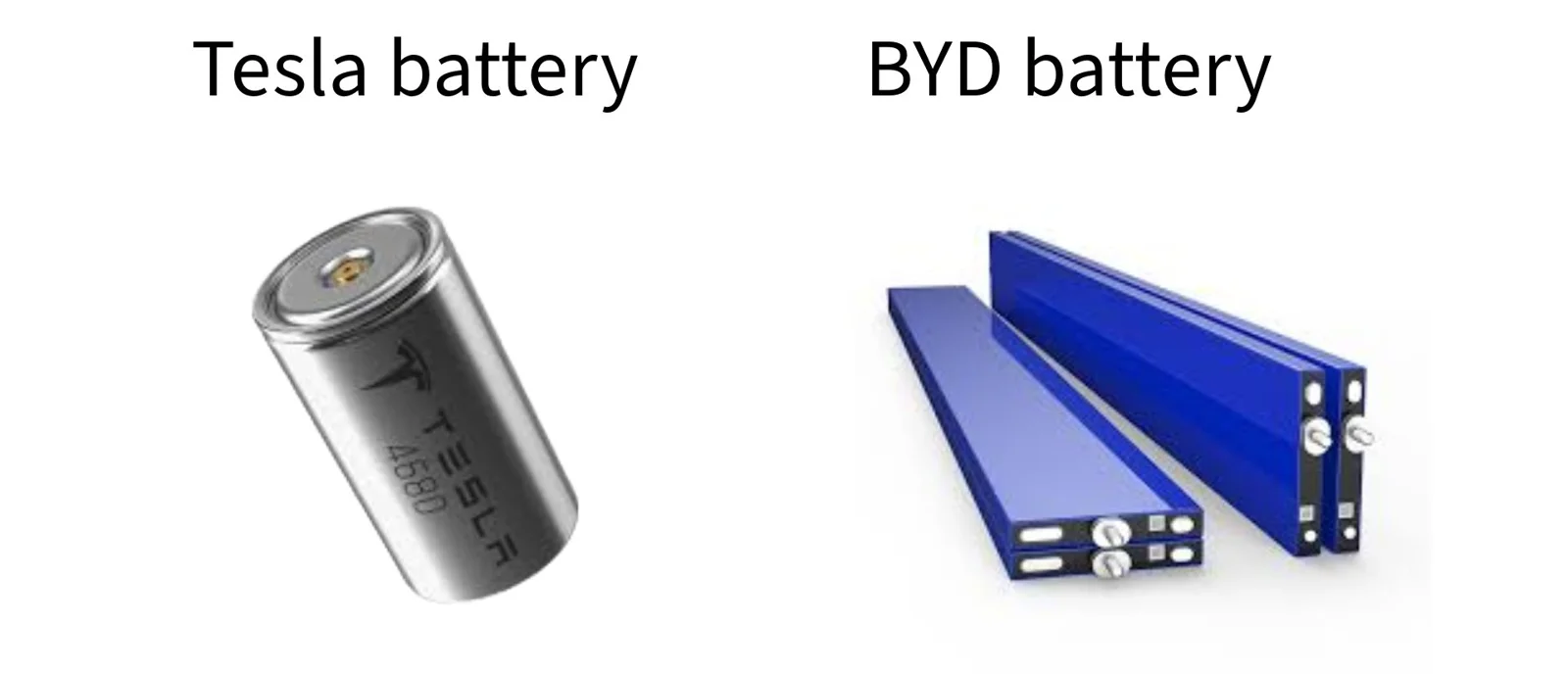
According to Zmescience, a team of researchers recently conducted an in-depth teardown of the world's most prominent electric vehicle batteries to understand their internal mechanics. Because manufacturers rarely share proprietary data regarding battery chemistry and construction, the study relied on physical disassembly and advanced testing tools like scanning electron microscopy (SEM) and thermogravimetric analysis (TGA).
Contrasting geometries and energy densities
The investigation highlighted a fundamental split in design goals between the two industry giants. Tesla utilizes the 4680 cell, a cylindrical format measuring 46 mm in diameter and 80 mm in length. In contrast, BYD employs its signature Blade battery, which is a long, thin prismatic cell measuring 965 mm in length but only 14 mm in thickness.
The data reveals that Tesla holds a significant lead in raw energy storage metrics:
- Tesla 4680 gravimetric energy density: 241 Wh/kg
- BYD Blade gravimetric energy density: 160 Wh/kg
- Tesla 4680 volumetric energy density: 643 Wh/l
- BYD Blade volumetric energy density: 355 Wh/l
While the Tesla cells allow for lighter and more compact packs, they rely on expensive nickel-rich cathode materials. Conversely, BYD's Lithium Iron Phosphate (LFP) chemistry is significantly cheaper and offers superior thermal stability, making it a preferred choice for budget-friendly vehicles.
Manufacturing and structural innovations
The study also uncovered unique mechanical differences in how these batteries are constructed. Tesla uses a "jelly roll" configuration where electrode layers are wound inside the can, utilizing laser welding to eliminate traditional tabs. BYD employs a Z-folded electrode stack, which provides high mechanical stability and utilizes a combination of ultrasonic and laser welding processes.
These findings suggest that there is no single "winner" in the EV battery race; rather, the market is bifurcating into two categories. Tesla's approach prioritizes maximum power and range for high-performance vehicles, while BYD focuses on longevity, safety, and cost-efficiency for the mass market. The research underscores how specific engineering choices directly influence the final price point and capabilities of modern electric cars.