 EVERYTHING


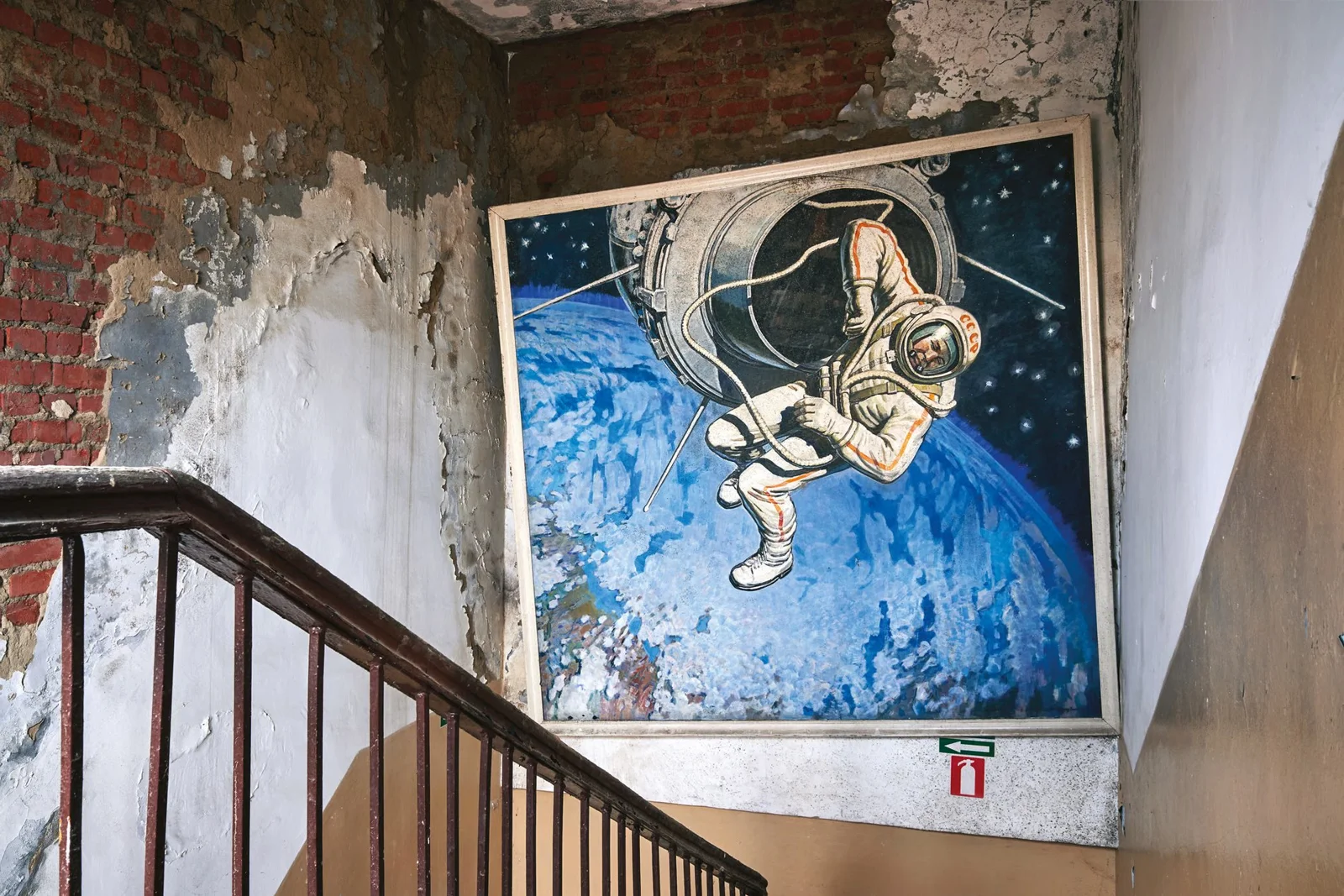
The Cold War period is often associated with geopolitical tension, but it was simultaneously a golden age for scientific innovation. According to Flashbak, the intense competition fueled massive projects across former Soviet states, resulting in technological marvels that continue to stand today. These institutes represent not only scientific breakthroughs but also monumental feats of engineering.
Pioneering Radar and Radio Astronomy
One such example is the Usikov Institute for Radiophysics and Electronics of the National Academy of Sciences of Ukraine. Established in 1930, its laboratory focused on electromagnetic oscillations. Under the leadership of Abram Slutskin, researchers pioneered electrical engineering, leading to effective microwave oscillators and magnetrons—key components utilized by Red Army radar systems.
Further demonstrating this technological reach is the Ukrainian T-shaped radio telescope (UTR-2) at the Institute of Radio Astronomy of the National Academy of Sciences of Ukraine. This structure is recognized as one of the world’s largest low-frequency radio telescopes. It comprises a network of 2,040 antennas known as dipoles and spans an area of 15 hectares.
- The UTR-2 analyzes radio signals from diverse cosmic sources.
- These sources include emissions from the sun, lightning on Saturn, pulsars, and interstellar space.
Nuclear Power and Particle Acceleration
Scientific ambition extended into nuclear physics across Eastern Europe. In Romania, the national nuclear program began in 1955 following a bilateral agreement with the USSR. Construction started in 1956 for two major research facilities: the VVR-S nuclear reactor and the U-120 cyclotron. The VVR-S was notable as the first reactor approved by the USSR outside its own borders, operating until its shutdown in 1997.
In Armenia, physicist Artem Alikhanian initiated the development of the Arus accelerator in 1956. His goal was to construct one of the world's most powerful electron synchrotrons, capable of accelerating particles close to the speed of light within a closed loop. This massive undertaking led to the creation of an entirely new town nicknamed ‘Physcity’.
Superconductivity and Foundational Science
The foundational scientific achievements were equally profound. In 1932, Lev Shubnikov's cryogenic laboratory in the USSR achieved helium liquefaction for the first time. This technological breakthrough paved the way for subsequent research, culminating in the discovery of type II superconductivity—now known as the Shubnikov phase—in 1936.
These preserved sites offer a tangible link to an era when state-sponsored science drove global technological progress. The surviving infrastructure from these institutes serves as a powerful testament to human ingenuity and the massive, often hidden, scientific investment of the Cold War period.