 EVERYTHING


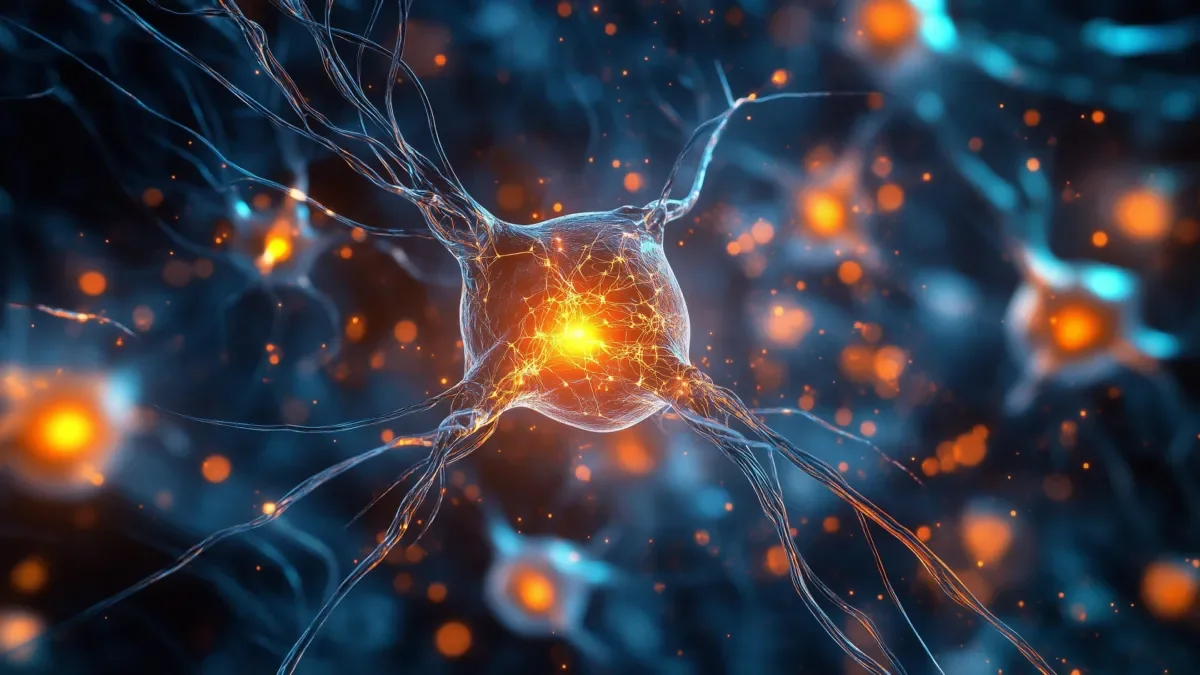
Hebrew University researchers put individual human neurons to the test
A neuroscience study published in PNAS on 13 August 2026 reveals that the building blocks of the human cortex are far more capable than scientists previously assumed. For decades, neuroscientists operated under the belief that individual brain cells functioned like basic electrical relays—simple switches turning on or off in response to incoming pulses.
Instead, a research team led by Prof. Idan Segev and Prof. Mickey London at The Hebrew University of Jerusalem discovered that single human cortical neurons operate as self-contained computational powerhouses. By processing multiple signals simultaneously, a single cell in the human brain performs calculations that match the workload of an entire artificial neural network.
Measuring cellular horsepower with artificial intelligence twins
To determine the true processing capacity of a single cell, researchers at the Edmond and Lily Safra Center for Brain Sciences combined advanced biophysical modeling with modern machine learning. They created digital twins of human neurons to test how complex an artificial network must be to mimic the real biological cell's input-output behavior.
If an artificial model requires multiple layers of synthetic nodes to reproduce a biological cell's activity, it proves the single living cell possesses immense computational depth. The team discovered that the intricate structure of human neurons enables them to execute high-level tasks, such as distinguishing complex visual patterns, right inside the individual cell.
The study highlighted key biological mechanisms behind this processing power:
- Richly branching dendritic trees that act as elaborate signal-processing networks rather than passive wires.
- Nonlinear synaptic interactions that allow a single cell to weigh, combine, and calculate conflicting inputs simultaneously.
- Specialized membrane dynamics that give human cortical cells far greater computational capacity than equivalent neurons found in other mammals.
«People often think of a neuron as a simple switch that either turns on or off,» explained Prof. Idan Segev during the presentation of the findings. «What we show is that a single human neuron is itself an extraordinarily sophisticated computing device.»
This discovery provides a fresh perspective on human evolution. While the human brain contains nearly 100 billion neurons, our cognitive superiority in language, mathematics, and creative thought may not depend solely on network size, but also on the raw processing power built into every single cell.
Redesigning artificial intelligence from the single cell up
The revelation that human brain cells operate like miniature microchips offers a practical solution to one of technology's greatest challenges: the immense power consumption of modern artificial intelligence. Today's deep learning algorithms rely on millions of basic, single-function artificial nodes linked together in vast server farms, requiring gigawatts of electricity to simulate basic reasoning.
By demonstrating that nature achieved intelligence by making individual cells computationally deep, the research offers computer engineers a new paradigm. Instead of building larger networks out of dumb switches, future neuromorphic microchips could feature sophisticated artificial neurons modeled after human dendrites. This design shift could yield AI systems capable of complex reasoning on mobile devices with a fraction of current energy demands.