 EVERYTHING


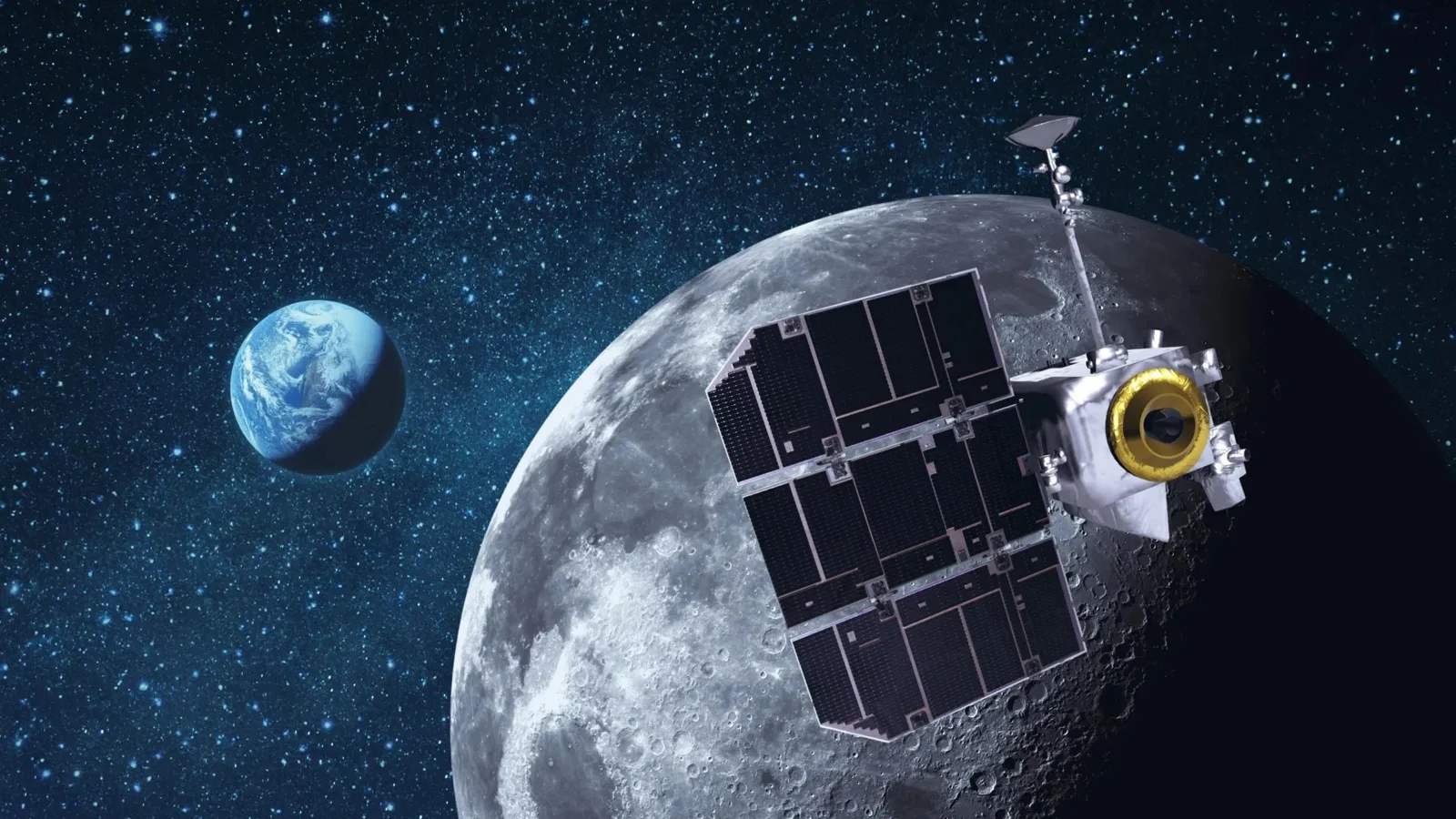
According to Sciencedaily, researchers at Tokyo Metropolitan University have developed detailed simulations showing that a small, newly designed X-ray telescope could revolutionize the study of lunar geology. By creating a comprehensive chemical map of the entire Moon's surface, this mission would provide scientists with essential data needed to understand how the celestial body formed and changed over billions of years.
The Challenge of Lunar Geochemistry
Understanding the Moon’s geological history remains incomplete because researchers lack a full geochemical map. Since collecting physical samples from every region is impossible, scientists must rely on remote sensing methods. One such technique is X-ray fluorescence imaging, where detectors capture specific X-rays emitted by elements after they are struck by solar radiation.
However, creating a global lunar map faces significant technical hurdles:
- Missions have limited time to gather sufficient sunlight-driven X-ray signals.
- Detectors can degrade during extended periods in space.
- Signal collection is particularly difficult near the Moon's poles where solar X-rays are weaker.
Designing a Compact Solution for Lunar Orbit
To overcome these obstacles, a team led by Airi Toida and Prof. Yuichiro Ezoe proposed placing a compact X-ray telescope on a satellite orbiting the Moon. Traditional X-ray telescopes are often too large and heavy for such missions, but this new design is highly practical.
The compact telescope was originally developed to study Earth's magnetosphere and weighs less than 10 kilograms. Its small size makes it suitable for long-term lunar observations. Furthermore, the detector has been successfully tested in radiation conditions far harsher than those anticipated in lunar orbit, ensuring robust imaging capabilities over an extended mission.
Simulations Show a Path to Global Mapping
The researchers incorporated the telescope's specifications into numerical simulations to test the viability of the satellite mission. Assuming 300 solar flares annually and utilizing a single compact telescope aboard a Moon-orbiting satellite, the simulation predicted that the entire lunar surface could be mapped for five key elements—oxygen, iron, magnesium, aluminum, and silicon—in approximately two years.
The initial mapping would use a grid size of 70 x 70 kilometers. The team also explored an advanced configuration involving a larger array: a five by five system of telescopes. According to the simulations, this 25-telescope system could produce sharper maps and complete the comprehensive work even more quickly.
This proposed mission represents a major technological leap toward transforming our understanding of planetary accretion and evolution.