 EVERYTHING


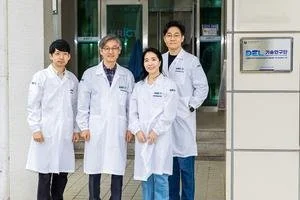
According to Eurekalert, KRICT’s DNA-Encoded Library (DEL) Research Center has unveiled the DEL CoreBank Platform, offering comprehensive services from compound library provision and high-throughput screening to detailed data analysis. This technology utilizes unique DNA sequences attached to individual compounds—acting as molecular barcodes—to enable simultaneous identification of potential drug candidates from vast chemical collections in a single experiment.
Overcoming Limitations of Conventional Screening
Traditional High Throughput Screening (HTS) methods analyze each compound individually, which provides high reliability. However, when dealing with extremely large libraries, the process becomes prohibitively slow and costly. For instance, screening one million compounds using standard 384-well plates would require approximately two months of continuous effort.
The Efficiency of DEL Technology
In contrast, DEL technology allows for ultra-large-scale hit discovery by mixing compounds together in a single solution. This dramatically reduces the time and resource burden. The platform’s methodology involves several cycles of synthesis and splitting to generate massive libraries:
- Chemical building blocks (BBs) and DNA barcodes are initially placed into 100 wells and chemically linked.
- The mixture is then redistributed, allowing for the attachment of additional chemical structures and DNA barcodes.
- By repeating this cycle three times using different types of BBs, researchers can generate a mixed library containing one million structurally distinct compounds.
Once generated, the compound mixture is exposed to disease-related target proteins. Next Generation Sequencing (NGS) is then employed to identify which specific DNA barcodes remain enriched after binding. This computational process decodes millions of fragments and matches them back to the original chemical structure database.
AI Integration for Enhanced Accuracy
While DEL experiments are highly efficient, performing them in mixed solutions introduces potential errors, such as non-specific binding or preferential amplification of certain DNA sequences. To address these challenges, KRICT developed advanced AI-based analysis methods. These models were trained on large-scale experimental datasets to identify structural patterns associated with stronger protein-binding affinity, ensuring the highest quality results.
Through machine learning, the platform selects and predicts the top 50 compounds most likely to possess high drug potential, providing researchers with a highly focused list of candidates for further validation. This public access service is expected to significantly lower the barrier to entry for domestic industry and academia in the competitive field of pharmaceutical research.