 EVERYTHING


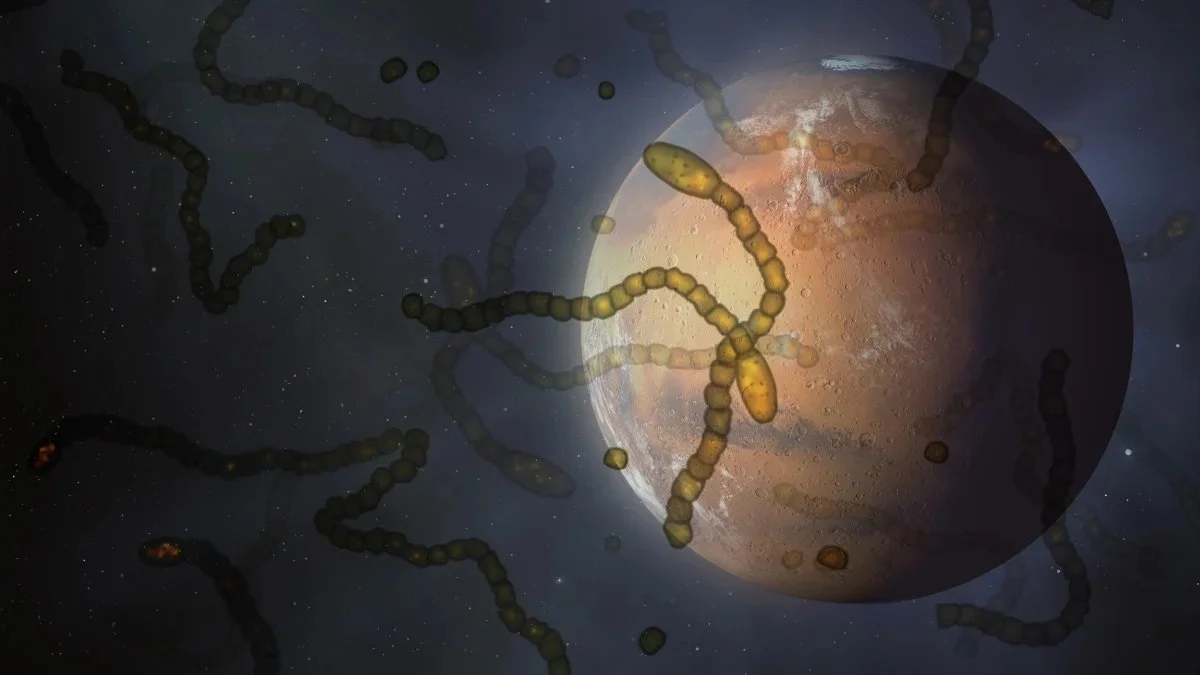
According to Mashable, scientists have conducted a series of experiments that could fundamentally alter our understanding of how life might travel across the cosmos. By subjecting microorganisms to pressures capable of pulverizing solid rock, researchers have strengthened the argument that biological entities could survive the violent ejection from a planet's surface by an asteroid impact.
Simulating high-pressure space launches
The study, funded by NASA and published in the journal PNAS Nexus, utilized a room-sized gas gun to fire steel plates into thin layers of bacteria. The goal was to replicate the peak pressures encountered during an initial launch from a planetary body. During these tests, the microorganisms were subjected to pressures reaching up to 2.4 gigapascals, which is tens of thousands of times greater than the atmospheric pressure found at sea level on Earth.
Despite the intensity of the mechanical stress, Lily Zhao, a doctoral student in mechanical engineering, observed unexpectedly high survival rates. After comparing shocked samples to a control group, she noted that the microorganisms showed remarkable resilience:
- Survival rates reached as high as 95 percent to 97 percent in certain initial test runs.
- Even at the maximum pressure levels before hardware failure, survival remained around 60 percent.
- The experiment provided much-needed empirical data on microbial durability under extreme kinetic stress.
Testing the lithopanspermia hypothesis
These findings are significant for the long-debated theory of lithopanspermia, which proposes that life can be transported between worlds sealed inside rocks knocked loose by comets or asteroids. While it remains unknown if this has occurred naturally, scientists have already identified at least 400 meteorites on Earth that originated from Mars. This suggests a potential pathway for biological material to move between neighboring celestial bodies.
To conduct the study, microbiologist Jocelyne DiRuggiero selected Deinococcus radiodurans, commonly known as "D. rad." This extremophile is renowned for its ability to survive extreme radiation, dehydration, and freezing temperatures. Professor K.T. Ramesh noted that previous studies on microbial survival from impacts were often sparse or difficult to interpret because researchers could not accurately measure the specific pressures experienced by surviving cells. This new research fills a critical data gap regarding whether microbes can move from Mars to its moon, Phobos.
The ability of these organisms to endure such violent transitions suggests that the vacuum of space may not be an absolute barrier to life. By proving that biological matter can survive the initial "blast off" from a planet, the research opens new doors for understanding the potential for panspermia in our solar system.