 EVERYTHING


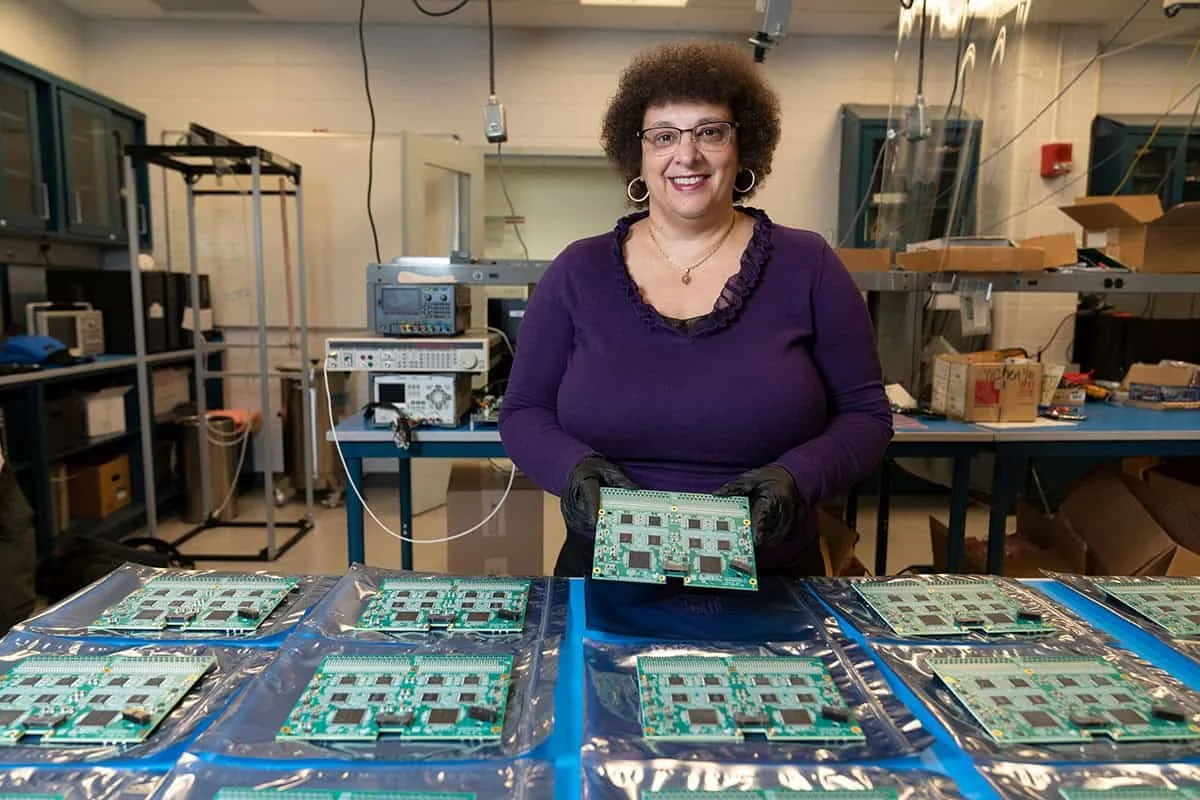
According to Physicsworld, distinguished scientist Mary Bishai recently shared insights into her role in experimental neutrino physics at Brookhaven National Laboratory. As a key leader for the Deep Underground Neutrino Experiment (DUNE), Bishai describes the unique demands of "big science," where achieving high-level research goals requires a massive coordination of diverse technical and scientific disciplines.
Interdisciplinary collaboration in particle physics
Bishai’s work on DUNE involves overseeing infrastructure for the Long Baseline Neutrino Facility. This project aims to send the world's most powerful neutrino beam from Fermilab near Chicago to an underground detector located 1300 km away in South Dakota. To make this possible, she must navigate a wide array of specialized fields that go far beyond traditional particle physics.
Her weekly responsibilities often include consulting with experts on various subjects, including:
- Mechanical engineering for detector components.
- Civil engineering requirements for large-scale underground facilities.
- Hydrogeology of the Fermilab site to ensure structural integrity.
- Design and optimization of high-powered focusing magnets.
- Simulations of high-energy particle interactions within specific materials.
- Artificial intelligence (AI) applications for detecting neutrinos from supernovae.
Methodologies for scientific problem solving
To overcome technical hurdles and mental blocks, Bishai advocates for a collaborative approach to research. She frequently engages in "devil’s advocate" discussions with her team to stress-test theories and designs. This rigorous self-criticism is considered vital for ensuring the accuracy of complex experiments. Furthermore, she emphasizes the importance of cross-pollination between departments, such as discussing new detector materials with colleagues from chemistry divisions.
While the scale of international collaboration can present logistical challenges, Bishai finds the most fulfillment in connecting disparate dots. She notes that her favorite moments occur when asking questions outside her primary expertise—such as civil engineering—and receiving novel perspectives from other specialists. This synergy between physics goals and multidisciplinary design solutions remains the cornerstone of modern experimental science.
Bishai was elected a fellow of the American Association for the Advancement of Science in 2026, recognizing her contributions to these massive scientific endeavors.