 EVERYTHING


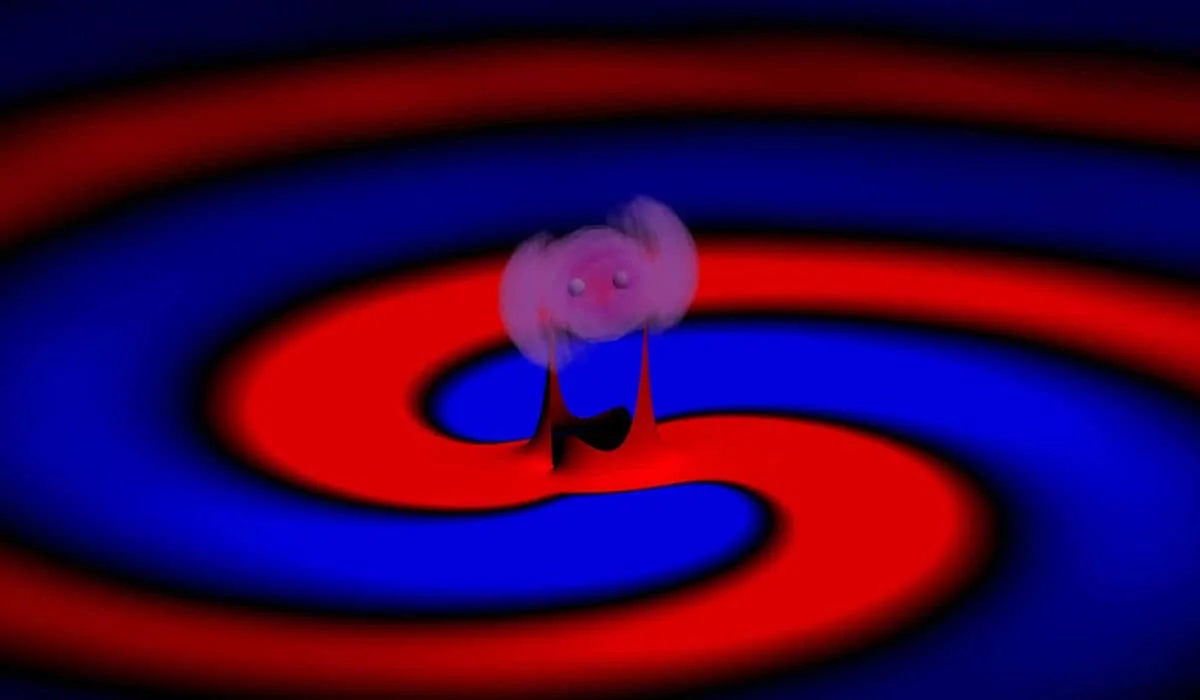
According to Physicsworld, a team of international researchers has successfully constructed a novel model to predict how gravitational-wave emissions are altered when binary black hole systems move through dark matter. While dark matter remains one of the most significant mysteries in modern cosmology—accounting for more than 80% of all matter yet remaining invisible to electromagnetic observation—this new approach provides a potential method for probing its characteristics via spacetime ripples.
Simulating cosmic interactions
The research focuses on how dark matter, specifically candidates like light scalar bosons, might interact with spinning black holes. Through a process known as superradiance, rotational energy from a black hole can be transferred to the surrounding field of ultralight boson particles. This interaction creates dense clouds of dark matter around the objects, which in turn modify the dynamics of binary systems as they spiral toward a final collision.
To capture these subtle changes, the team utilized meticulous numerical relativity simulations. The goal was to distinguish between genuine physical effects and computational artifacts. "The hardest part was making sure we truly understood what the simulations were telling us. The danger in numerics is fooling yourself," explains Josu Aurrekoetxea of Massachusetts Institute of Technology. He collaborated with experts from Queen Mary University of London, the University of Oxford, Université Catholique de Louvain, and the University of Amsterdam to validate the resulting waveform models.
Testing against existing data
While much of the current research in this field anticipates future space-based detectors like the Laser Interferometer Space Antenna, this team sought to utilize data already available from the LIGO–Virgo–KAGRA (LVK) network. They applied their model to 28 publicly available signals to see if any showed deviations from standard vacuum mergers.
- The team compared 28 observed events against both standard and dark-matter-modulated waveforms.
- 27 of the 28 events were found to be consistent with binary black holes merging in empty space.
- One specific event, GW190728, showed a slight preference for the dark-matter model.
- The results indicate that some extreme dark matter models may be testable with current technology.
The findings suggest that while the evidence is not yet definitive, the methodology provides a robust framework for future discovery. By identifying these specific modulations, scientists may eventually be able to determine the precise nature of the invisible substances that govern the structure of our universe.