 EVERYTHING


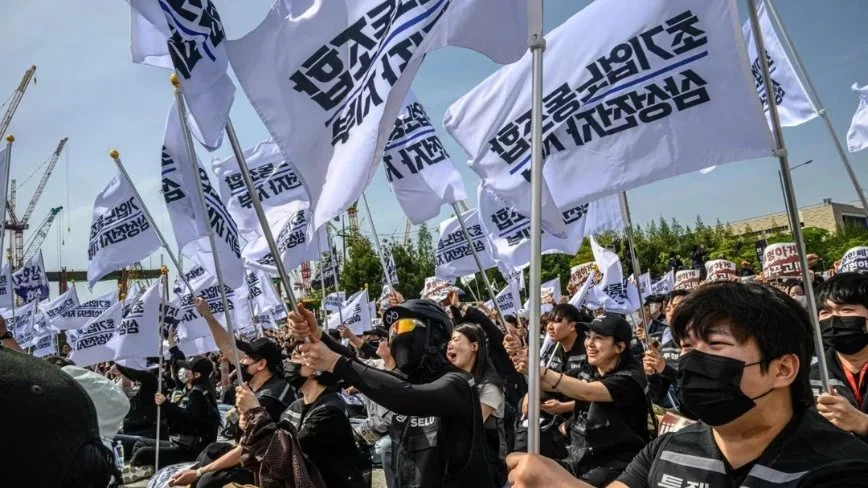
According to Thenextweb, several thousand workers who manufacture Samsung’s phones, televisions, and washing machines are preparing to gather near the company’s Suwon headquarters on 16 July. The rally serves as a visible protest against the substantial bonuses awarded to employees in the semiconductor division, a dispute that has intensified since a major pay deal was finalized in May.
A massive disparity in corporate rewards
The arithmetic of the grievance is stark for those on the factory floor. Staff within Samsung’s Device eXperience division—the unit responsible for products most commonly used by consumers—are scheduled to receive a 2026 bonus of approximately 6 million won, which equates to roughly $3,900 in treasury shares. In contrast, workers in the semiconductor division stand to collect up to 600 million won.
This creates a gap of about a hundred to one between two halves of the same employer. While the chip workers secured their windfall through a separate union and negotiation, the deal included an unusual provision for Korean labor history: Samsung agreed in writing to set aside roughly 10.5 percent of semiconductor operating profit for special bonuses. This represents only the second time a major Korean corporation has committed a fixed percentage of profits to a binding contract.
Leverage and the AI windfall
The disparity is largely attributed to the immense profitability of the chip division, which has been driven by high-bandwidth memory chips essential for AI data centers. The semiconductor union successfully leveraged its position during negotiations, having previously threatened an 18-day strike that Samsung could not afford during a peak memory shortage. During those talks, they were offered an average bonus of about $340,000.
The appliance and consumer electronics workers lack similar leverage because their division, while profitable, does not hold the company hostage in the same way. The Donghaeng union has already attempted to block the arrangement through legal channels in Suwon, but after failing to halt a companywide vote, they have turned to public demonstration. Key points of contention include:
- The demand for a revised allocation that treats AI profits as a company-wide achievement.
- The perception of a two-tier workforce created by management decisions.
- Concerns from policymakers regarding the scale of chip bonuses as a potential inflation risk.
- The discrepancy between Samsung's claim of industry-standard pay and the reality for non-chip staff.
While the 2026 payout is largely settled, the rally aims to set the tone for future negotiations. It serves as a reminder to management that a divided workforce presents a significant operational risk. The outcome of this tension will depend on whether Samsung offers a more equitable distribution in upcoming cycles.