 EVERYTHING


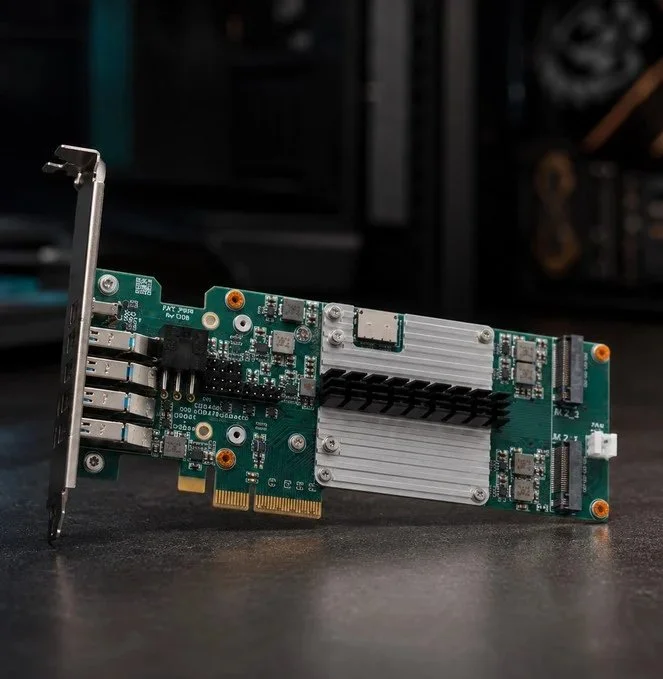
The concept of moving a core motherboard component onto a dedicated expansion card might initially sound like a niche project, but the WisdPi PROM21 demonstrates a technically plausible path toward highly modular PC I/O. According to Igorslab, this PCIe expansion card features an AMD Promontory 21 chip, which serves as the primary I/O hub equivalent to the B650 chipset found on AM5 motherboards. This design allows system builders to decouple essential connectivity from the mainboard structure, making it ideal for expanding systems where native ports are limited or specific interfaces are required.
Comprehensive Interface Capabilities
The PROM21 card is designed to offer a broad range of modern connections through its PCIe 4.0 x4 host connection. It supports various high-speed and legacy peripherals, positioning it as a versatile tool for specialized builds. The key features include:
- Storage: Four M.2 slots for fast NVMe SSDs.
- External Connectivity: One USB-C port supporting USB 3.2 Gen 2×2 (20 Gbit/s) and four USB-A ports at USB 3.2 Gen 2 (10 Gbit/s).
- Specialized I/O: A single OCuLink port, which can be configured for either PCIe or SATA signals via a DIP switch.
- Internal Headers: Six internal USB 2.0 headers and an additional power connector.
Niche Applications in Homelab and Mini-PCs
The inclusion of the OCuLink port is particularly noteworthy, as it allows users to connect external PCIe hardware or multiple SATA drives using appropriate cables. This capability makes the PROM21 highly attractive for specific user groups, including NAS tinkerers, homelab enthusiasts, compact workstation builders, and mini-PC project designers. While OCuLink is not yet a mass-market standard, its integration here provides a cleaner, more PCIe-adjacent connection compared to traditional USB solutions.
However, potential users should understand the design limitations. The card’s host connection operates at PCIe 4.0 x4, which serves as the natural bottleneck for simultaneous high-demand operations. While this bandwidth is sufficient for a single fast NVMe SSD, it cannot fully support four M.2 drives, multiple USB devices, and OCuLink peripherals operating at peak capacity concurrently. This limitation means that while the PROM21 offers incredible interface variety, it should not be confused with a dedicated high-end RAID or PCIe switch card designed for maximum sustained bandwidth.
Ultimately, the WisdPi PROM21 is positioned not as a general gaming PC upgrade, but rather as a specialized solution. It successfully demonstrates how complex modular I/O can be conceived, allowing an AMD B650 chipset functionality to operate independently of its original AM5 motherboard environment for highly specific technical deployments.