 EVERYTHING


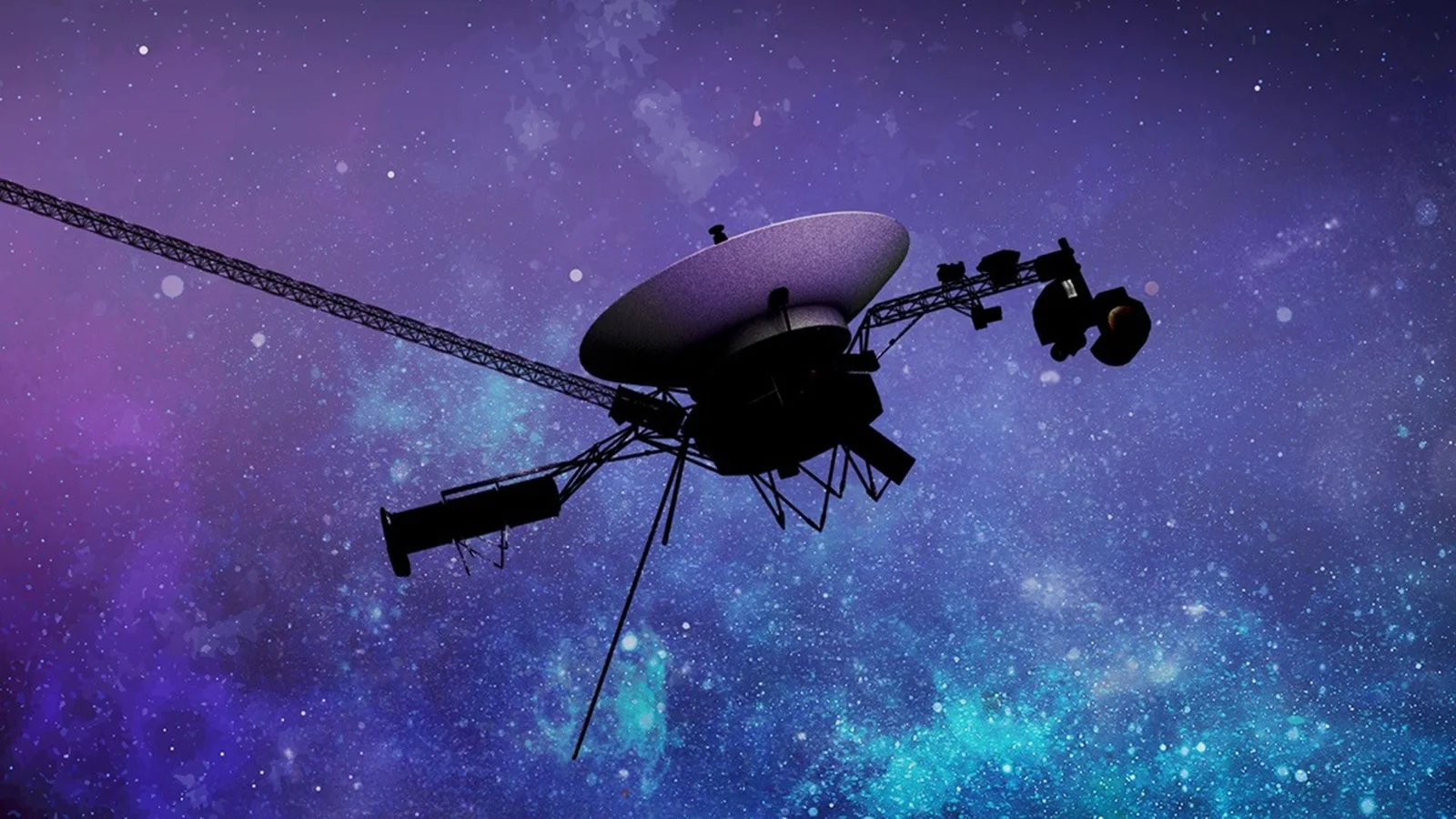
A Fifty-Year Power Decay in Interstellar Space
Cruising far beyond the edge of our solar system, Voyager 2 operates in a cold realm where sunlight is virtually useless for generating electricity. The spacecraft relies on a radioisotope thermoelectric generator, which converts heat from decaying plutonium-238 directly into electrical current. However, that cosmic battery loses roughly 4 watts of power every year as the radioactive material decays and its thermocouples degrade.
To keep the probe operational, engineers at NASA's Jet Propulsion Laboratory have spent years turning off non-essential systems, including camera heaters and backup radios. By mid-2026, Voyager 2 had reached a critical threshold where maintaining power for its remaining science suite threatened to trip automatic low-voltage safety tripwires, which would trigger an emergency shutdown.
How the "Big Bang" Electrical Hack Works
Imagine running a household on a battery that loses power every single day. Eventually, turning on even a tiny lightbulb risks tripping the main circuit breaker. To prevent that breaker from blowing, engineers devised a risky technique called the "Big Bang" maneuver.
Rather than cutting power to another vital scientific instrument, flight controllers bypassed the probe's primary voltage regulator—a component designed to shield electronics from rare power spikes. The team redirected electricity straight from the main bus into a backup circuit switch, allowing Voyager 2 to operate on variable voltage levels. The procedure required adjusting several electrical systems simultaneously:
- Disabling the primary voltage safety fuse that previously forced system shutdowns during minor voltage fluctuations
- Rerouting electrical current into low-power secondary heating elements to prevent scientific sensors from freezing solid in deep space
- Reallocating tiny reserves of leftover power directly to the plasma science instrument and magnetometer
Signals sent from Earth took more than 20 hours to traverse the interstellar void before reaching Voyager 2. Telematics readouts confirmed that the probe absorbed the command sequence smoothly and stabilized its power grid without crashing onboard computers.
Voyager 1 Next in Line for Deep Space Survival
The successful execution of the patch grants Voyager 2 enough electrical buffer to operate all five of its remaining scientific instruments through at least late 2027. Without this intervention, mission controllers would have been forced to turn off one of its primary instruments before the end of this year, ending valuable measurements of interstellar magnetic fields and cosmic rays.
More importantly, the success on Voyager 2 sets the stage for a similar rescue attempt on its twin probe, Voyager 1. Positioned over 16 billion miles from Earth, Voyager 1 is humanity's most distant craft and faces an even harsher power deficit. NASA plans to adapt the lessons learned from this electrical re-route to keep Voyager 1 transmitting data from outside the heliosphere, extending humanity's direct reach into interstellar space well past the 50th anniversary of its launch on 5 September 1977.