 EVERYTHING


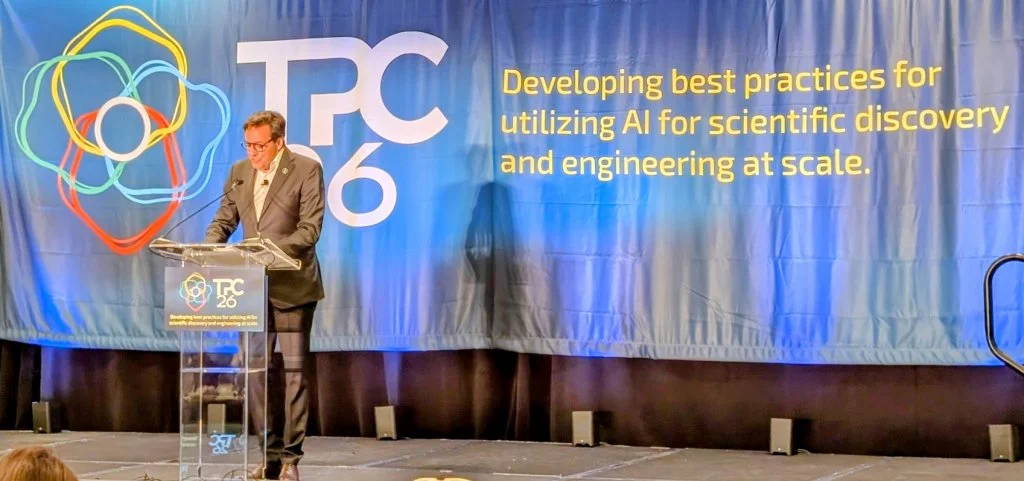
The speed and scope of scientific breakthroughs are undergoing a rapid transformation driven by Artificial Intelligence (AI). According to Hpcwire, Darío Gil, the Energy Department’s Undersecretary for Science, stated at the TPC26 conference that AI is no longer merely analyzing results; it is increasingly shaping experiments as they unfold. This capability allows researchers to move from sequential experimentation and delayed analysis to continuous, iterative learning within a single session.
Real-Time Experimentation and Data Velocity
Traditionally, scientific workflows involved running an experiment, collecting data, and then dedicating days or weeks to interpretation. AI fundamentally alters this process by interpreting data in real time. Models identify signals, adjust experimental parameters instantly, and guide the next step before the current one is complete. For instance, researchers at the Stanford University-managed SLAC National Accelerator Laboratory previously required significant time to interpret subatomic particle smashing results. Now, thanks to AI power, that interpretation can happen immediately after the particles collide.
Particle physicists and material science workflows now incorporate AI-driven analysis and control at speeds previously unattainable. This immediate decision-making capability is crucial in ultra-fast experimental environments. Another powerful example comes from Brookhaven National Laboratory. Over 50 years of painstaking human effort resulted in a protein data bank containing approximately 200,000 structures. When modern AI techniques were applied, the scale expanded dramatically.
- The application of AI systems increased the database size to over 200 million structures in just a few years.
- This demonstrates that AI does not replace human expertise but rather amplifies both the scientific infrastructure and the knowledge base.
Strategic Investment: The Genesis Mission
Beyond immediate productivity gains, the U.S. government is actively investing in this shift through the DOE’s Genesis Mission. Launched by President Trump in late November, this federal initiative aims to funnel resources into AI for science. Gil stated that the mission seeks to double the productivity and impact of America's trillion-dollar-a-year R&D engine within a decade.
The Genesis Mission is designed to build a bridge between public and private industry, ensuring scientific breakthroughs move at the required speed and scale. This strategic focus extends across various disciplines, including fusion energy research, where AI predicts plasma state behavior, and material science, where models forecast properties of novel materials before they are even synthesized in a lab.
Gil emphasized that achieving this ambitious goal requires urgency and a new operational model. The integration of large language models (LLMs) and other foundation models marks a major shift in how scientific knowledge is generated and deployed globally. This technological evolution promises to redefine the limits of human discovery across multiple critical fields.