 EVERYTHING


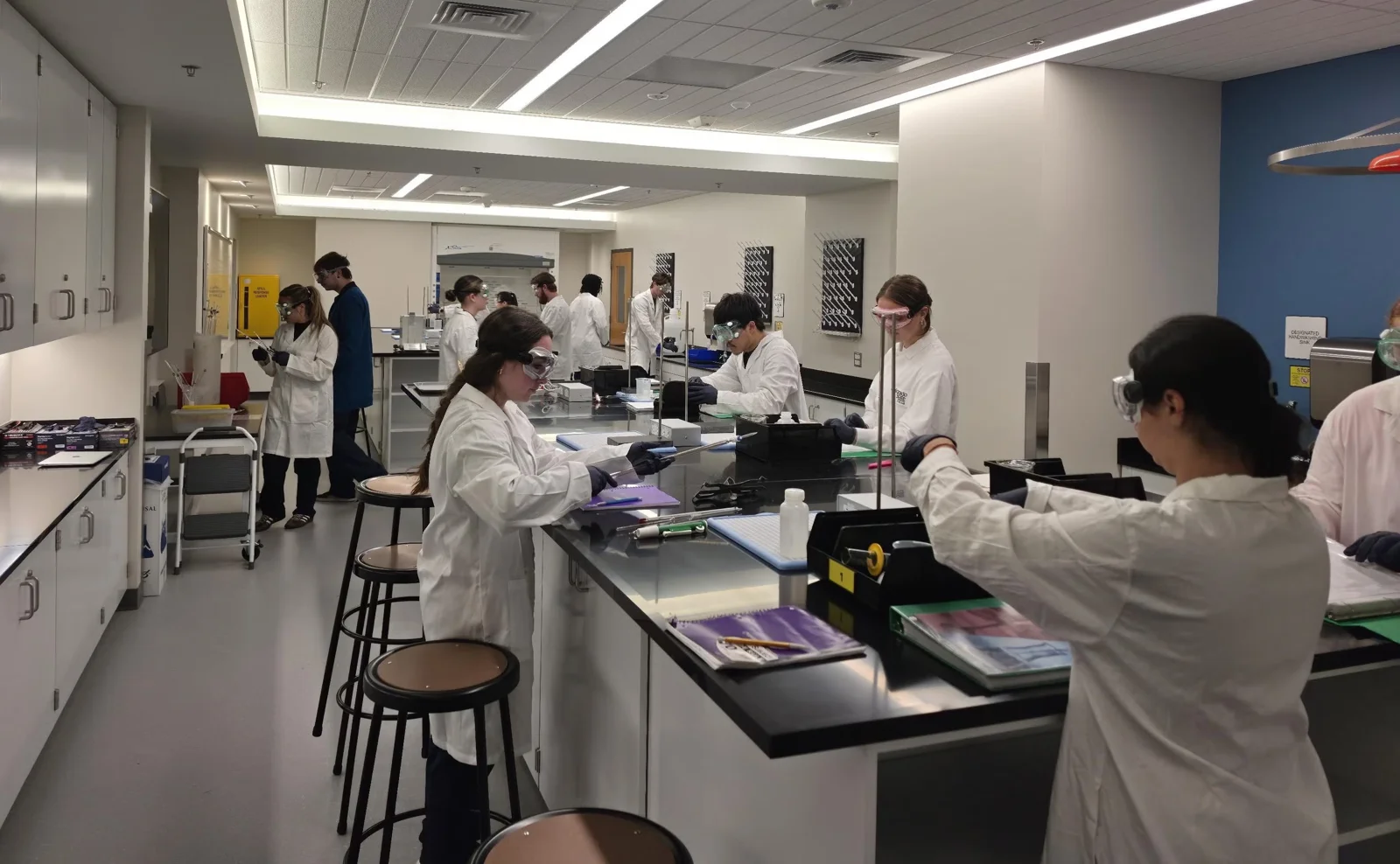
The University of Colorado Boulder Department of Chemistry recently debuted a comprehensive suite of general chemistry teaching laboratories following a $33.5 million renovation project in the Ekeley Sciences Building. Originally constructed in 1898, the building required extensive updates to meet modern standards for safety and environmental consciousness. Chris Marelli, director of the general chemistry teaching labs, stated that the goal was to create a superior learning environment benefiting not only chemistry majors but also all arts and sciences students who utilize undergraduate chemistry labs.
Advancements in Safety and Technology
The renovation prioritized integrating state-of-the-art technology alongside robust safety measures. Technological upgrades include several key features designed to protect both staff and students during practical sessions:
- Updated engineering controls for enhanced laboratory safety.
- New HVAC systems providing increased air flow throughout the spaces.
- Touch-control fume hoods, which improve operational safety protocols.
- A video calling system that allows graduate teaching assistants a direct line to lab staff during emergencies.
The project also involved creative spatial redesigns and infrastructure improvements. The number of general chemistry labs was increased from 12 to 14 through efficient use of the existing building footprint. Furthermore, widening hallways ensures safer pedestrian traffic patterns during class changeover periods.
Enhancing Learning and Accessibility
Beyond safety, the renovation focused heavily on fostering active learning and ensuring inclusivity within the teaching spaces. The updated labs feature several design elements aimed at modern pedagogy:
- Collaborative workstations designed to support hands-on group work.
- Wheelchair-accessible workstations installed in 7 of the new labs, promoting adaptability.
- New A/V systems, including projectors and widescreen TVs, replacing traditional chalkboards for state-of-the-art instruction.
The capacity increase is substantial; Marelli noted that before the renovation, the labs were at maximum capacity. The updated facilities can now accommodate an additional 400 students, with the potential to host 1,000 more students annually as the program continues to grow.
Construction on the renovated spaces began in December 2025 and was managed by Adolfson & Peterson Construction (A&P). Marelli, along with lab coordinators Avery Hatch and Estrella Lastre, collaborated closely with A&P throughout the process to ensure the final design met the practical needs of students. These updated facilities represent a significant commitment to maintaining high-quality STEM education in an aging academic structure.