 EVERYTHING


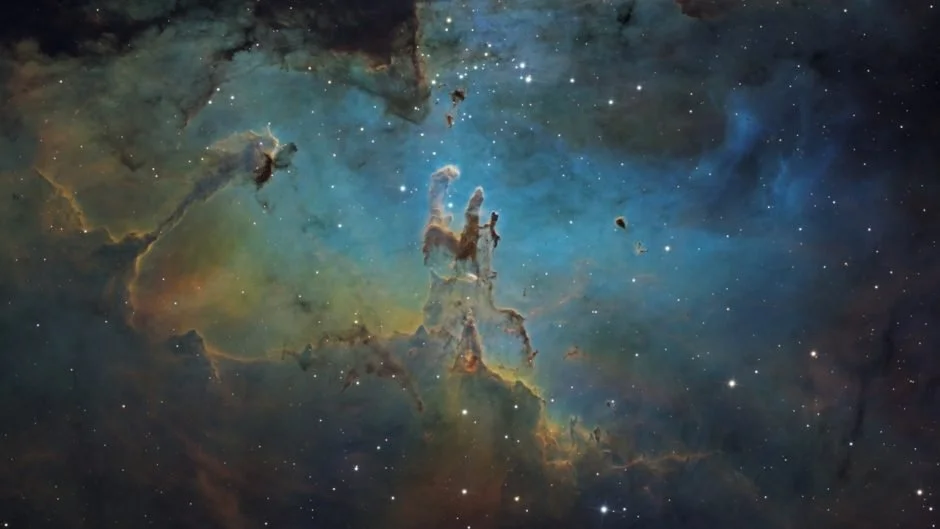
Bangzheng "Tom" Sun has cultivated a deep fascination with the cosmos since childhood, transforming early curiosity into advanced academic research. Now pursuing his doctorate at Mizzou’s College of Arts and Science, Sun views the universe through two distinct lenses: one scientific and precise, and the other creative and expressive.
According to Showme, Sun's daytime work involves complex studies on how galaxies formed in the early universe. This research demands extreme patience and precision, requiring him to analyze faint signals buried within vast streams of data gathered by some of the most powerful instruments available today, including NASA’s James Webb Space Telescope.
The Pursuit of Scientific Accuracy
In his scientific capacity, Sun's primary goal is understanding what the universe is actually telling researchers. His work requires meticulous attention to detail when processing massive datasets. The contrast between this analytical rigor and his nighttime activities provides him with a necessary creative outlet.
- His research utilizes data from cutting-edge instruments like the James Webb Space Telescope.
- The scientific process demands spotting subtle signals within enormous volumes of cosmic information.
- He focuses on fundamental questions regarding early galactic development.
From Data Analysis to Artistic Vision
When night falls, Sun shifts his focus entirely to astrophotography. This pursuit trades research questions for creative ones, allowing him to prioritize beauty and emotional impact over strict realism. In this artistic setting, he gains a freedom unavailable in the scientific lab.
Sun notes that while both science and art examine the same universe, their goals diverge significantly. He explains: "In research, the goal is accuracy... The goal there is beauty." His equipment has also evolved dramatically; starting with small portable setups near locations like Finger Lakes State Park, he recently established a larger telescope system at a remote observatory in New Mexico.
This evolution allows him to capture high-resolution images of iconic celestial structures, such as galaxy M51. Furthermore, his process involves more than just viewing through a viewfinder; he writes lines of computer code to direct the distant systems where to point and how long to collect faint light from deep space. This blend of coding, observation, and artistic interpretation defines Sun's unique contribution to astrophysics.
Ultimately, Bangzheng Sun’s journey illustrates how scientific discipline and creative expression are not mutually exclusive paths but complementary tools for exploring the vastness of the cosmos.