 EVERYTHING


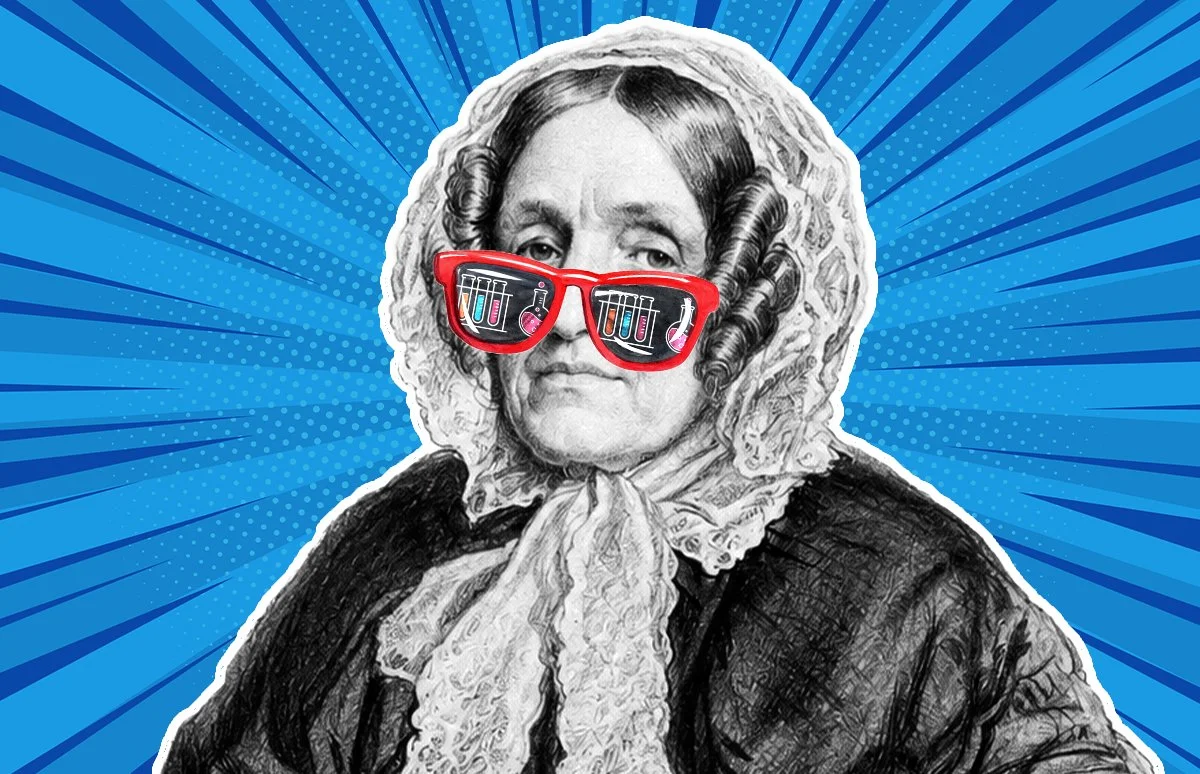
The history of scientific advancement is often told through the lens of male geniuses, yet crucial figures like Jane Marcet played an indispensable role in democratizing knowledge. According to Nautil, her 1806 publication, Conversations on Chemistry, provided a clear and accessible introduction to chemistry that resonated widely, even among those excluded from formal academic settings.
Challenging the Scientific Status Quo
During the late 18th century, scientific study was predominantly confined to elite male circles. Women were generally barred from attending universities or holding memberships in prestigious science academies. Despite this systemic exclusion, Marcet’s work found a vast readership among both young men and women across Europe and America.
Jane Haldiman (later Jane Marcet) was born in 1769 in London to a wealthy Swiss father and English mother. While many contemporaries advocated for minimal female education—suggesting a woman should be satisfied with learning how to make pudding or basic geography—Marcet’s family defied these norms. She and her sisters received the same rigorous tutoring as their brothers, allowing her to develop the intellectual capacity necessary to author such a complex text.
- The book was designed specifically for female readers, making science accessible outside traditional male institutions.
- It achieved international bestseller status, demonstrating a significant public appetite for scientific literacy among women.
- Marcet’s commitment emphasized science as a public good, a theme that remains relevant today.
A Catalyst for Scientific Discovery
The impact of Marcet's Conversations is perhaps best exemplified by the life of Michael Faraday. As a teenage apprentice bookbinder in London, Faraday encountered the manuscript and later stated that the book had "saved" his future. It set him on a path toward becoming a scientist whose experiments in chemistry and electromagnetism were foundational to modern technology.
Faraday expressed profound gratitude for Marcet’s instruction. In his diary, he wrote: "I felt that I had got hold of an anchor in chemical knowledge & clung fast to it." This early exposure to scientific principles paved the way for discoveries like radio waves and later influenced figures such as Albert Einstein, whose theory of relativity was indebted to Faraday’s work on the electromagnetic field.
Marcet's dedication extended beyond mere writing; her original edition contains illustrations drawn by herself, depicting complex apparatuses. These diagrams show devices used for chemical experiments, including an “apparatus for the combustion of metals by means of oxygen gas.” Her life itself demonstrated resilience and intellectual drive, as she was thrust into managing a large household at age 15 following her mother’s death.
Jane Marcet's legacy underscores that scientific progress is not solely dependent on grand theories but also relies heavily on the foundational work of educators and communicators. Her ability to translate complex chemistry into an accessible format helped educate a generation, proving that intellectual curiosity knows no gender boundaries.