 EVERYTHING


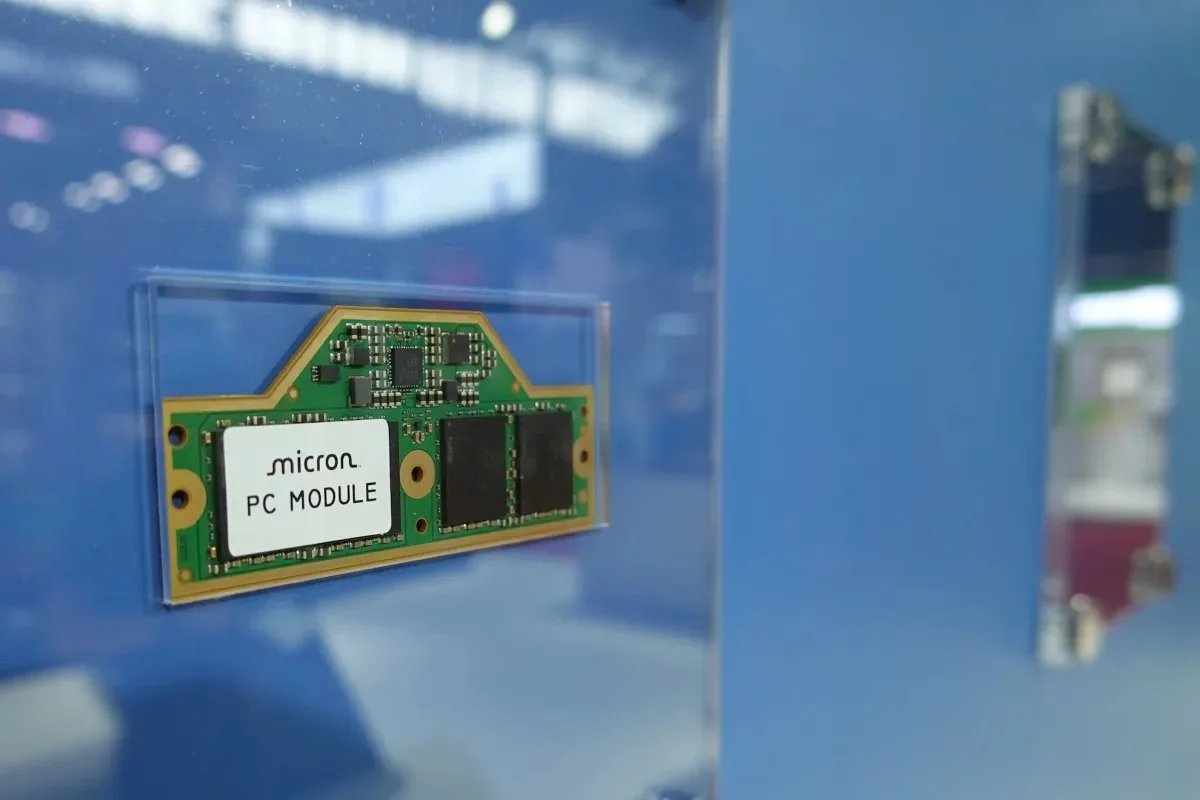
According to TechCrunch, Micron has captured significant attention from Wall Street investors as it positions itself as a critical pillar of the AI hardware ecosystem. The company recently saw its market valuation approach that of trillion-dollar giants like Meta and Tesla, reflecting a massive shift in investor sentiment toward memory manufacturing.
Rapid stock appreciation and market cap shifts
Micron's financial trajectory has undergone a dramatic transformation since mid-2025. The company closed recent trading with a market capitalization of approximately $1.27 trillion, trailing slightly behind Meta at $1.39 trillion and Tesla at $1.42 trillion. This surge is particularly notable given that the stock traded below $100 per share for several years prior to its current rally, eventually reaching a recent close of $1,132 per share.
The primary driver for this growth is the massive demand for DRAM and NAND memory required for AI data centers. Specifically, High-Bandwidth Memory (HBM) has become a critical component as hyperscalers like Microsoft, Amazon AWS, Google, Meta, and Oracle build out their own systems. This scarcity, often referred to as "RAMageddon," is expected to persist into 2027, impacting the pricing of everything from enterprise servers to consumer electronics like Apple products.
Strategic agreements provide revenue visibility
To counter the traditional boom-and-bust cycles of the semiconductor industry, Micron has focused on securing long-term stability. The company reported a blockbuster third quarter where revenue quadrupled year-over-year to $41.45 billion, while profits jumped from $1.88 billion to $28.2 billion.
Key factors contributing to this outlook include:
- The signing of 16 strategic customer agreements across data center, consumer, and automotive segments.
- Direct supply partnerships with major players including Nvidia and the AI laboratory Anthropic.
- A projected fourth-quarter revenue forecast between $49 billion and $51 billion.
- The ability to outpace the rate at which new cleanroom manufacturing space can be constructed.
Analysts suggest these moves provide a buffer against potential overcapacity issues. In a research note, "Given the strong likelihood of continued ASP growth in the coming quarters and improving revenue visibility thanks to a rapidly expanding set of long-term agreements (SCAs) with key customers, we see potential for more durable earnings growth," — Sebastien Naji, tech analyst at William Blair. While the sustainability of this growth remains subject to market fluctuations, Micron has successfully rebranded itself from a commodity component maker to an essential AI infrastructure provider.