 EVERYTHING


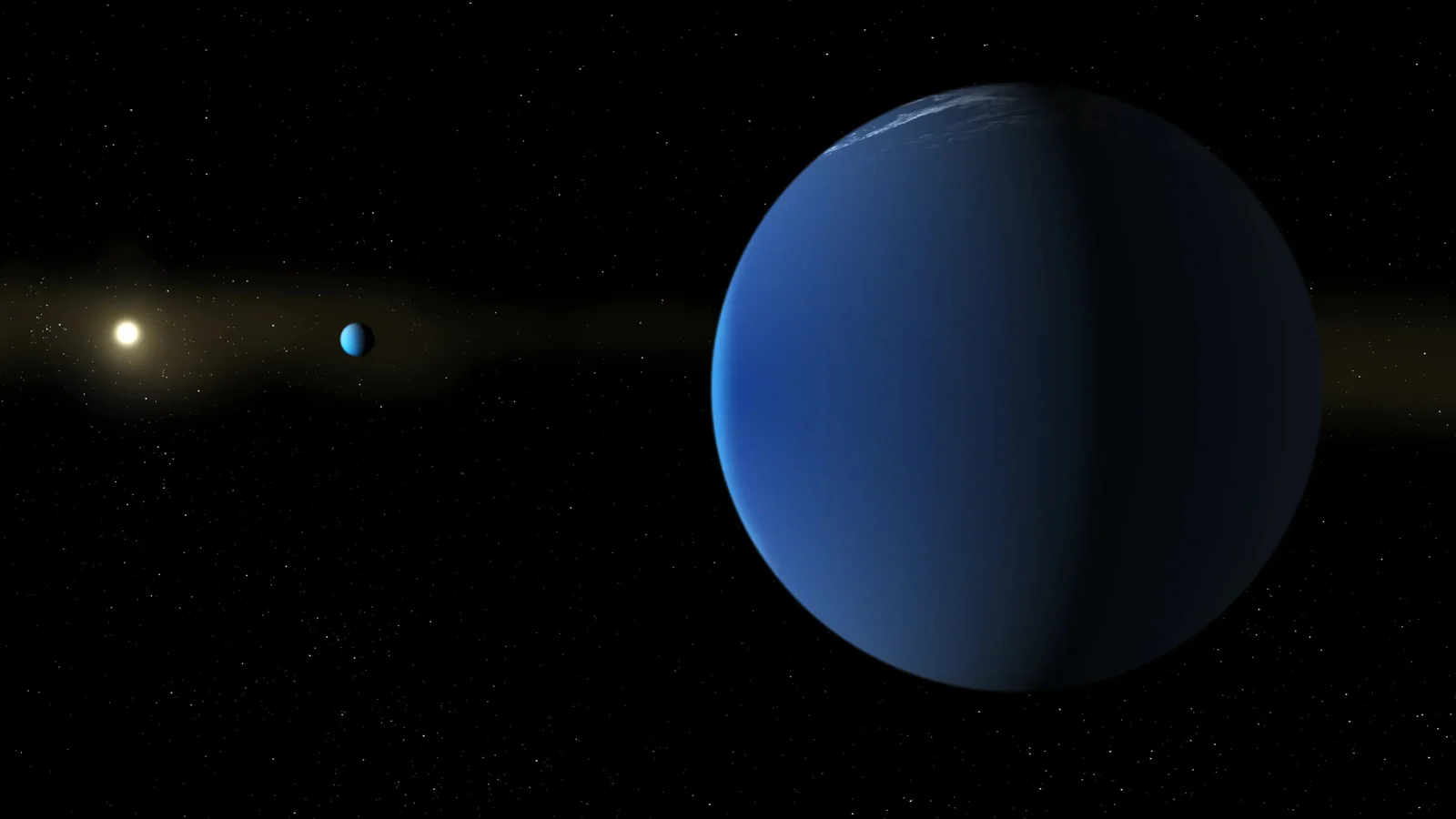
According to Science, researchers have identified two new "super-puff" planets that represent some of the least dense giant worlds ever observed in space. These celestial bodies orbit a Sun-like star named TOI-791. The discovery was made possible by analyzing data from NASA’s Transiting Exoplanet Survey Satellite (TESS), which monitored repeated dips in the host star's brightness to detect planetary transits.
Unusual physical characteristics and mass
The two planets exhibit a striking disparity between their volume and their actual weight. While they appear large enough to be categorized as gas giants, their composition is remarkably light. The specific measurements for the two worlds are as follows:
- TOI-791 b: Nearly the same size as Jupiter but contains only 3.0 percent of its mass.
- TOI-791 c: Larger than Jupiter in physical dimensions but contains just 5.9 percent of its mass.
Because these planets are so light, their density is frequently compared to cotton candy by the scientific community. These findings were made possible because TESS was able to collect over 1,122 days of data on this specific system over a seven-year period.
Orbital dynamics and gravitational interaction
The discovery is particularly significant due to the planets' long orbital periods. TOI-791 b takes 139 days to complete an orbit, while TOI-791 c requires 232 days. Finding such long-orbit planets is rare because it requires extended telescope observation times to confirm their attributes. Scientists determined the masses of these worlds by observing how they tug on each other gravitationally, which causes slight variations in the timing of their transits across the host star.
"The main reason these planets are interesting to study is that we didn’t expect to see them at all," — Jon Jenkins, science lead for the Science Processing Operations Center at NASA’s Ames Research Center. The research team aims to use these super-puffs to better understand how giant planets form and migrate within planetary systems. Future studies will focus on their atmospheric chemistry, orbital tilts, and the specific interactions that allowed such low-density worlds to survive in their current environment.