Tech Read the original on En 2 min read 0

MSI GeForce RTX 5060 Shadow 2X OC Plus tests in 007 First Light

The MSI GeForce RTX 5060 SHADOW 2X OC PLUS has been benchmarked in IO Interactive's new spy title, 007: First Light. Utilizing NVIDIA's Blackwell architecture, the card leverages DLSS 4.5 and advanced neural network rendering to deliver high-fidelity visuals without traditional ray tracing. The hardware demonstrates significant performance gains by employing multi-generation frame insertion techniques to maintain smooth gameplay during demanding cinematic sequences.

#NVIDIA #MSI #RTX 5060 #DLSS 4.5 #Gaming Hardware #Blackwell Architecture
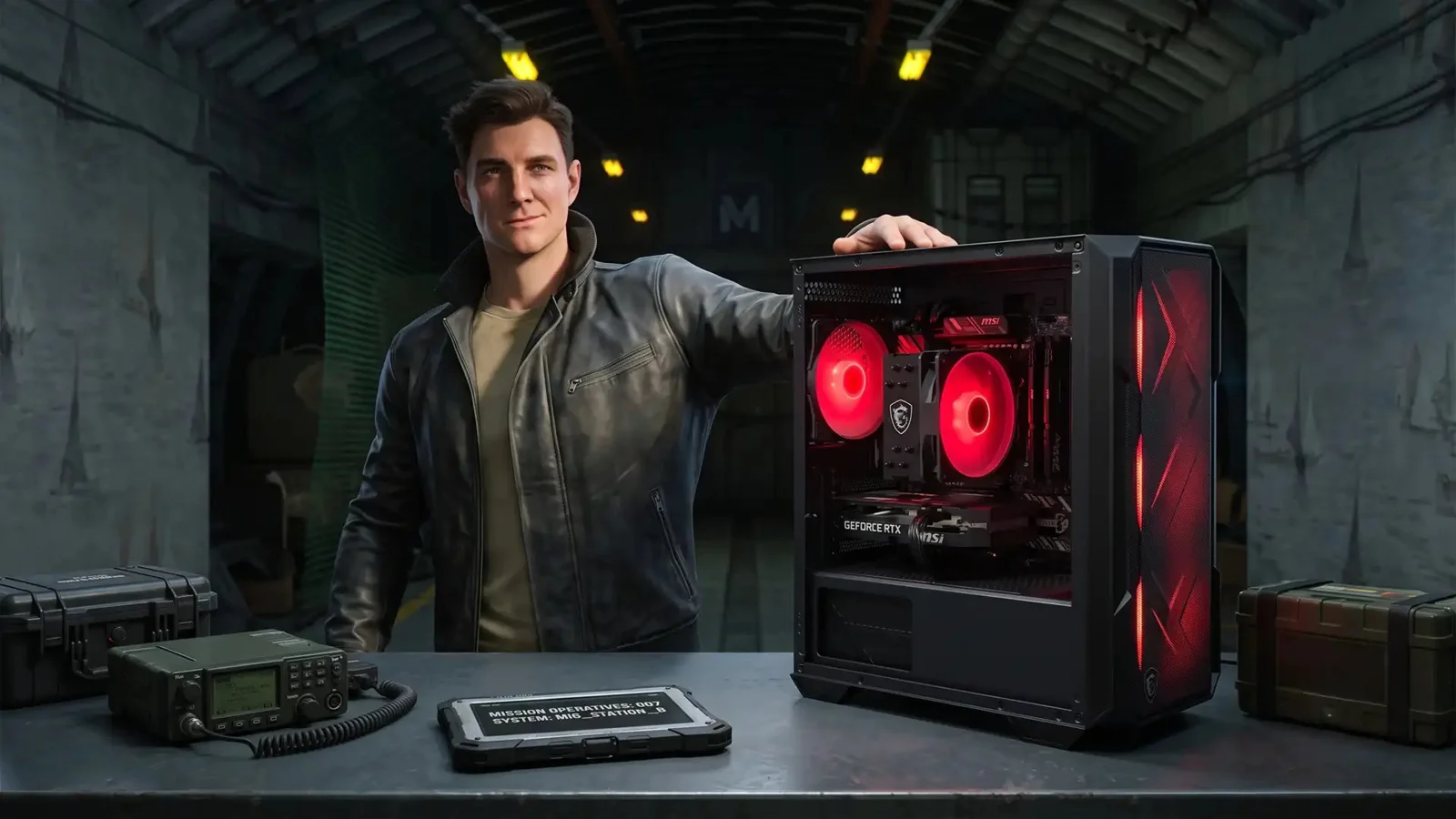
Чоловік у шкіряній куртці поклав руку на потужний ігровий ПК із яскравою червоною підсвіткою в умовах секретного бункера.
Чоловік у шкіряній куртці поклав руку на потужний ігровий ПК із яскравою червоною підсвіткою в умовах секретного бункера. · Image source: En

According to En, IO Interactive's latest spy saga, 007: First Light, has emerged as a primary visual showcase for modern graphics technology. While the title notably avoids classic ray tracing, it relies heavily on an updated Glacier engine packed with artificial intelligence and neural network rendering. To assess how these technologies perform in real-world scenarios, testers utilized a balanced Dragon Lucky Shadow system equipped with the mainstream MSI GeForce RTX 5060 SHADOW 2X OC PLUS graphics card.

Advanced DLSS 4.5 and Transformer Models

The core of the game's visual stack is centered on the latest DLSS 4.5 intelligent upscaling technology. This iteration marks a significant departure from previous versions by moving away from standard convolutional neural networks in favor of a completely new architecture based on Transformer-based models. These models, trained on NVIDIA supercomputers, provide a deeper analysis of spatiotemporal relationships between frames.

This technological shift allows the hardware to better understand complex scene geometry during high-intensity moments. Key benefits observed include:

  • Stability of fine details like thin wires and mesh fences during rapid camera movements.
  • Preservation of suit textures and interface elements without pixelation or blurring.
  • Sub-pixel clarity in Quality mode that often surpasses native resolution performance.
  • Significant performance boosts while maintaining image integrity in rain-drenched city environments.
  • Multi-Frame Generation and Dynamic Control

    The Blackwell architecture introduces a sophisticated approach to frame generation as part of the DLSS 4.5 suite. The technology is split into two distinct concepts: quantitative multigeneration and intelligent dynamic control. Multi-Frame Generation (MFG) allows the AI to calculate and insert up to five additional frames for every real one, effectively unlocking 4X and ultra-high 6X modes. This hardware multiplier transforms standard raster rendering into a highly fluid visual stream.

    Furthermore, Dynamic Multi-Frame Generation acts as an automated system for the graphics card. It prevents the generation of unnecessary frames that exceed the monitor's physical refresh rate, which would otherwise increase input lag and degrade the user experience. By balancing these factors, the MSI GeForce RTX 5060 SHADOW 2X OC PLUS manages to deliver uncompromising clarity in demanding espionage scenes.

    The integration of these "green" technologies suggests a shift toward AI-driven fidelity where neural networks compensate for the absence of traditional ray tracing. The results indicate that the Blackwell architecture provides a robust foundation for mainstream users seeking high-end visuals in modern AAA titles.

    FAQ

    What technology does 007: First Light use instead of ray tracing?
    The game avoids classic ray tracing and instead relies on an updated Glacier engine packed with artificial intelligence and neural network rendering. These technologies provide high-fidelity visuals by using AI to compensate for the absence of traditional ray tracing methods.
    How does Multi-Frame Generation work in this hardware?
    Multi-Frame Generation allows the AI to calculate and insert up to five additional frames for every real one, unlocking 4X and ultra-high 6X modes. Dynamic Multi-Frame Generation automatically prevents generating frames that exceed the monitor's refresh rate to reduce input lag.
    What are the benefits of DLSS 4.5 in this title?
    DLSS 4.5 provides stability for fine details like thin wires during rapid camera movements and preserves suit textures without blurring. It also offers sub-pixel clarity in Quality mode and significant performance boosts in rain-drenched city environments.
    Telegram

    Fresh news on our Telegram

    Get instant alerts for new posts in «Tech»

    @protechandevenmore