 EVERYTHING


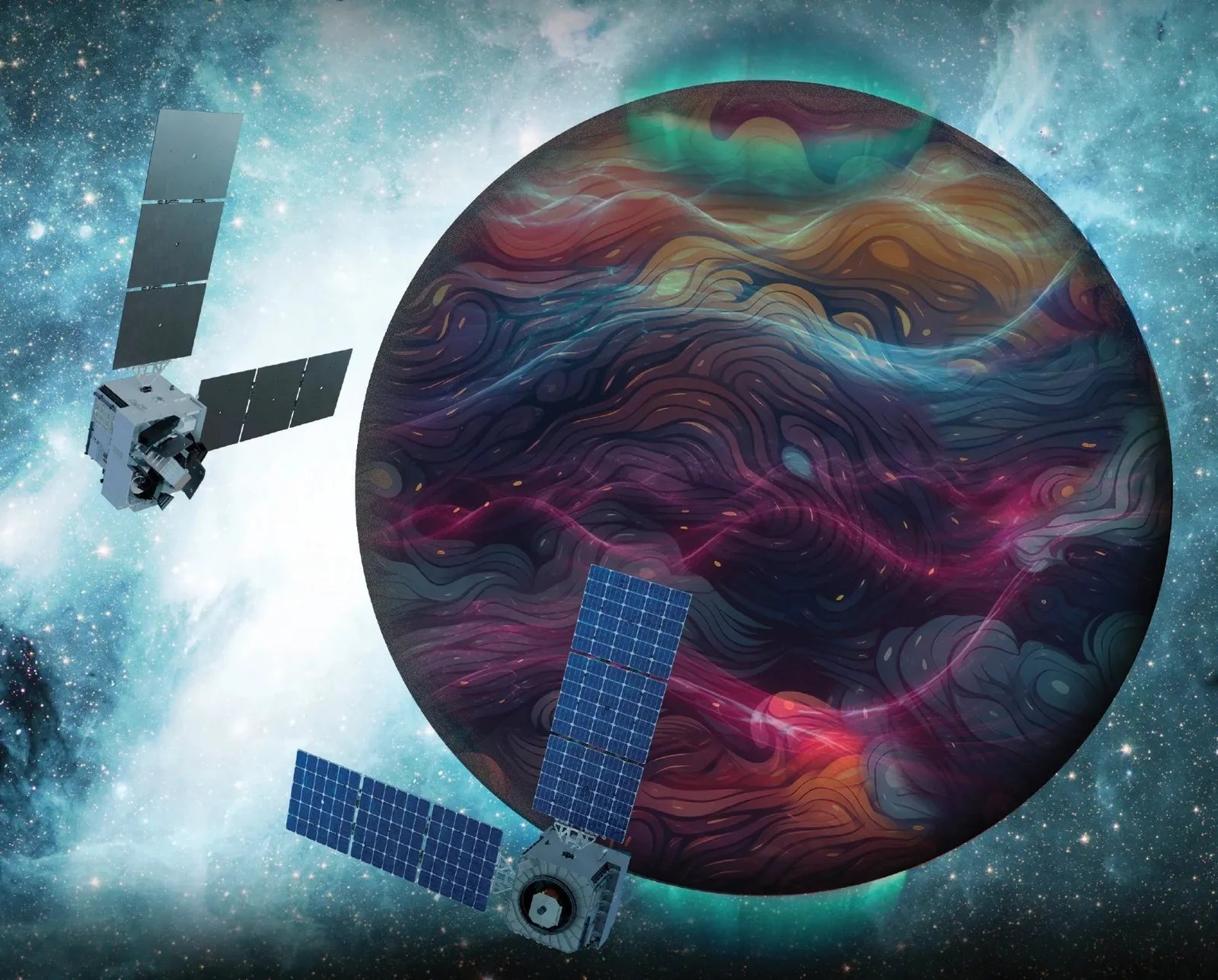
According to Nasa, the agency has officially moved the DAPHNE (Dynamic Atmosphere-Ionosphere Explorer) mission into Phase B of development. This stage focuses on the comprehensive planning and design required for flight operations and mission execution. The primary objective is to understand how dynamics within the lower atmosphere influence the upper atmosphere, which serves as a critical interface where space weather manifests.
Coordinated measurements for better prediction
The DAPHNE mission is designed as a low-risk, high-return concept that will provide coordinated, multi-point measurements of several key variables. By deploying identical twin satellites, the project will monitor changes in neutral winds, temperature, and chemical composition within the thermosphere. This region represents the transition zone where Earth's neutral atmosphere turns into ionized plasma.
Because this thin shell surrounding our planet is in constant motion, it is highly susceptible to solar activity and fluctuations in near-Earth space. By incorporating lower-atmospheric energy data into their models, scientists hope to achieve a more accurate understanding of these interactions. Key goals for the mission include:
- Mapping neutral wind patterns in the thermosphere.
- Measuring temperature fluctuations across the ionosphere.
- Analyzing atmospheric composition changes caused by solar activity.
- Improving predictive models for satellite communication disruptions.
Strategic goals for deep space exploration
Nicky Fox, associate administrator of the Science Mission Directorate at NASA Headquarters, emphasized that the mission is a cornerstone for making the United States a space weather-ready nation. "As NASA sends astronauts beyond Earth’s magnetic protection to the Moon, Mars, and beyond, DAPHNE will join the NASA science fleet strategically located across the solar system to provide data that will help mission planners predict and mitigate the effects of space weather for the benefit of all," Fox stated.
The project is currently led by Aimee Merkel from the Laboratory for Atmospheric and Space Physics at the University of Colorado, Boulder. While the mission faces a confirmation review in 2027 to assess funding and progress, the current estimated cost—excluding launch—is capped at $250 million in fiscal year 2023 dollars. If approved, the satellites are scheduled for launch no earlier than 2029.
The DAPHNE concept was originally proposed as a response to the DYNAMIC mission announcement of opportunity. It will be managed by the Solar Terrestrial Probes program at NASA’s Goddard Space Flight Center in Greenbelt, Maryland, ensuring that the data collected contributes directly to global infrastructure safety.