 EVERYTHING


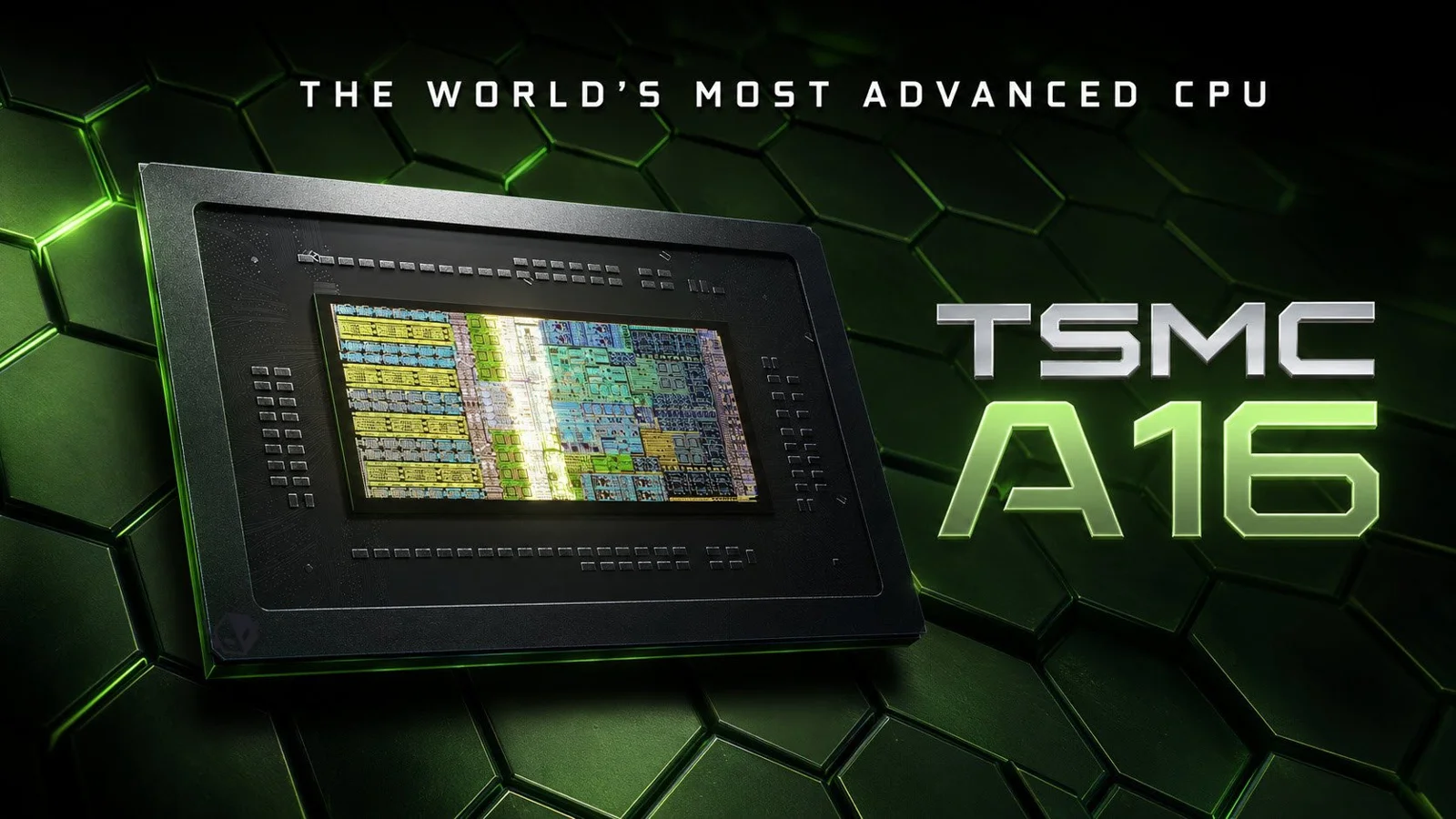
According to Wccftech, reports indicate that NVIDIA is prioritizing TSMC's A16 process technology for its next-generation Rosa CPUs. While the company may also utilize standard 2nm processes, the specific interest in A16 stems from its innovative Super Rail Power feature. This technology represents a major shift in how power is distributed across high-performance silicon chips.
Advancements in backside power delivery
The primary advantage of the A16 process lies in its ability to separate signal and power distribution. In traditional designs, both functions compete for space on the front side of the wafer. With TSMC's backside power delivery, the nanosheet transistors dedicate the front side exclusively to signals and clock distribution, while the back side handles power supply. This architectural shift allows for a more streamlined layout that does not increase the physical size of the chip.
Industry analysts suggest that this transition will provide several measurable benefits for NVIDIA's AI hardware roadmap:
- An 8-10% speedup in performance compared to standard N2P processes.
- A substantial power saving of 15-20% at equivalent speeds.
- A 10% increase in overall chip density within the same footprint.
Impact on the semiconductor supply chain
The adoption of A16 technology is expected to create a ripple effect across the global semiconductor supply chain. Because this process requires specialized manufacturing steps, it will likely drive up demand for Chemical Mechanical Polishing (CMP) processes and consumables. Specifically, Taiwanese partners such as Suntech Power Semiconductor and Suntech Power Technology are positioned to benefit from this increased production volume. Additionally, there is an expected uptick in the demand for carrier wafers to support these advanced fabrication methods.
Evolution of NVIDIA's CPU architecture
The Rosa CPUs will represent a significant evolution in NVIDIA's custom silicon strategy. These processors are designed to work alongside future GPUs like the Feynman series and will feature the brand-new "Rigel" core architecture. Built on the Arm v9.2 standard, Rigel is intended to surpass the previous Olympus cores used in the Vera systems by focusing on ultimate single-threaded performance at scale.
By combining these high-performance Armv9.2 cores with TSMC's A16 power delivery, NVIDIA aims to maintain its lead in AI infrastructure. The transition from Grace and Vera to Rosa demonstrates a clear trajectory toward maximizing per-core efficiency while minimizing the thermal and spatial constraints of modern data centers.