 EVERYTHING


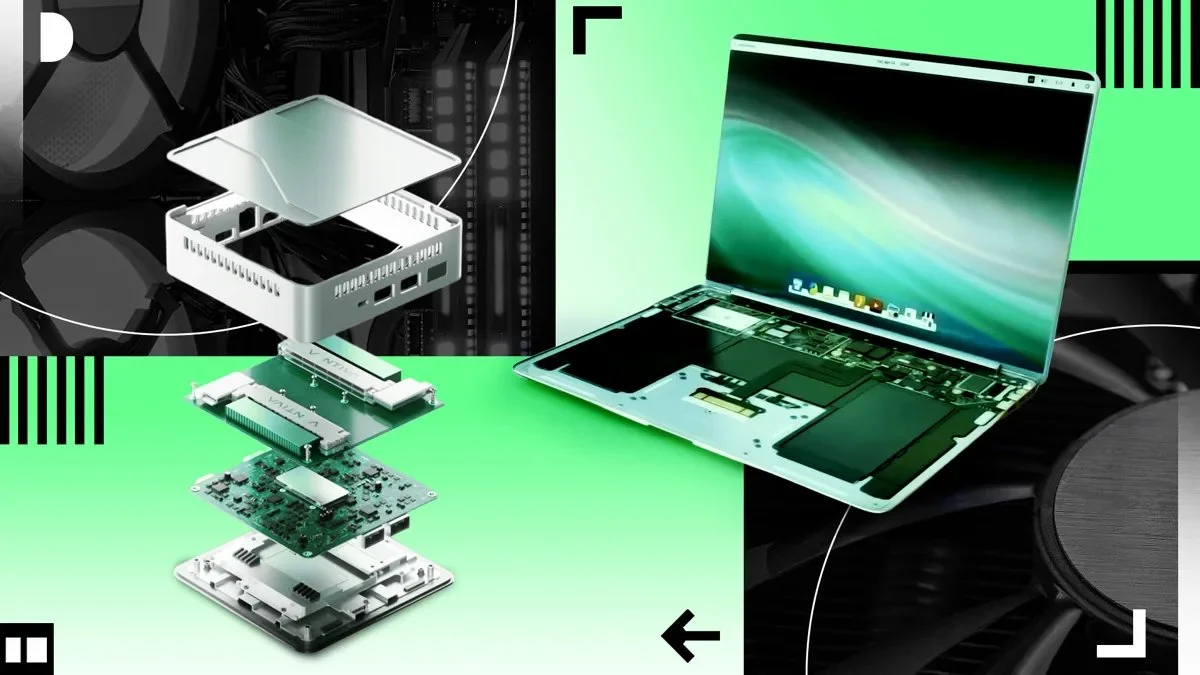
According to Uk, laptop manufacturers are facing a growing design bottleneck as the rapid evolution of AI-focused silicon outpaces current cooling capabilities. While new processors pack more CPU, GPU, and NPU power into increasingly thin chassis, the industry still relies heavily on traditional spinning fans. Ventiva, a 62-person company based in Fremont, California, is attempting to break this cycle by introducing solid-state "ionic cooling" modules that contain no moving parts.
Solving the motherboard real estate crisis
The primary advantage of eliminating mechanical fans extends beyond noise reduction and vibration control. For hardware engineers, removing fans addresses a "real estate crisis" on the laptop motherboard. In modern designs, components must be placed in close proximity to maximize performance, particularly for local AI inference which requires immense memory bandwidth. To achieve this, memory must often be soldered extremely close to the CPU to shorten circuit traces.
Carl Schlachte, the chairman and CEO of Ventiva, highlights that current designs are often compromised by the physical footprint of cooling hardware. He notes that traditional fans can occupy between 40% and 45% of a motherboard's area. In practical terms, this equates to roughly 8,000 square millimeters of expensive space that could otherwise be used for larger batteries or more substantial memory banks.
Overcoming psychological barriers in design
Schlachte suggests that the persistence of fans is partly due to a phenomenon he calls "fan blindness." Because spinning fans have been the industry standard for decades, engineers often struggle to imagine motherboard layouts that do not include them. By providing a solid-state alternative, Ventiva aims to:
- Free up significant internal volume for larger battery capacities.
- Allow for denser memory configurations required by large local AI models.
- Enable more flexible and creative industrial designs for thin-and-light laptops.
- Reduce the mechanical failure points associated with moving parts.
The company is already preparing for scale, utilizing an automated factory in Malaysia to produce millions of these modules. This shift toward solid-state cooling could be a turning point for high-end machines that require unified memory and massive processing power without the bulk of traditional thermal management systems.