 EVERYTHING


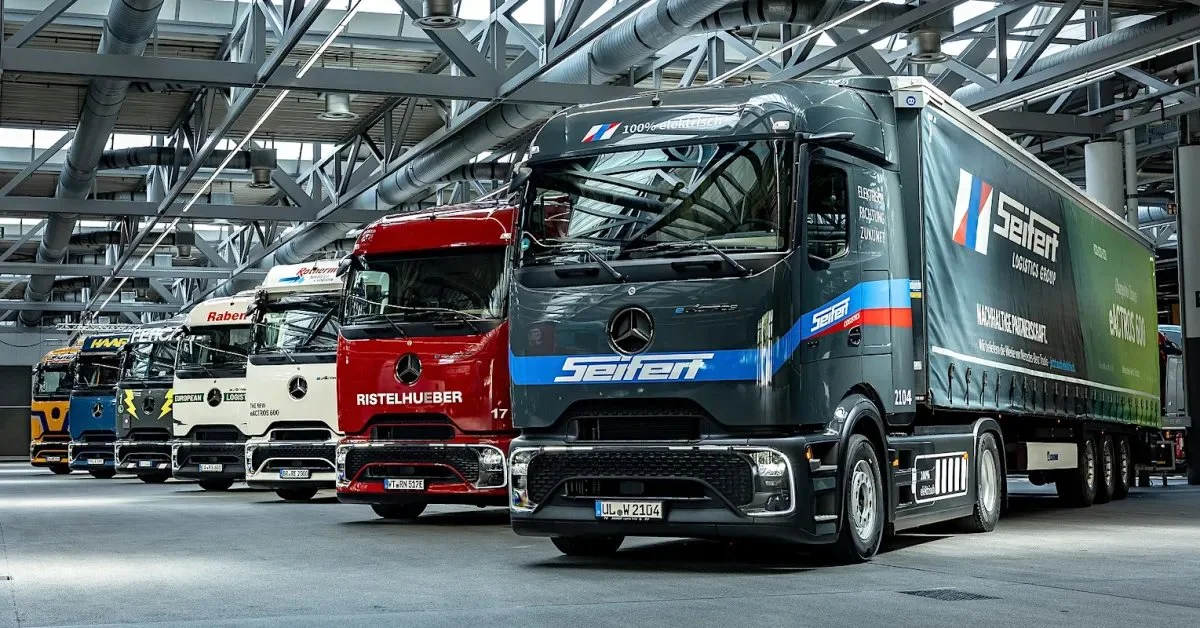
According to Electrek, Mercedes-Benz has compiled extensive real-world data from its own logistics fleet to address lingering myths regarding the range and economic feasibility of heavy-duty electric vehicles. The study covers 80 battery-electric trucks across millions of miles, thousands of charging cycles, and various demanding transport scenarios.
Real-world performance in German winters
A primary case study involves a route between Wörth am Rhein and Bielefeld operated by the logistics company Seifert. Using an eActros 600 with an average gross combination weight of 36 metric tons, the truck achieved a daily mileage of approximately 600 km. Notably, about half of the charging events occurred at public stations, proving that existing infrastructure can support long-distance heavy hauling.
The data highlights several key performance indicators for this specific route:
- Toll savings exceeding €4,000 per month.
- Annual carbon dioxide equivalent reductions of 90 metric tons.
- Average energy consumption of 100 kWh per 100 km during the winter months (November to February).
- Energy usage comparable to approximately 11 liters of diesel fuel.
Efficiency comparisons and operational factors
The report places Mercedes-Benz's performance in a competitive context with other industry leaders. The cabover-style eActros trucks achieved an efficiency of 1.61 kWh per mile while hauling heavy loads in cold weather. This figure is remarkably close to the 1.55 kWh per mile efficiency claimed by Tesla Semi prototypes, which were tested on routes between Reno and Sacramento.
The analysis suggests that success in electric trucking depends heavily on operational alignment rather than just vehicle hardware. Key factors for maximizing efficiency include:
While the Tesla Semi figures were recorded by ArcBest, a less-than-truckload carrier, Mercedes-Benz's data reflects heavy-duty hauling under more strenuous environmental conditions. These results support broader findings from groups like NACFE and Transport Canada, indicating that battery-powered logistics are ready for large-scale commercial adoption when managed correctly.