 EVERYTHING


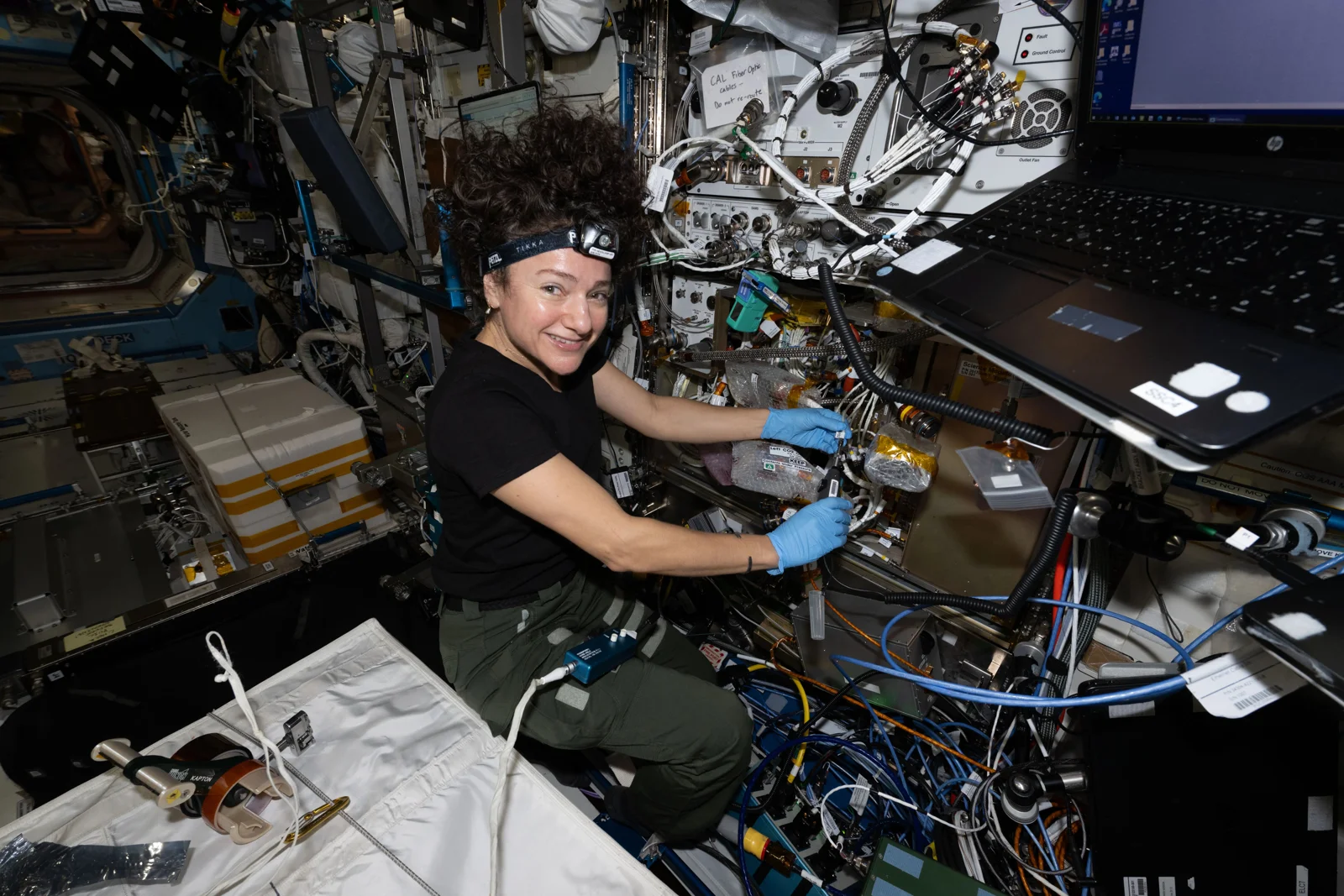
According to Nasa, astronauts have officially switched on a newly upgraded version of the Cold Atom Lab (CAL). This one-of-a-kind facility is designed to explore the fundamental workings of matter and accelerate the development of quantum technologies. By operating in the unique environment of microgravity, the lab facilitates cutting-edge science that cannot be performed in terrestrial laboratories.
The mechanics of ultracold matter
Quantum science focuses on matter at the smallest scales, including atoms, electrons, and light particles. While often visualized as solid objects, these particles exhibit wave-like behaviors, such as existing in two places simultaneously or passing through one another. The Cold Atom Lab achieves extreme conditions by chilling atoms to temperatures below -459 degrees Fahrenheit (-237 degrees Celsius).
At these temperatures, just above absolute zero, atoms form a Bose-Einstein condensate (BEC). This represents a fifth state of matter beyond solids, liquids, gases, and plasma. In this state, the matter waves become larger due to the lack of gravity, allowing for more precise measurements of time, gravity, and motion. The facility essentially shrinks a room-sized laboratory—typically filled with mirrors and lasers—into a compact experiment rack aboard the space station.
Technological upgrades and international collaboration
The latest hardware arrived on April 11 as part of a Commercial Resupply Services mission. This upgrade marks the fourth iteration of the lab since its arrival in 2018. The process involves several distinct stages to reach these extreme states:
"At the coldest temperatures, matter behaves drastically different from anything we have experienced," — Jason Williams, project scientist for Cold Atom Lab at NASA’s Jet Propulsion Laboratory. The project currently supports five international teams who are testing the space-readiness of quantum tools intended for future Earth science and deep-space exploration missions.
Advancing Quantum 2.0
The mission aims to move beyond the first quantum revolution, which gave humanity lasers, mobile phones, and MRI machines. Scientists are now pursuing "Quantum 2.0," which involves the direct manipulation of large quantum states. By demonstrating that these processes can work reliably in orbit, NASA hopes to achieve similar technological leaps in the coming decades.